

Sauna Comparison Guide

Choose a traditional Finnish sauna if you want the highest air temperatures, adjustable humidity, and the löyly steam ritual. Choose infrared if you prefer lower air temperatures, faster warm-up, simpler installation, and generally lower energy use. Neither is universally better. Traditional sauna has stronger long-term cardiovascular evidence,[1] while infrared is often easier to use frequently at home.
At a Glance: Traditional Finnish vs. Infrared Sauna
| Factor | Traditional Finnish | Infrared |
|---|---|---|
| Heating method | Heats the air via a stove and stones | Radiant panels heat the body directly |
| Typical air temperature | 150 to 195°F in home units[7] (Finnish tradition and research: 176 to 212°F[3]) | 110 to 150°F (45 to 65°C) |
| Humidity | Adjustable (dry heat to steam bursts) | Low (typically below 10%) |
| Preheat time | 30 to 45 minutes | 10 to 20 minutes |
| Typical session | 10-to-20-minute rounds with cool-down breaks | 25 to 45 continuous minutes |
| Heater power | 6 to 9 kW | 1.5 to 2.5 kW |
| Estimated monthly electricity* | About $14 to $28 | About $3.50 to $6.25 |
| Installation | 240V hardwiring usually required | Often plug-and-play (120V on smaller units) |
| Maintenance | Higher (moisture management) | Lower (dry environment) |
| Experience style | Social, ritual-based | Solo, meditative |
Key Takeaways
- Traditional Finnish saunas use high heat and can create bursts of steam — roughly 150 to 195°F in home units,[7] and 176 to 212°F (80 to 100°C) in Finnish tradition and most published research.[3] Infrared saunas use lower-temperature radiant heat, typically 110 to 150°F.
- Infrared is typically cheaper to run, easier to install indoors, and suited to longer continuous sessions. Finnish saunas deliver a hotter, more social, ritual-style experience.
- Both types produce overlapping sauna-related effects such as sweating, a temporarily elevated heart rate, and relaxation.[3][5] Long-term cardiovascular evidence is currently stronger for traditional Finnish sauna use, and that evidence is observational.[1]
- Neither type is universally better. The right choice depends on your space, budget, electrical setup, and how you actually like to sweat.
- How often to use a sauna is individual. Finnish cohort studies associated benefits with frequent use, but that is a population-level observation, not a universal prescription; start low and build up.[1]
This guide breaks down the nine key differences between infrared and traditional saunas so you can match the right technology to your lifestyle, available space, and goals.
What Is a Sauna?
A sauna is an enclosed heated room designed to induce sweating for relaxation, recovery, and general wellness. The practice traces back thousands of years to Finland, where the word "sauna" originates. For Finns, the sauna room has served as a space for cleansing, socializing, childbirth, and spiritual practice across generations, and Finland is commonly estimated to have around three million saunas for a population of about 5.5 million.
In modern home wellness, buyers typically evaluate two main categories: traditional Finnish saunas that use heated stones and steam, and infrared saunas that use radiant heat panels. This guide compares those two head-to-head; for the broader landscape, including steam rooms and hybrid formats, see our guide to sauna types.
How Do Traditional Finnish Saunas Work?
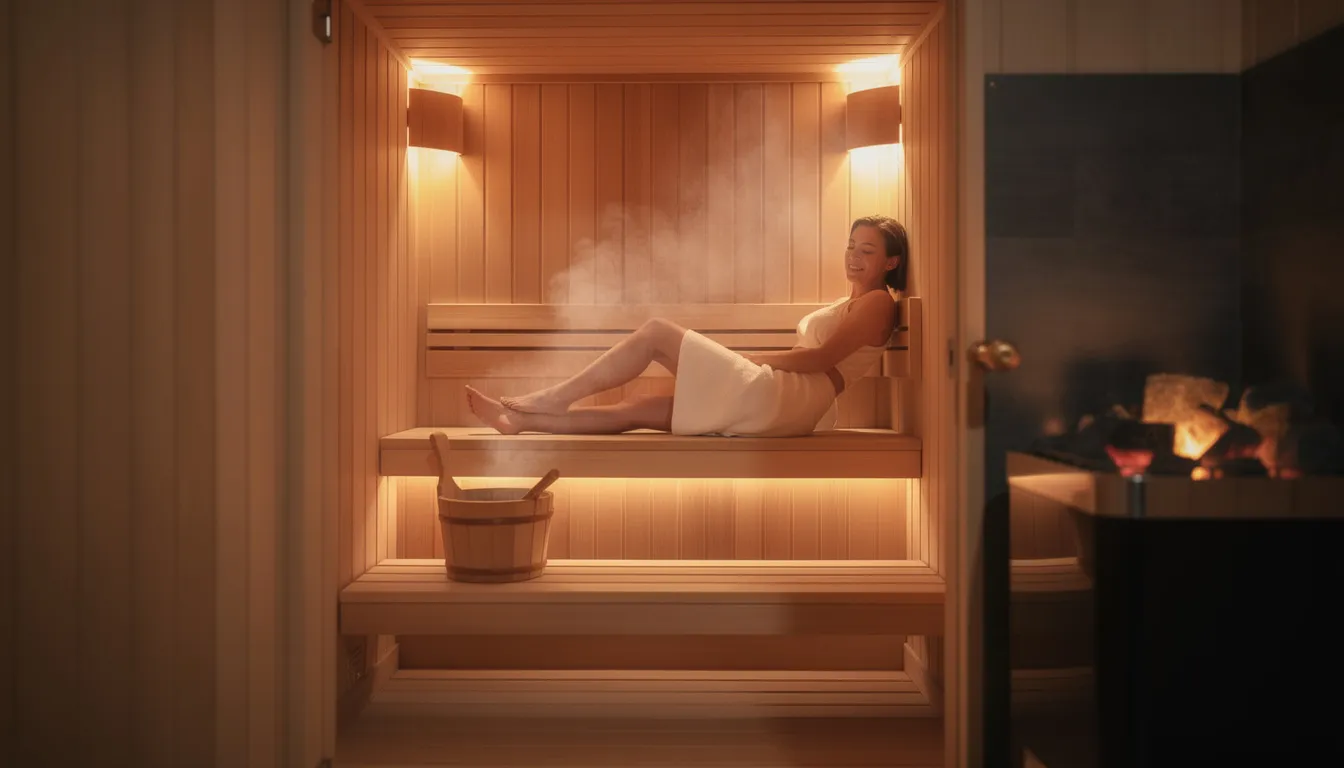
Traditional Finnish saunas heat the air first, then your body. An electric or wood-burning heater warms a pile of stones, which radiate heat throughout the room and raise the air temperature to create the hot environment Finnish saunas are known for.
In Finnish tradition and most published research, air temperature runs from 80 to 100°C (176 to 212°F) at the level of the bather's head, with relative humidity around 10 to 20 percent until water hits the stones.[3] North American home saunas commonly run cooler, in the 150-to-195°F (65-to-90°C) range.[7] Humidity varies based on whether you pour water over the stones: that practice, called löyly, creates bursts of steam that intensify the perceived heat and add moisture to what is otherwise a dry environment.
The traditional ritual involves 10-to-20-minute rounds inside, stepping out to cool down (often with a cool shower or plunge), then repeating for two to three rounds.[4] Total visit time usually runs 45 to 60 minutes including breaks. This pattern creates the social, communal experience that defines Finnish sauna culture, with families and friends gathering in two-to-six-person cabins.
Common home configurations include:
- Indoor corner cabins for basements or spare rooms
- Dedicated wellness-room build-outs
- Outdoor barrel or cube saunas for backyards
- Standalone cabin structures with changing areas
Most two-to-four-person electric units require a 6-to-9 kW heater, which means 240V hardwiring by a licensed electrician in North American homes.
How Do Infrared Saunas Work?
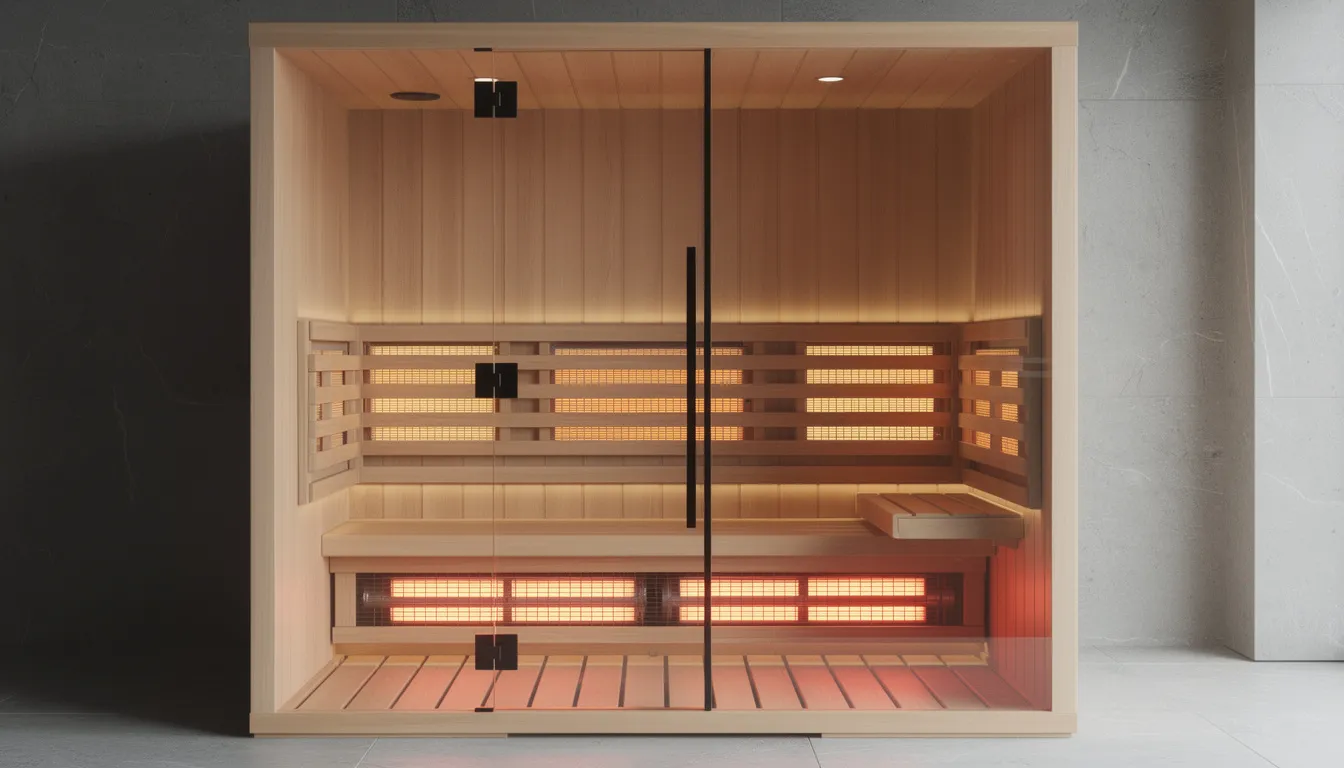
Infrared saunas are wooden cabins that use carbon or ceramic infrared emitters to warm your body directly rather than superheating the surrounding air.[5] These units operate at far lower air temperatures than Finnish models, typically 110 to 150°F (45 to 65°C), with minimal humidity. Many people find the milder environment easier to tolerate for longer continuous sessions.
Full-spectrum systems combine near-, mid-, and far-infrared wavelengths. How that energy interacts with tissue depends on the wavelength, the emitter's output, your distance from the emitter, exposure time, and the body's absorption characteristics. Be cautious with marketing that assigns a guaranteed penetration depth or health outcome to each band unless the manufacturer publishes testing of that specific heater system. One practical check: standard carbon panels emit primarily far infrared, so a genuine full-spectrum sauna needs distinct near- and mid-infrared emitters, not carbon panels alone. Our full-spectrum sauna guide explains how to verify those claims model by model.
Typical infrared sessions run 25 to 45 continuous minutes. Users often remain seated while listening to music, meditating, or practicing breathwork, creating a more solitary, contemplative experience compared with the social rounds of traditional steam saunas. Smaller one- and two-person cabins often plug into a standard 120V household outlet, and portable formats such as sauna blankets and tents suit apartments where a full cabin will not fit.
What Are the 9 Key Differences Between Traditional Finnish and Infrared Saunas?
This section covers the core comparison every buyer needs: nine specific differences across heating method, temperature, research backing, routines, costs, installation, maintenance, aesthetics, and overall experience. There is no universal winner. The goal is to map each difference to your situation, whether you are an athlete prioritizing recovery, a family building a backyard spa, or a traditionalist seeking an authentic sauna experience.
1. Heating Method
The fundamental technical distinction: Finnish saunas heat air via a stove and stones, while infrared saunas use panels whose radiant energy is absorbed directly by the body.[5]
This affects warm-up significantly. Finnish units need the entire room to reach temperature, typically requiring 30 to 45 minutes of preheat. Infrared cabins feel effective within 10 to 20 minutes because the emitters begin warming your body as soon as they are up to output, regardless of air temperature.
The sensation also differs. Infrared's direct radiant heat often feels more internal, while Finnish heat feels like an intense, enveloping environment surrounding you.
2. Temperature, Humidity, and Overall Feel
Finnish saunas operate at high air temperatures — commonly 150 to 195°F in home units,[7] and 176 to 212°F in traditional practice and research settings[3] — with humidity you control by adding or withholding water from the stones. Infrared models run at 110 to 150°F with humidity typically below 10 percent.
The subjective feel varies dramatically. Finnish heat can feel sharp on the skin, especially during löyly when steam bursts raise the perceived temperature, and many people sweat heavily within the first 5 to 10 minutes. Infrared feels milder at the skin's surface, which is why longer continuous sessions are common.
The löyly ritual is unique to traditional saunas: pouring water over hot stones sends waves of moist heat through the cabin, temporarily spiking intensity in a way no infrared sauna replicates.
Buyer guidance: beginners and anyone who finds very high heat uncomfortable often gravitate toward infrared's milder feel. Heat-lovers and traditionalists seeking the classic bathing ritual usually prefer Finnish.
3. Health and Wellness Evidence
Both sauna types promote sweating, a temporarily elevated heart rate, and, for many people, relaxation, in ways that resemble the body's response to moderate exercise.[3][5] The evidence base behind longer-term claims differs by type.
Traditional Finnish sauna has the stronger long-term observational evidence. In a cohort of 2,315 middle-aged Finnish men followed for a median of 20.7 years, more frequent sauna use (four to seven sessions per week versus one) was associated with lower rates of sudden cardiac death, fatal cardiovascular disease, and all-cause mortality.[1] The study was observational: it found associations, not proof that sauna use caused the lower mortality, and its authors called for further research. Its findings should not automatically be applied to infrared saunas or to every population. In the same Finnish cohort, more frequent sauna bathing was also associated with a lower risk of developing high blood pressure over roughly 25 years of follow-up, again an association rather than proof of causation.[2]
Infrared sauna research is smaller, shorter-term, and often specific to particular devices or medical protocols. Studies have examined sauna use for conditions including high blood pressure, heart failure, headache, type 2 diabetes, and arthritis, and some report promising results, but Mayo Clinic notes that larger and more rigorous studies are still needed, and that some of those studies used traditional rather than infrared saunas.[5] The evidence does not yet support treating infrared sauna as equivalent to traditional Finnish sauna for long-term cardiovascular outcomes.
A 2018 systematic review of regular dry sauna bathing reported that most studies found some benefit across cardiovascular, pain, and wellbeing outcomes, while noting that many were small and methodologically limited.[4] Claims that go further, such as rapid detoxification, meaningful weight loss, or immune "boosting," are not well supported by clinical evidence, and we do not make them here.
Buyer guidance: if long-term cardiovascular evidence matters most to you, the strongest data currently comes from traditional Finnish sauna use.[1][3] If you want lower-heat sessions that are easy to repeat frequently, infrared may fit your life better; weigh that convenience on its own merits rather than assuming equivalent proven benefits.
4. Session Length, Frequency, and Routine
A typical Finnish routine involves 10 to 20 minutes inside at high heat, followed by a cool-down period, repeated two to three times, for a total of about 45 to 60 minutes including breaks.[4] Infrared routines typically involve one continuous 25-to-45-minute session at lower temperatures.
In the Finnish cohort research, benefits were associated with frequent use, but that is a population-level observation rather than a prescription.[1] A sensible approach for beginners with either type is to start with one to three shorter sessions per week and build up gradually based on how you feel.
Buyers with busy schedules often value infrared's faster warm-up and single continuous session. Those seeking the traditional multi-round experience, especially paired with cold exposure, may prefer Finnish. Many home users integrate either type with complementary practices such as cold plunges, breathwork, or red light therapy.
5. Energy Use and Running Costs
Energy consumption differs substantially because of the heating requirements. A two-to-three-person infrared cabin typically draws 1.5 to 2.5 kW, while a comparable Finnish sauna uses a 6-to-9 kW heater. Infrared commonly runs at a fraction of the electricity cost of a Finnish unit, partly because Finnish saunas preheat an entire room to much higher temperatures and may stay on through cool-down rounds.
The full math, with the formula and every assumption stated, is in the cost section below. For model-level energy comparisons based on published specifications, see our guide to the most efficient home saunas.
Whichever type you choose, quality insulation and modern controls such as timers and thermostats reduce wasted energy.
6. Installation Requirements
Most infrared saunas arrive as modular, plug-together kits. Smaller one-to-two-person infrared units often use standard 120V household outlets, making DIY installation realistic within a few hours, while larger infrared models may require 240V circuits.
Finnish saunas typically need 240V hardwiring, proper ventilation clearances, and sometimes construction or framing work for built-in installations. Professional installation is strongly recommended for safety and code compliance.
| Infrared | Finnish |
|---|---|
| Spare bedrooms | Dedicated wellness rooms |
| Home offices | Basements with proper ventilation |
| Basements | Garages (with insulation) |
| Large walk-in closets | Outdoor structures |
Before you buy, confirm outlet type, circuit capacity, ventilation, and clearances against the manufacturer's spec sheet. Our guide to choosing a home sauna walks through those decisions in order.
7. Maintenance, Cleaning, and Durability
Finnish saunas' higher moisture levels require attention to ventilation, drying the room after each use, and periodic mold checks in poorly ventilated spaces. Infrared saunas require generally simpler maintenance, since low humidity means less moisture-related wear.
- Finnish: ensure ventilation operates properly; wipe benches after sessions; leave the door open to dry; check stones annually; inspect wood for moisture damage.
- Infrared: wipe benches after sessions; clean glass doors; occasionally check heater panels and control electronics.
For both types, a quick wipe-down after each session combined with a deeper clean every few weeks keeps things hygienic. When comparing models, look for kiln-dried wood and low-emission finishes rated for repeated heat cycles; our guide to what makes a high-quality sauna covers the construction details worth verifying.
8. Space, Design, and Aesthetic Considerations
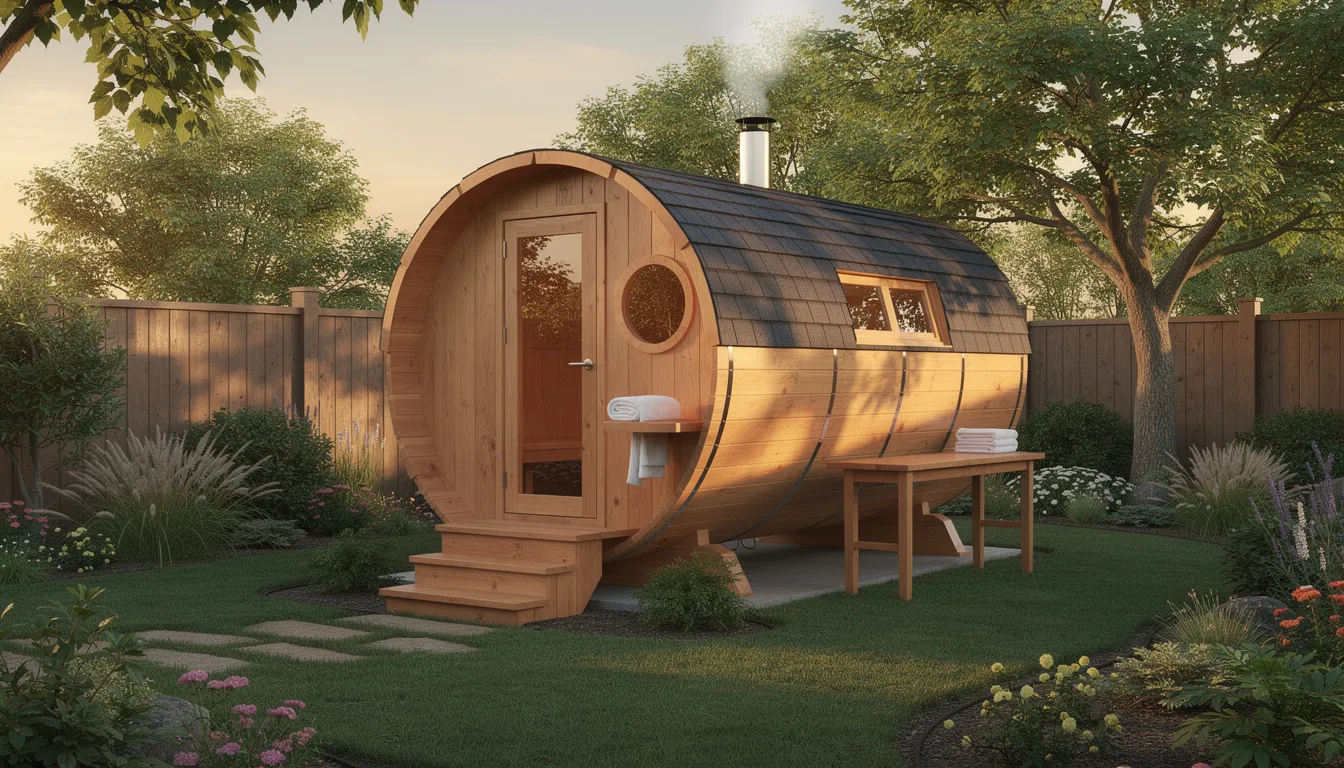
Infrared units often have smaller footprints. Compact one-to-two-person indoor cabins can fit where traditional build-outs would not, such as condos, apartments, or small homes; many two-person infrared cabins measure roughly 4 by 4 feet.
Finnish saunas typically require more cubic volume per user and generous ceiling heights (7 to 8 feet is commonly recommended), especially for outdoor barrel or cabin styles that become landscape features.
Aesthetically, Finnish outdoor saunas project a Northern European spa look: wood barrels and cabin structures, sometimes with changing rooms. Infrared cabins often feature modern glass doors, interior accent lighting, audio, and chromotherapy options.
Measure carefully before ordering. Check door-swing clearance, floor load capacity, and access paths for delivery against the manufacturer's published dimensions and recommended clearances.
9. Experience, Culture, and Personal Preference
Finnish saunas carry strong cultural traditions: social gatherings, löyly rituals, and alternating with cold plunges or even snow in Nordic practice. The experience feels communal and event-like, often lasting an hour or more with friends and family.
Infrared offers a more private, meditative approach. Users often sauna solo, treating sessions as personal recovery time for reading, guided meditation, or quiet reflection, and the lower heat intensity makes a near-daily practice easier to sustain.
If you are undecided, try both types at local spas, gyms, or wellness centers before committing. The best sauna is the one aligned with your habits, the one you will consistently use for years.
What Do Traditional Finnish and Infrared Saunas Cost?
Look beyond the sticker price to include installation, operating costs, and expected lifespan when evaluating the total investment.
| Category | Infrared | Finnish |
|---|---|---|
| 1-to-2-person entry | $2,000 to $4,000 | $3,000 to $5,000 |
| 2-to-4-person mid-range | $4,000 to $7,000 | $5,000 to $10,000 |
| Outdoor / premium | $6,000 to $10,000 or more | $8,000 to $15,000 or more |
| Installation | Often DIY | $500 to $2,000 or more (electrician) |
Electricity: the formula and a worked example
Monthly electricity cost = energy per session (kWh) × sessions per week × 4.33 × your electricity rate per kWh.
Our worked example uses 3 to 4 sessions per week at $0.18 per kWh, in line with current U.S. residential electricity prices published by the U.S. Energy Information Administration: the national residential average has climbed from about 16.5¢ per kWh in 2024 to just over 18¢ per kWh in mid-2026.[6] Session energy figures include warm-up: about 1.5 to 2 kWh for a 45-minute infrared session, and about 6 to 9 kWh for a full Finnish visit including a 30-to-45-minute preheat and cool-down rounds. Substitute your own utility rate and usage into the formula, since actual rates vary widely by state.
| Sauna type | Energy per session | Estimated monthly cost |
|---|---|---|
| Infrared (45-minute session) | 1.5 to 2 kWh | $3.51 to $6.24 |
| Finnish (60-minute visit incl. preheat) | 6 to 9 kWh | $14.03 to $28.06 |
Five-year cost example
The example below assumes a mid-range two-to-three-person unit used four times weekly for five years at $0.18 per kWh, with the same per-session energy figures as above. It excludes maintenance, repairs, and replacement parts such as heater stones.
| Cost item | Infrared | Finnish |
|---|---|---|
| Unit cost (example, mid-range) | $5,000 | $7,000 |
| Installation | $0 (plug-in) | $800 |
| Electricity, 5 years (4 sessions/week) | $281 to $374 | $1,123 to $1,685 |
| Total | $5,281 to $5,374 | $8,923 to $9,485 |
Infrared typically wins on upfront cost and power bills. Finnish installations are often more expensive because they more often involve outdoor structures, custom construction, dedicated electrical work, or changing areas. For like-for-like energy comparisons of specific current models, see our efficiency guide.
Which Sauna Is Right for You?
Turning the technical differences into practical guidance, here is how common buyer profiles map to sauna types.
Busy professional in a city condo: infrared. Compact footprint, plug-and-play installation, and fast warm-up for 30-minute sessions, with no construction or 240V wiring required.
Family building a backyard spa: a Finnish outdoor unit. It creates a gathering space for multiple users, pairs well with landscaping, and delivers the social ritual experience; many families add a cold plunge for contrast. If you get real winters, our cold-climate outdoor sauna guide covers what to verify.
Athlete focused on recovery: either type works. Infrared offers convenient near-daily sessions at gentle heat, while Finnish delivers intense heat for those who prefer the multi-round format.
Daily-routine optimizer: infrared. Faster warm-up and lower operating temperatures make it easier to fit consistent sessions into a daily schedule. If you are weighing a full-spectrum model, evaluate those claims separately based on the actual emitter configuration and published testing — our full-spectrum guide shows how.
Traditionalist seeking an authentic experience: Finnish. Nothing replicates the löyly ritual, the high-heat challenge, and the cultural depth of traditional bathing.
Maximalist with space and budget: both. An outdoor Finnish sauna for weekend social sessions plus an indoor infrared cabin for weekday recovery covers every use case.
How HomeSauna.com Researched This Comparison
HomeSauna.com is a sauna research and education publisher affiliated with Sun Home Saunas, a company that sells saunas and cold plunges. HomeSauna.com does not itself manufacture, sell, or distribute sauna products, and this page contains no affiliate links. This comparison covers sauna formats rather than specific brands or models, and no product from any brand, including Sun Home, is linked or recommended for purchase in this article.
Health and research claims in this comparison carry claim-level citations to the peer-reviewed and institutional sources listed below. Technical figures — heater power, electrical requirements, preheat times, session lengths, humidity, cabin sizing, price brackets, and expected lifespan — are typical ranges drawn from publicly available manufacturer specifications and market observation as of August 2026, not from a systematically documented model sample, unless a source is cited on the specific figure. We have not conducted instrumented, side-by-side testing of the two sauna formats, and we do not claim hands-on testing anywhere in this article. The electricity costs are worked examples using the stated assumptions. If you spot an error, contact us and we will review and correct it.
The Bottom Line
The decision comes down to your priorities. Traditional Finnish saunas deliver an immersive, high-heat, adjustable-humidity experience that many consider the true sauna, backed by the strongest long-term observational evidence,[1] but they require more space, 240V or wood-fired infrastructure, longer preheat times, and more maintenance. Infrared saunas offer convenience, lower running costs, faster warm-up, and gentler sessions that are easy to repeat frequently, though the clinical evidence base is younger and the format lacks the ceremonial intensity of traditional heat.[5]
If you are ready to shortlist actual models, start with our best home saunas guide, or work through the seven decisions in our guide to choosing a home sauna first.
References
- Laukkanen T, Khan H, Zaccardi F, Laukkanen JA. "Association Between Sauna Bathing and Fatal Cardiovascular and All-Cause Mortality Events." JAMA Internal Medicine. 2015;175(4):542–548.
- Zaccardi F, Laukkanen T, Willeit P, Kunutsor SK, Kauhanen J, Laukkanen JA. "Sauna Bathing and Incident Hypertension: A Prospective Cohort Study." American Journal of Hypertension. 2017;30(11):1120–1125.
- Laukkanen JA, Laukkanen T, Kunutsor SK. "Cardiovascular and Other Health Benefits of Sauna Bathing: A Review of the Evidence." Mayo Clinic Proceedings. 2018;93(8):1111–1121.
- Hussain J, Cohen M. "Clinical Effects of Regular Dry Sauna Bathing: A Systematic Review." Evidence-Based Complementary and Alternative Medicine. 2018.
- Mayo Clinic. "Do infrared saunas have any health benefits?" September 13, 2024.
- U.S. Energy Information Administration. Electric Power Monthly, Table 5.6.A: average price of electricity to ultimate customers by end-use sector (June 2026 data, released August 26, 2026).
-
Finnish Sauna Builders. "What Temperature Should a Sauna Be for Optimal Benefits?"
FAQs
Can I use a sauna every day?
Many healthy adults use a sauna most days without problems, and in the long-term Finnish research, benefits were associated with more frequent use, four to seven sessions per week versus one.[1] That is an observational finding, not a prescription.
A sensible starting point is one to three shorter sessions of 10 to 15 minutes per week, with good hydration, increasing gradually as your tolerance builds. Anyone who is pregnant or has cardiovascular disease, low blood pressure, or another medical condition should check with a clinician before making daily sauna use a habit.
Is an infrared sauna safer than a traditional Finnish sauna?
Both formats are generally considered safe for most healthy adults when used sensibly. Mayo Clinic notes that no harmful effects specific to infrared saunas have been reported, and that infrared's lower air temperature can suit people who find traditional sauna heat hard to tolerate.[5] That is a comfort difference, not evidence that one type is categorically safer.
For either type: hydrate, avoid alcohol beforehand, and exit immediately if you feel lightheaded or unwell. People who are pregnant or have cardiovascular disease, low blood pressure, or other medical conditions should talk with their clinician before starting regular sauna use. Before buying, separately verify two different things: third-party EMF measurements if low EMF matters to you, and certification of the complete sauna system to an applicable safety standard such as UL 875 (electric dry-bath heating equipment) or ANSI/UL 60335-2-53 (sauna heating appliances). Confirm any certification in the testing laboratory's public directory rather than relying on marketing language alone; our guide to what makes a high-quality sauna explains both standards.
Can I combine sauna sessions with cold plunges?
Alternating heat with a cool-down is built into the classic Finnish routine: a 10-to-20-minute round in the sauna, then a cooling-off period such as a cool shower, plunge, or fresh air, repeated two to three times.[4] Many home users apply the same pattern with a cold plunge tub, echoing Nordic-style sauna culture.
Evidence for any specific hot-and-cold protocol is limited, and most contrast-therapy research involves alternating warm and cold water immersion rather than sauna use, so treat exact times and temperatures as personal preference. Build cold tolerance gradually, and get medical advice first if you have a heart condition or blood-pressure issues.
What if I live in a small home or rental?
Compact infrared cabins and portable options such as sauna blankets make regular sauna use realistic without construction or permanent modifications. Infrared generally suits renters better because smaller units run on a standard 120V outlet, with no plumbing, ventilation changes, or 240V wiring.
Measure available floor space and ceiling height carefully, check the manufacturer's spec sheet for clearances, and confirm landlord policies on appliances. Our guides to the best infrared saunas for small spaces and the best portable infrared saunas compare current options.
How long will a home sauna last?
A well-built home sauna can last 10 to 20 or more years with routine care, depending on wood quality, hardware durability, and how often it is used. See our guide to how long home saunas last for a deeper breakdown.
Key longevity factors include proper ventilation, especially for Finnish units, which handle more moisture, regular cleaning with gentle methods, and avoiding harsh chemical cleaners that damage wood finishes. Before buying, compare warranty terms in writing, because coverage length and what it actually includes vary widely between brands.