

Combining sauna heat with gentle yoga creates a powerful recovery, mobility, and stress-relief routine you can practice at home in as little as 20 to 30 minutes. This fusion approach draws from ancient wellness traditions while incorporating modern understanding of heat therapy and movement science.
This guide covers science-backed health benefits, practical pose sequences, safety guidelines, and how to set up a dedicated sauna yoga space. You'll learn optimal temperatures, session structures, and how to integrate this practice into your weekly routine for maximum sauna health benefits and physical recovery.
Key Takeaways
- Combining sauna heat (especially from an infrared sauna) with gentle yoga creates a powerful recovery, mobility, and stress-relief routine you can practice at home in as little as 20 to 30 minutes.
- The combination of sauna and yoga can enhance weight loss by increasing the metabolic rate and calorie burn, while supporting detoxification through deep sweating.
- Maintaining temperatures between 95°F and 110°F enables safe movement, deeper stretching, and improved blood flow without overloading your cardiovascular system.
- Pairing sauna sessions with mindful yoga poses supports muscle recovery, joint mobility, nervous system regulation, and radiant skin through the synergy of heat and intentional movement.
- Infrared and traditional models, combined with cold plunges, enable the creation of a comprehensive "heat plus movement plus cold" recovery ritual from the comfort of your own home.
- Drink plenty of fluids before your yoga sauna session to stay hydrated and support your body's natural cooling mechanisms.
What Is Sauna Yoga Fusion and Why Does It Work?
Sauna yoga is exactly what it sounds like: performing a gentle, structured yoga practice inside a warm sauna, followed by a brief cool-down and optional cold plunge. The idea is simple: use heat to prime your body for movement, then move through poses that release tension, improve circulation, and promote deep relaxation.
This approach differs from Bikram yoga and traditional hot yoga in meaningful ways. Those modalities typically push temperatures to 105°F or higher and follow fixed, intense sequences. Sauna yoga fusion is generally gentler, slower, and focused on recovery rather than intensity.
How Heat Primes the Body for Movement
When you step into a sauna at 100 to 110°F, your heart rate increases, similar to that of light cardio. Blood vessels dilate, increasing blood flow throughout your body. Muscles warm up, and connective tissue becomes more pliable.
This primes your body for stretching and mobility work in ways that practicing yoga in a cool room simply cannot replicate. Research shows that warm muscles are more supple and less prone to tears and strains.
The best infrared sauna for home use provides consistent, gentle heat ideal for extended yoga sessions without the intensity of traditional steam rooms.
Recovery Benefits for Active Adults
For active adults and athletes, the specific recovery benefits are compelling. You get reduced soreness after heavy training sessions, improved range of motion in the hips and spine, and faster post-competition recovery.
A pilot study found that participants in the sauna yoga group experienced an 83% improvement in lower body flexibility, compared to just 3% in the control group, which performed identical exercises without heat. The benefits of infrared sauna for athletes compound when combined with intentional movement.
Full-spectrum infrared saunas and traditional outdoor units can serve as the foundation for this practice. If your sauna is large enough for a mat or modified poses, you have everything you need to begin.
What Does Science Say About Heat Plus Movement?
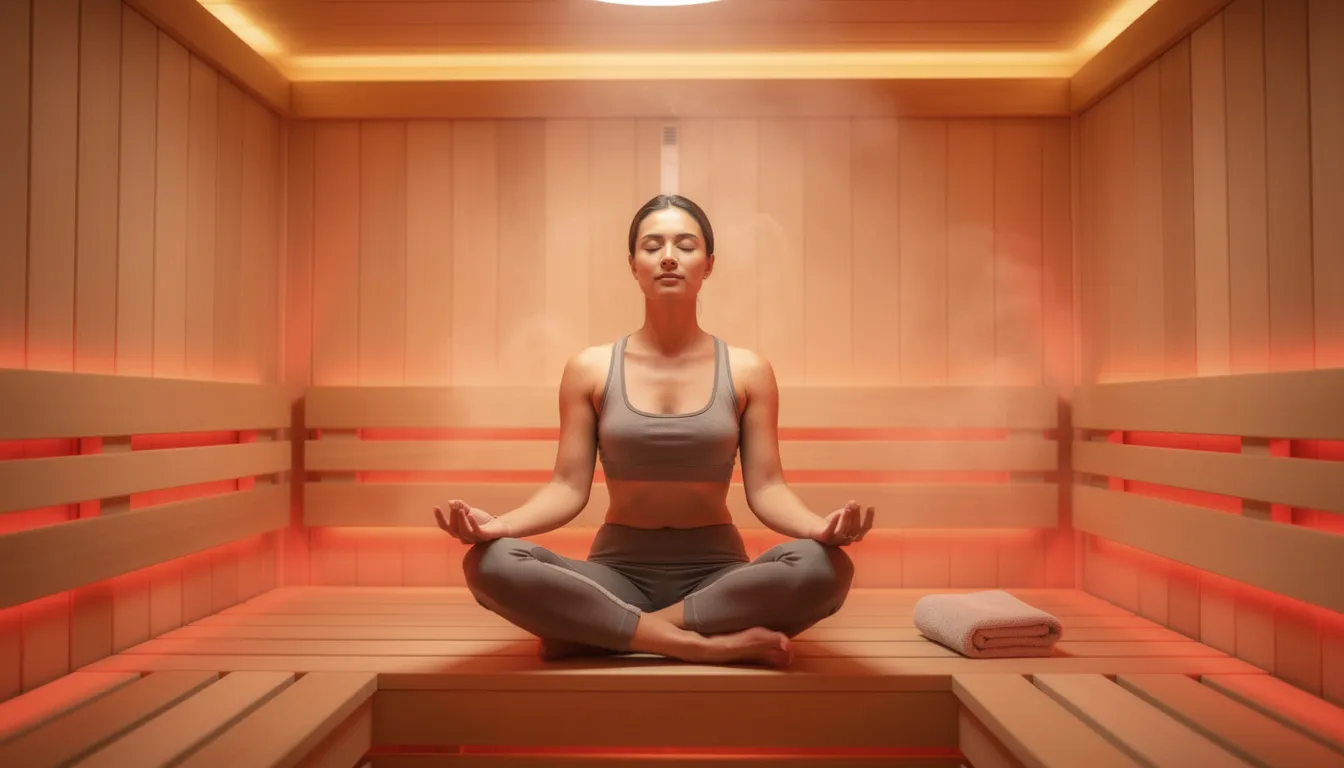
Combining passive heat stress from a sauna with active movement from yoga amplifies many known physiological benefits. Neither modality alone delivers what the fusion creates together.
Cardiovascular Effects
When you sit in a warm sauna, your heart rate increases, and blood vessels dilate through vasodilation. This improves circulation throughout your body, transporting nutrients to muscles and aiding in the removal of metabolic waste.
The cardiovascular demand is comparable to that of a brisk walk, sufficient to stimulate the system without exhausting it. Adding gentle yoga poses to this environment maintains that elevated circulation while directing blood flow to specific muscle groups.
The result is a form of active recovery that supports your cardiovascular system while you stretch.
Musculoskeletal Benefits
Heat causes muscles to relax and fascia to become more extensible. Stiffness decreases. The body becomes ready for stretching in ways that cold muscles resist.
Research confirms this mechanism. The pilot trial on sauna yoga measured lower body flexibility gains that were 80 percentage points higher in the heat group compared to the control.
This isn't a marginal improvement. It's a fundamental shift in what gentle stretching can accomplish when performed in a warm environment.
Nervous System and Stress Response
Sauna yoga supports the parasympathetic nervous system, helping your body shift from "fight or flight" to "rest and digest." Studies using EEG technology found that sauna exposure increases theta and alpha brainwaves.
These patterns link to relaxation and mental clarity. Participants reported feeling physically calm with sharper mental processing.
A 2022 study on hot yoga found that participants experienced significant boosts in mental well-being. They reported increased mindfulness, peacefulness, and life satisfaction.
The combination of heat and yoga can reduce cortisol levels, your primary stress hormone, more effectively than either practice alone. This promotes relaxation that extends well beyond the session itself.
Infrared vs Traditional Heat for Yoga
Infrared saunas utilize infrared energy and light to warm the body directly, rather than heating the surrounding air. This allows for therapeutic effects at 100 to 130°F, instead of the 150 to 180°F typically found in traditional steam-based rooms.
Traditional sauna sessions are typically limited to a short period due to the higher heat and steam. The gentler temperature of infrared saunas makes movement more comfortable and sustainable for longer sessions.
The infrared heat penetrates tissue more deeply. This supports a deeper sweat and helps reduce inflammation at the muscular level. When considering ‘infrared sauna vs traditional sauna’ for yoga, infrared generally wins for extended movement practices.
How Do You Design the Ultimate Sauna Yoga Session?
This section provides a practical template for a 20 to 40-minute sauna yoga recovery routine suitable for 2 to 4 sessions per week. Consistency matters more than intensity here.
Temperature Guidelines
|
Experience Level |
Recommended Temperature |
Notes |
|
Beginners |
95-105°F |
Start lower, build tolerance |
|
Intermediate |
105-110°F |
Comfortable for most |
|
Experienced |
110-115°F |
Monitor closely |
These temperatures are intentionally lower than those of typical sauna-only sessions. The goal is to create a warm, supportive environment for movement, rather than pushing your heat tolerance.
Sample Session Structures
Quick Post-Workout Reset (20 minutes)
- 3 to 5 minutes: Seated breathing and gentle neck/shoulder movements
- 10 to 12 minutes: Low-impact standing and floor poses
- 3 to 5 minutes: Savasana and breath awareness
- Optional: 2-minute cool shower
Deep Recovery Night Routine (35 to 40 minutes)
- 5 minutes: Seated breathing, gentle neck rolls, shoulder circles
- 20 minutes: Extended floor-based poses with longer holds
- 10 minutes: Restorative poses and mindfulness
- 5 minutes: Cool plunge or cold shower, then rest
Integration with Training
The best results are achieved by combining sauna yoga with consistent weekly training. Consider this framework:
- Strength workouts 3x per week (Monday, Wednesday, Friday)
- Sauna yoga on active recovery days (Tuesday, Thursday, or Sunday)
- Cold plunge after sauna yoga sessions for contrast therapy
This approach allows your body to work hard during training while utilizing heat and movement to accelerate recovery between sessions.
What Are the Best Sauna-Friendly Yoga Poses?
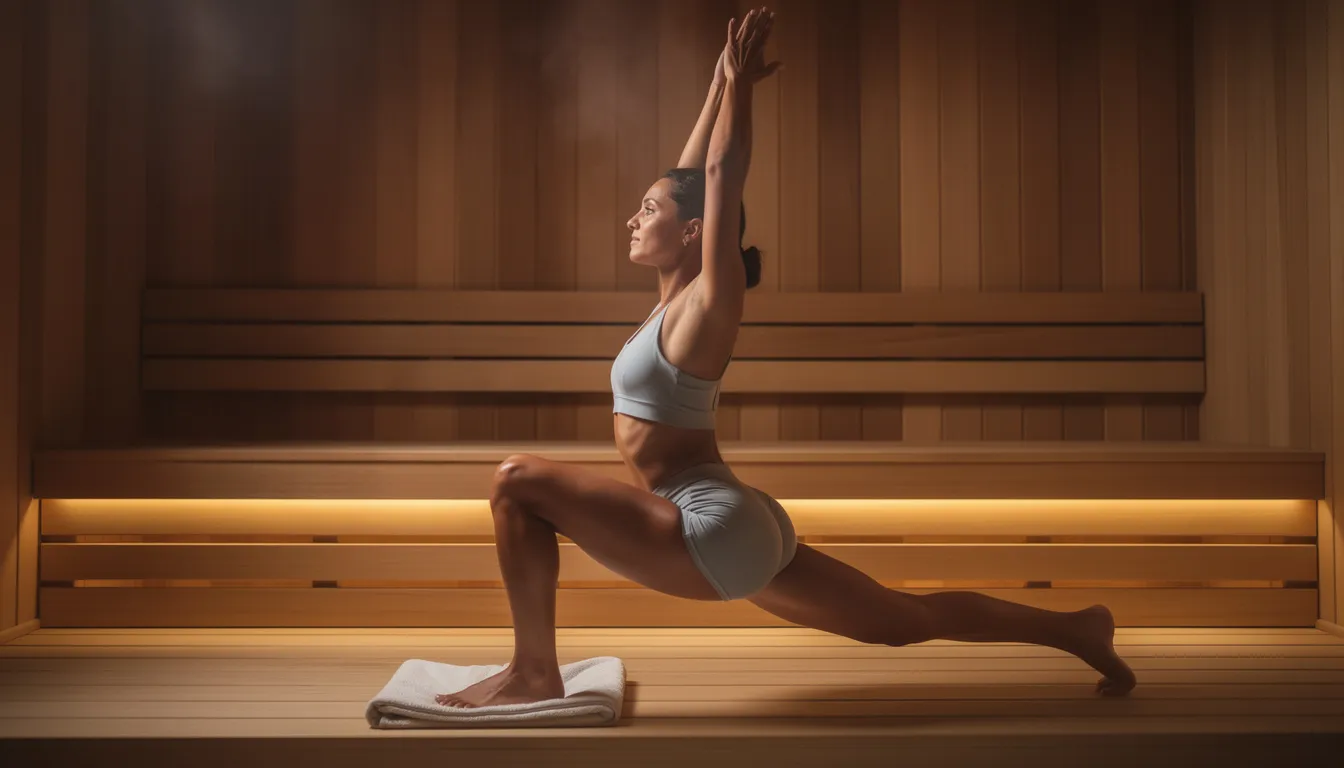
Not all yoga poses are ideal in a warm, confined space. Many of the recommended poses are rooted in traditional yoga, ensuring both safety and authenticity. The focus here is on simple, joint-friendly, low-risk movements that support recovery and rehabilitation.
Recommended Poses for Heat Environments
Tadasana (Mountain Pose): Stand tall with feet hip-width apart, arms relaxed at sides. Focus on posture, breath awareness, and grounding. Hold for 30 to 60 seconds while establishing your breath rhythm for the session.
Cat-Cow (Marjaryasana-Bitilasana): On hands and knees, alternate between arching your back (cow) and rounding it (cat). This gentle spinal mobility sequence helps warm up the spine and release tension. Move with your breath for 8 to 10 cycles.
Low Lunge (Anjaneyasana): Step one foot forward into a lunge with the back knee on a folded towel for padding. This opens the hip flexors, which become tight from sitting. Hold each side for 45 to 60 seconds, breathing into the stretch.
Seated Forward Fold (Paschimottanasana): Sit with legs extended, keeping knees slightly bent. Fold forward from the hips, reaching toward your feet. This targets hamstrings and lower back, areas that respond particularly well to heat. Hold for 60 to 90 seconds.
Supported Bridge Pose (Setu Bandhasana): Lie on your back, knees bent, feet flat. Lift your hips and slide a folded towel under your lower back for support. This gentle back extension opens the chest and stretches abdominal organs. Hold for 60 seconds.
Reclined Figure-Four Stretch: Lying on your back, cross one ankle over the opposite knee and gently pull the bottom thigh toward your chest. This releases the glute and piriformis. Hold each side for 45 to 60 seconds.
Savasana (Corpse Pose): Lie flat on your back, arms at sides, palms up. Close your eyes and breathe naturally. This closing integration pose enables your nervous system to fully absorb the benefits of the session. Rest for 3 to 5 minutes.
Poses to Avoid in Heat
Limit balance-intensive or inversion poses in the sauna environment. Avoid headstands and shoulder stands, standing balances like Tree Pose or Warrior III, and deep backbends like Wheel Pose.
The combination of slippery surfaces, elevated heart rate, and reduced stability in heat makes these poses unnecessarily risky.
Adapting for Bench-Style Saunas
Many infrared sauna indoor 2-person units feature bench-style seating rather than open floor space. For these units, modify your yoga session to include seated spinal twists, seated forward folds with feet on the floor, and gentle neck stretches and shoulder rolls.
Use supported hip stretches with one foot crossed over the opposite knee. You don't need a full yoga mat to access the benefits. A towel on the bench provides enough surface for an effective session.
What Are the Essential Safety Guidelines?
Safety is non-negotiable when combining physical activity with elevated temperatures. The warm environment amplifies both benefits and risks. Proper breathing technique is crucial to yoga, especially in a hot sauna environment.
Session Duration and Hydration
Begin with 10 to 15-minute sessions. Build up gradually over 2 to 3 weeks. The maximum recommended duration is 25 to 30 minutes for most people.
Drink plenty of water, a full glass 30 to 60 minutes before your session. Keep water within arm's reach during practice. Hydrate again immediately after finishing.
Consider adding electrolytes for sessions longer than 20 minutes.
Timing Considerations
Avoid sauna yoga within 1 to 2 hours of a large meal. Never practice after significant alcohol consumption. Evening sessions often work best for sleep support.
Who Should Seek Medical Clearance
Certain groups should consult a physician before practicing sauna yoga. Pregnant individuals need medical approval. People with uncontrolled high blood pressure should get clearance.
Individuals with serious cardiovascular disease should consult a physician. Those with a history of heat intolerance or heat-related medical conditions should consult a healthcare professional for guidance.
Individuals taking medications that affect heart rate or blood pressure need medical approval. Medical guidance on sauna safety emphasizes proper screening.
Warning Signs to Stop Immediately
Exit the sauna if you experience dizziness or lightheadedness, nausea, headache, chest pain, extreme shortness of breath, or feeling faint.
These symptoms indicate your body is under more stress than it can handle. Rest, hydrate, and cool down immediately.
Equipment and Environment
Use non-slip mats or towels designed for high-heat environments. Wear breathable, sweat-wicking clothing or light swimwear. Ensure adequate ventilation in your sauna space.
Keep the door easily accessible for quick exits. Quality units feature low-EMF heaters, non-toxic woods, and precise temperature controls.
How Do You Build a Home Sauna Yoga Sanctuary?

Transforming a spare room, garage corner, or patio into a small home wellness sanctuary is more accessible than most people realize. The key is choosing the right equipment and setting up a space that invites consistent use.
Choosing a Sauna Model for Yoga
When selecting a sauna for yoga practice, consider:
|
Factor |
What to Look For |
|
Interior dimensions |
Enough space for seated and reclining poses |
|
Door configuration |
Easy entry/exit without obstruction |
|
Bench design |
Flat surfaces or removable for floor space |
|
Electrical requirements |
Compatible with your home's capacity |
|
Temperature control |
Digital controls for precise settings |
Equipment Solutions
Full-Spectrum Infrared Cabins: These provide precise heat control and gentle, deep warmth ideal for extended yoga sessions. Infrared light warms your body directly, allowing for comfortable movement at lower temperatures.
Digital controls let you dial in exact temperatures for repeatable sessions. The best home sauna brands 2026 offer integrated temperature management systems.
Traditional Outdoor Saunas: For those who prefer higher heat, traditional saunas are well-suited for shorter, yoga-inspired stretching sessions. The steam environment is more intense, so keep yoga sequences simpler and sessions shorter (15-20 minutes).
Portable Sauna Blankets: These blankets are ideal for floor-based restorative poses, such as lying in the blanket while holding gentle stretches or engaging in breathing exercises. Avoid standing or balancing poses on a blanket. They're designed for stillness.
Enhancing Your Environment
Small additions elevate the experience. Add dimmable lights for relaxation and red light therapy panels for additional skin and recovery benefits.
Include a small waterproof speaker for calming music. Install hooks or shelves for towels and water bottles. Store a dedicated yoga mat or thick towel nearby.
Creating a Contrast Therapy Ritual
The combination of heat, movement, and cold represents the gold standard for recovery among biohackers and athletes. Structure your ritual:
- Warm up in the sauna (3 to 5 minutes)
- Move through 10 to 20 minutes of gentle yoga
- Cool down with a brief cold plunge or cool shower (2 to 5 minutes)
Cold exposure constricts blood vessels, reduces perceived soreness, and leaves the body feeling energized. The outdoor infrared sauna, paired with a cold plunge, creates a comprehensive recovery system.
How Do You Integrate Sauna Yoga Weekly?
Sauna yoga works best as a recurring habit rather than an occasional treat. The cumulative benefits (improved flexibility, reduced stress, better sleep, faster recovery) build over weeks and months of consistent practice.
Sample Weekly Schedules
For Strength Athletes:
- Monday: Strength training
- Tuesday: Sauna yoga (25 min)
- Wednesday: Strength training
- Thursday: Sauna yoga (25 min)
- Friday: Strength training
- Saturday: Active rest
- Sunday: Sauna yoga (35 min, deep recovery)
For Busy Professionals:
- Short 20-minute evening sessions 2 to 4 nights per week
- Focus on stress relief and sleep support
- Pair with a 5-minute cool shower to transition into evening rest
For Endurance Athletes:
- Gentle post-long-run sessions 1 to 2 times per week
- Focus on hip flexors, hamstrings, and lower back
- Use heat to ease joint and muscle tension accumulated from high-volume training
Adjusting for Seasons and Training Load
During hotter months or after particularly intense training blocks, dial back your sauna yoga. Use shorter sessions (15 to 20 minutes), lower temperatures (95 to 100°F), and fewer sessions per week.
Prioritize how your nervous system feels the day after. If you wake up groggy or depleted, you're overdoing it. The goal is to feel restored, not drained.
Tracking Progress
Track simple metrics over 4 to 6 weeks to notice measurable improvements. Monitor your sleep quality (do you fall asleep faster and wake less often?).
Assess perceived soreness (are you recovering better between workouts?). Evaluate flexibility (can you touch your toes more easily, sit cross-legged more comfortably?).
Notice stress levels (do you feel calmer during stressful days?). These markers reveal whether your sauna yoga practice is delivering the benefits you're seeking.
Frequently Asked Questions
Can I do sauna yoga every day safely?
Most healthy adults can practice gentle sauna yoga 3 to 5 times per week without issue. Daily sessions are possible but should be shorter (15 to 20 minutes) and less intense. Listen to your body and alternate between 30-minute sessions that are deeper and restorative. If you feel depleted rather than refreshed, consider reducing the frequency of your sessions. Recovery practices should support your immune system, rather than taxing it. The 2-3-person home sauna benefits work best with consistent moderate use rather than daily intensive sessions.
Is an infrared or a traditional sauna better for yoga practice?
Infrared units are usually more comfortable for movement. The drier air and lower temperatures (100 to 115°F) allow longer sessions without overheating. Traditional saunas feel more intense due to higher heat and humidity, making them better suited for shorter, simpler stretching rather than extended yoga styles. When comparing infrared saunas to traditional saunas for movement practices, infrared generally provides better conditions for extended yoga sessions due to its gentle, penetrating heat.
Do I need yoga experience to try sauna yoga?
Not at all. Beginners can start with very basic poses, such as seated breathing, gentle twists, cat-cow, and supported forward folds. The focus is on slow, mindful movement rather than complex flows. If you can breathe and move gently, you can practice yoga in a sauna. The heat does much of the work in relaxing your muscles. You're simply guiding the body through positions that take advantage of that warmth.
Should I do sauna yoga before or after workouts?
After-workout sessions are generally better for muscle recovery and promoting flexibility gains. The heat helps your body process the exercise you just completed and reduces inflammation. Pre-workout sauna yoga can serve as a warm-up, but keep it short (10 to 15 minutes) and at lower temperatures (95 to 100°F). Avoid heavy lifting or intense physical activity immediately after a long, hot session. Your body works hard during heat exposure and needs time to return to normal.
How does cold plunging fit into sauna yoga fusion?
A simple protocol works best: warm up in the sauna, then move through 10 to 20 minutes of gentle yoga, followed by a brief cold plunge or cool shower (2-5 minutes). Cold exposure constricts blood vessels after heat has dilated them, creating a "pump" effect that may reduce perceived soreness and leave you feeling energized. This contrast therapy approach (heat, movement, cold) is popular among athletes and biohackers focused on recovery optimization.
What is the ideal temperature for beginners practicing sauna yoga?
Beginners should start at 95 to 105°F for their first several sessions. This temperature range allows comfortable movement while your body adapts to exercising in heat. Build up gradually over 2 to 3 weeks before increasing the temperature. Never rush adaptation. The health benefits of an infrared sauna accumulate best when you progress safely and sustainably, without overwhelming your cardiovascular system.
How long should a typical sauna yoga session last?
For beginners, start with 10- to 15-minute sessions, including both warm-up and cool-down. Intermediate practitioners can extend to 20-25 minutes. Experienced users may practice for 30 to 35 minutes, ensuring proper hydration and heat management to prevent injury. Quality matters more than duration. A focused 20-minute session delivers better results than a rushed or uncomfortable 40-minute session. Always exit if you feel dizzy, nauseous, or excessively fatigued.
What should I wear for sauna yoga practice?
Wear minimal, breathable clothing, such as light athletic wear or swimsuits. Natural fabrics, such as cotton, are more effective than synthetic materials that trap heat. Many practitioners prefer minimal coverage to allow maximum heat contact with skin and unrestricted movement. Whatever you choose, ensure it's non-restrictive and won't become dangerously hot against your skin. Avoid wearing jewelry and accessories that can heat up or interfere with your poses.
Transform Your Recovery with Sauna Yoga Fusion
The combination of sauna heat and gentle yoga yields recovery benefits that surpass those of either practice alone. Whether you're an athlete seeking faster muscle recovery, a professional managing stress, or someone exploring longevity practices, this combination delivers measurable results with consistent practice.
Start with simple 15- to 20-minute sessions twice a week. Focus on basic poses and proper hydration. Build gradually as your heat tolerance and flexibility improve.
The equipment is straightforward. The practice is accessible. The benefits accumulate with time and consistency. Your body deserves this level of intentional care. Visit us today to explore home sauna options designed for movement practices or for expert guidance on creating your perfect sauna yoga sanctuary at home.