

Are you concerned about electromagnetic field exposure in your home sauna? As awareness of EMF grows in 2026, more wellness-focused consumers are asking pointed questions about the electromagnetic radiation emitted by their home spa equipment.
This comprehensive guide explains everything you need to know about low-EMF infrared sauna standards, testing methods, and how HomeSauna designs products that prioritize your home sauna wellness while minimizing electromagnetic field exposure.
Key Takeaways
- The year 2026 marks a turning point for EMF awareness in the home sauna industry.
- Industry standards for saunas have shifted towards stricter voluntary thresholds as of 2026, despite high regulatory limits, to better protect public health.
- In 2026, most international EMF limits (ICNIRP 2020, IEEE C95.1-2019, EU Directive 2013/35/EU) still focus on avoiding short-term heating and nerve stimulation, not subtle long-term biological effects.
- The general trend in 2026 is towards transparent third-party testing that verifies ultra-low EMF designation for saunas.
- Well-designed low-EMF infrared saunas and traditional models typically measure in the single-digit milligauss (mG) range where you sit.
- This is far below occupational limits but still worth minimizing for daily use, especially if you prioritize a low-toxicity lifestyle.
- HomeSauna designs all its infrared and traditional models to keep user-level EMF as low as reasonably achievable through shielded wiring, optimized heater placement, and quality power components.
- By choosing the best infrared sauna for home use and following simple habits—maintaining distance from heaters, considering session length, and switching off nearby wireless devices—you can enjoy sauna benefits while staying within conservative EMF practices.
What Is a Low-EMF Sauna?
Low-EMF saunas are specifically engineered to create a relaxing, rejuvenating environment while minimizing your exposure to electromagnetic radiation. Unlike many traditional saunas, which can emit higher levels of EMF from their electrical components, low-EMF models use advanced shielding, optimized wiring, and carefully selected materials to reduce EMF exposure to the lowest possible levels.
This is especially important for individuals concerned about the potential health risks associated with EMF, such as sleep disturbances, immune system disruption, and even increased cancer risk over time.
By choosing a low-EMF sauna, you're taking a proactive step to reduce EMF exposure in your wellness routine, allowing you to enjoy all the benefits of heat therapy without the added worry of electromagnetic radiation.
As awareness of these potential health risks grows, low-EMF saunas have become a popular choice for those seeking to balance relaxation, recovery, and long-term health in their luxury home sauna experience.
What EMF Standards Actually Cover in 2026?
When people talk about "EMF standards" in 2026, they're usually referring to guidelines from organizations like the International Commission on Non-Ionizing Radiation Protection (ICNIRP), the Institute of Electrical and Electronics Engineers (IEEE), and various national agencies. These exposure standards form the basis for regulatory compliance.
These standards were written primarily for power lines, industrial equipment, and wireless technology—not specifically for saunas.
The key public-exposure reference documents relevant in 2026 include:
- ICNIRP Guidelines for Low-Frequency Fields (2010, still current).
- ICNIRP RF Guidelines (2020).
- IEEE C95.1-2019.
These set exposure limits are designed to prevent nerve stimulation and tissue heating from acute, high-level exposures. International Reference Limits from the ICNIRP and WHO allow for EMF exposure up to 2,000 mG, but these limits are designed to prevent immediate effects rather than address long-term sensitivity or non-thermal effects.
Low-frequency magnetic fields in homes are usually expressed in microtesla (µT) or milligauss (mG), with 1 µT equaling 10 mG. Typical precautionary indoor targets used by building biologists and wellness practitioners are less than 1–3 mG in occupied areas, even though official limits from ICNIRP allow up to 2000 mG (200 µT) for prolonged exposure to 50/60 Hz fields.
That's a massive gap between what's legally permitted and what EMF-conscious consumers prefer.
In North America, federal agencies such as the FCC and Health Canada's Safety Code 6 focus primarily on radiofrequency exposure from wireless devices, such as cell phones and Wi-Fi routers. Most sauna EMF, however, falls into the extremely low frequency (ELF) band generated by mains electricity at 50/60 Hz and its harmonics.
This distinction matters because the biological effects and safety limits differ between ELF and RF fields. The U.S. Federal Communications Commission (FCC) has not updated its wireless radiation safety limits since 1996, and these were designed primarily to protect against heating effects rather than biological impacts from long-term exposure.
No major regulator in 2026 has issued sauna-specific EMF rules. This means responsible brands like HomeSauna must voluntarily design products to stay well below general public guidelines while aligning with best-practice low-EMF benchmarks used by independent testers.
It's a proactive approach that serves customers who want more than just regulatory compliance.
What Are the EMF Profiles of Different Sauna Types in 2026?
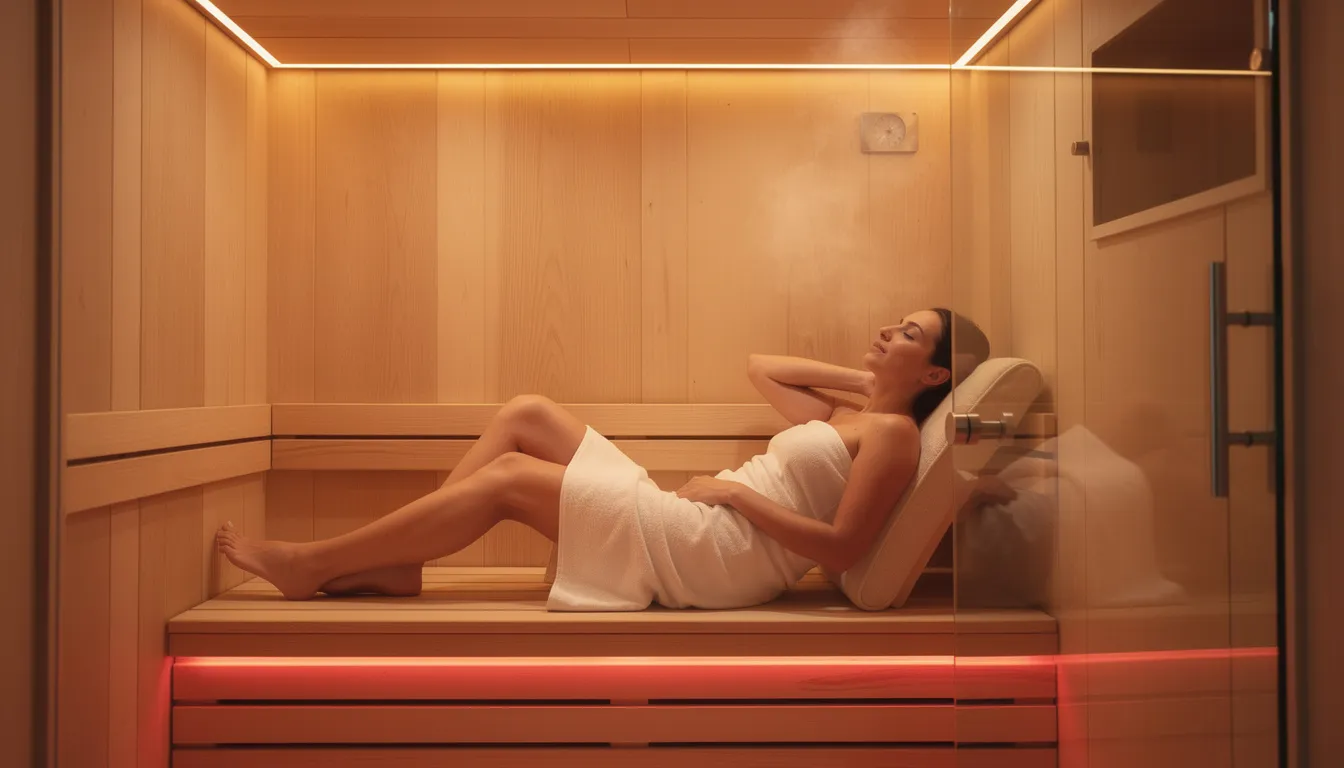
EMF exposure varies significantly by sauna category. Whether you're considering traditional saunas, steam rooms, infrared sauna indoor 2-person models, full-spectrum units, or portable sauna blankets, understanding the electromagnetic field exposure profile of each type helps you make an informed decision.
HomeSauna offers both traditional and infrared options, all engineered for low user-level EMF. The key insight is that independent reviewers in 2024–2026 commonly find higher EMF near older infrared heaters and poorly routed wiring, whereas modern low-EMF designs perform much better at the bench where you actually sit.
High-quality carbon heater panels naturally emit lower EMF compared to older ceramic heater types. Premium models aim for near-zero EMF levels below 0.5 mG at typical seating positions.
For all sauna types, distance from heating elements and quality of electrical design are the primary drivers of real-world EMF levels—more so than simply choosing "infrared vs traditional" alone.
2026 market trends favor carbon panels with advanced shielding over older ceramic heaters that emit higher EMF levels.
Traditional Dry Saunas (Electric and Wood-Fired)
- Wood-burning traditional saunas are effectively EMF-free at the bench because they rely on combustion heat.
- The only electric and magnetic fields present come from optional circulation fans or lighting fixtures, which are typically minimal.
- Electric traditional heaters produce ELF magnetic fields close to the stove and supply cables.
- However, readings at typical seating distances—about 2–3 feet away from the heater—are usually in the low single-digit mG range when wiring is routed correctly.
HomeSauna’s electric traditional models use twisted, shielded feeds and route cables away from the main seating area to keep user exposure as low as reasonably achievable. This attention to wiring pathways makes a measurable difference in what you'll experience during sauna sessions.
Customers who are highly EMF-sensitive can choose layouts with benches positioned farther from the heater and control box. The principle is simple: step back, get less EMF.
Infrared and Full-Spectrum Saunas
Infrared panels run on electricity, so their controls and wiring generate ELF EMF even though the infrared light itself is non-ionizing radiation and not the primary EMF concern. The electromagnetic radiation comes from the power delivery system, not from the therapeutic infrared technology that provides radiant heat.
Carbon fiber heaters provide more uniform heat with significantly lower EMF output compared to traditional ceramic or metal rod heaters.
Typical ranges reported by independent testers in 2025–2026 show:
- Legacy infrared units can exceed 10 mG near heating panels.
- Modern low-EMF infrared sauna models target less than 3 mG at the head and torso when seated.
- Some ultra-low EMF and near-zero designs achieve readings below 0.5 mG through advanced shielding techniques.
Full-spectrum models (incorporating near-, mid-, and far-infrared wavelengths) add light sources such as quartz or halogen emitters. Despite this complexity, they should still be engineered to keep ELF magnetic fields very low at user positions.
HomeSauna’s full-spectrum and far infrared saunas use shielded cabling, balanced heater circuits, and careful panel placement to keep control electronics away from the head and heart areas.
When shopping for infrared saunas in 2026, look for published EMF measurements taken at realistic user positions—seat, back, and calves—rather than only "at panels." Measurements right on the heater surface are less meaningful than readings at 6–18 inches, where your body actually rests.
Portable Infrared Saunas and Sauna Blankets
Portable tents and sauna blankets present a unique challenge because the body is in close contact with heaters and wiring. This proximity can lead to higher localized EMF if the product isn't carefully designed with shielding and proper wire routing.
In 2026, cautious users should seek portable solutions with tested readings below 3 mG at the torso and head. Avoid products where EMF meter readings spike near the zipper, controller cord, or foot region.
HomeSauna focuses on low-EMF engineering even in compact home solutions by:
- Keeping control boxes off the body.
- Using shielded harnesses.
- Routing wiring away from the chest and neck.
One practical note: portable saunas should always be plugged into properly grounded outlets. Avoid using power strips or extension cords, which can introduce stray fields and defeat the grounding that helps minimize electric field exposure.
How Is EMF Measured in Saunas (and What's Considered "Low" in 2026)?
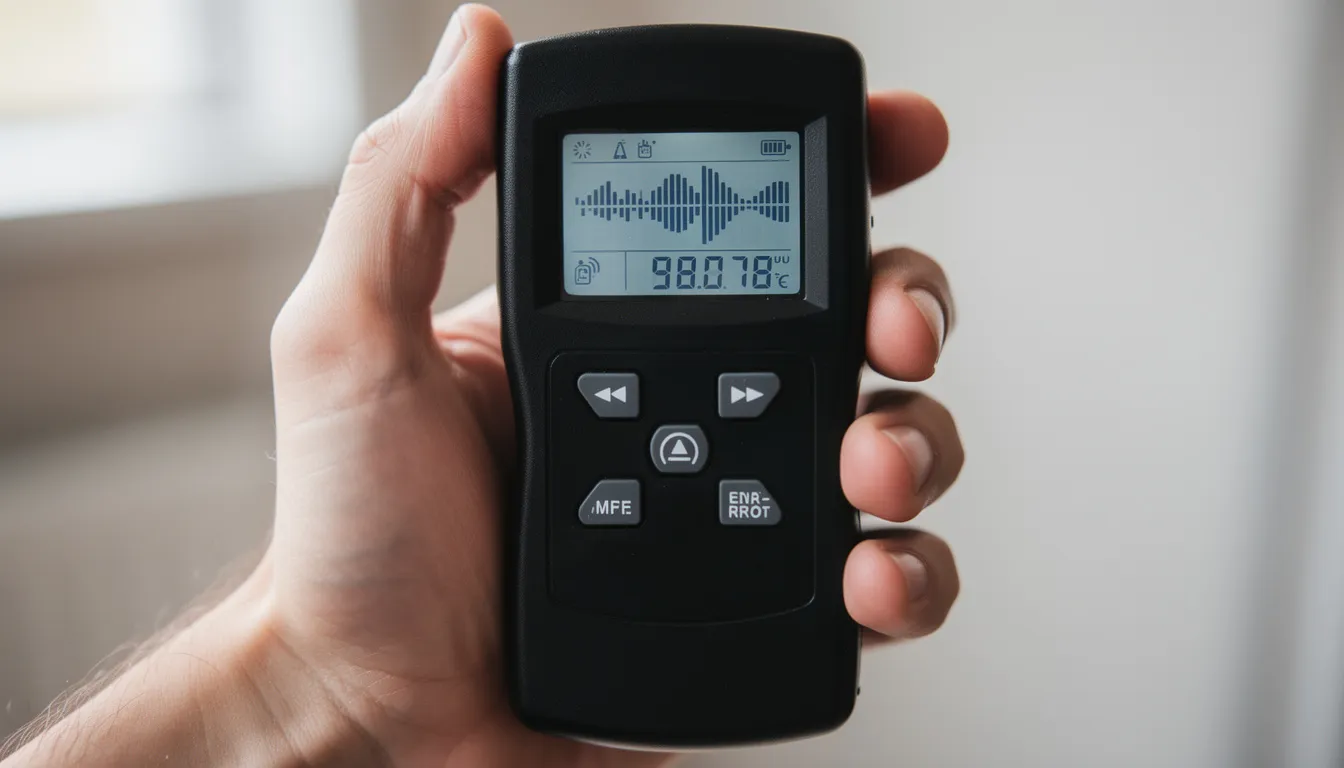
Understanding measurement basics helps you evaluate manufacturer claims and verify conditions in your own home. The key quantities are:
- Magnetic fields (measured in milligauss or microtesla).
- Electric fields (measured in volts per meter).
- Radiofrequency power density for wireless signals.
Sauna EMF focus is mostly on ELF magnetic fields from power wiring and heating elements.
A typical modern tri-field meter—such as the TriField TF2 or Cornet ED88T—measures all three field types. Home buyers can verify manufacturer claims by taking readings at the seat, backrest, and around the head area while the sauna is at operating temperature.
Testing with the sauna cold won't give you accurate results since the heaters must be drawing power to generate their characteristic fields.
Many low-EMF sauna brands in 2026 aim for less than 3 mG at user positions as an informal benchmark. This threshold aligns with precautionary standards used in Sweden (2.5 mG for prolonged residential exposure) and Switzerland (a recommendation of under 1 mG), even though general public guidelines from ICNIRP permit 2000 mG for ELF fields.
Point measurements right on the heater surface are less meaningful for user safety than readings at 6–18 inches from panels and at a typical sitting posture inside the cabin. Your head, heart, and torso positions during normal use are what matter most for cumulative exposure assessment.
HomeSauna relies on third-party lab testing where appropriate and performs in-house meter checks under realistic installation conditions.
At-Home EMF Testing Routine for Your Sauna
Testing your sauna at home follows a straightforward workflow:
- Step 1: Measure ambient EMF in the room with the sauna completely off—this establishes your baseline from household wiring and nearby electrical devices.
- Step 2: Repeat the measurement with the sauna powered on but empty, allowing it to reach full operating temperature.
- Step 3: Measure again while sitting in your usual position to capture realistic exposure levels.
Test at different heights corresponding to your head, heart, lap, and calves. Also check near control panels, door areas, and any spots where wiring enters the cabin.
Record both maximum readings (brief spikes) and typical readings (stable values during normal operation) for comparison to manufacturer specifications.
For accurate results, turn off nearby Wi-Fi routers, cordless phone bases, cell towers (if you have a femtocell), and large appliances during tests. This isolates the sauna's contribution from other household EMF sources.
If readings are unexpectedly high, check for faulty wiring, ungrounded outlets, or non-original accessories. Aftermarket color-therapy kits or audio systems power-tapped from control wiring can introduce new EMF hotspots that weren't present in the original design.
What Are Current EMF Guidelines vs. Precautionary Approaches?
There's an ongoing tension between official EMF limits—which are relatively high and focused on preventing acute effects—and the more cautious practices favored by the biohacking and wellness communities. Understanding this gap helps you make informed choices about your outdoor or indoor infrared sauna.
ICNIRP and FCC/IEEE exposure limits for ELF magnetic fields in 2026 are orders of magnitude higher than the single-digit mG levels targeted by low-EMF sauna brands. Official limits are designed to prevent immediate nerve stimulation and tissue heating with substantial safety margins.
They don't specifically address potential risks from prolonged exposure at much lower levels. Research on long-term exposure, including studies on mobile phone use and rats exposed to EMF, has shown various biological effects:
- High-EMF environments can cause oxidative stress, damaging cells, tissues, and DNA.
- Prolonged exposure to high EMF levels may interfere with the brain's nervous system, leading to dizziness and memory loss.
- Research suggests a potential link between long-term exposure to EMFs and decreased fertility in both men and women.
- High-intensity EMF exposure is also linked to health risks including dizziness, headaches, and sleep disturbances.
WHO-sponsored systematic review efforts on RF-EMF health effects continue through 2024–2026. The International Agency for Research on Cancer (IARC) classified radiofrequency radiation as "possibly carcinogenic" (Group 2B) based on limited evidence, though this classification relates more to radiofrequency electromagnetic fields from cell phones than to ELF from sauna wiring.
HomeSauna does not claim that saunas cure diseases or that EMF is definitively harmful at levels below regulatory safety limits. Instead, the brand emphasizes "as low as reasonably achievable" design because many customers want to minimize any unnecessary exposure.
This precautionary approach aligns with how environmental health sciences professionals often recommend reducing exposure where practical, even without definitive proof of harm.
HomeSauna designs products to comfortably meet or exceed mainstream safety standards while also aligning with stricter wellness community expectations for low EMF.
How Often and How Long Should You Use a Sauna Considering EMF?
Most healthy adults use infrared or traditional saunas 3–5 times per week for 15–30 minutes per session. EMF-conscious users may prefer the lower end of this range, especially when starting out or if they experience EMF-sensitivity symptoms.
Shorter sessions still deliver meaningful health benefits while reducing total exposure time.
Cumulative exposure from a low-EMF sauna used for 20 minutes is typically far less than all-day exposure to wireless technology, phones, and office electronics. Your daily life involves constant contact with electrical devices, and a properly designed sauna adds relatively little to your total electromagnetic field exposure budget.
Listen to your body during and after sauna sessions. If you experience headaches, sleep disturbances, or unusual sensations, you can:
- Shorten session length.
- Sit farther from heaters.
- Test EMF levels with a meter to identify any hotspots.
People with medical implants such as pacemakers or defibrillators should consult their physician and device manufacturer about both heat and EMF before using any sauna. Even low-EMF models warrant medical clearance because implanted electronics may be affected by both thermal stress and electromagnetic interference.
What Are the Health Benefits of Low-EMF Saunas?
Low-EMF saunas deliver all the classic health benefits of sauna sessions—detoxification, weight management, improved circulation, and glowing skin—while keeping EMF exposure to a minimum.
The gentle infrared heat in these saunas penetrates deeply, encouraging your body to sweat out toxins and supporting natural detox processes. Regular sessions can help:
- Boost your metabolism and promote calorie burn.
- Enhance blood flow to reduce inflammation and support faster recovery after exercise or stress.
- Stimulate collagen production, which can smooth fine lines and improve skin tone for a more youthful appearance.
With low-EMF technology, you can enjoy these wellness benefits with added peace of mind, knowing your sauna sessions are supporting your health without unnecessary electromagnetic exposure.
What Does EMF Research Show?
A growing body of EMF research highlights the importance of minimizing exposure, especially in environments where you spend significant time, like saunas. Studies have found statistically significant associations between radiofrequency radiation and increased cancer risk in animal models, raising concerns about the long-term effects of EMF exposure on human health.
The Environmental Health Sciences community has also explored the impact of EMF on cognitive functions, with some studies suggesting that prolonged exposure may impair cognitive abilities and increase the risk of neurodegenerative diseases.
While the scientific community continues to investigate these health effects, the evidence points to a prudent approach: reducing EMF exposure wherever possible. By choosing a low-EMF sauna, you're aligning with the latest findings and recommendations to protect your cognitive functions and overall well-being from the potential adverse health effects of electromagnetic radiation.
How Does HomeSauna Design for Low EMF in 2026?
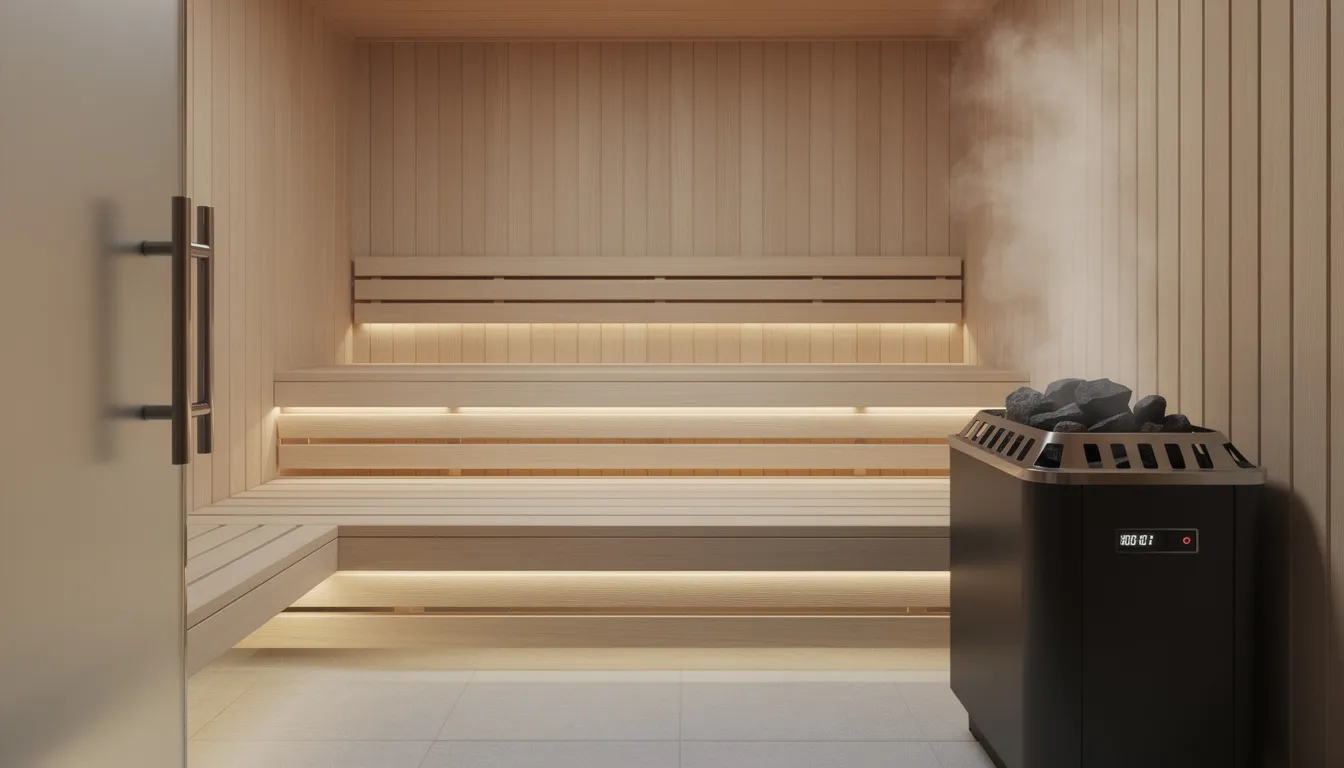
HomeSauna serves wellness-focused homeowners, athletes recovering from training, and biohackers optimizing their biology. For these customers, low EMF isn't a marketing afterthought—it's a core engineering priority built into every product from initial design through final quality control.
The brand employs several high-level design strategies to reduce EMF exposure:
- Shielded and twisted-pair wiring runs minimize stray magnetic fields.
- Power electronics are physically separated from seating areas so the control box and power supply don't sit directly behind your head.
- Modern heater technologies deliver efficient infrared or convective heat while minimizing electromagnetic radiation in the ELF range.
Material selection extends this wellness philosophy beyond EMF. HomeSauna uses sustainably sourced wood, low-VOC finishes, and high-quality power supplies to avoid additional chemical and electrical stressors.
Plug-and-play infrared models work safely on standard household circuits while keeping leakage fields low. Larger traditional or outdoor infrared sauna units come with clear installation guidance developed to maintain low EMF performance.
HomeSauna continuously reviews evolving scientific literature from sources like the National Institute of Environmental Health Sciences and international guidance documents. This commitment ensures that 2026 and future product lines stay aligned with the most up-to-date understanding of EMF and human health.
HomeSauna Infrared, Full-Spectrum, and Traditional Lines
The HomeSauna product lineup spans:
- Indoor infrared cabins.
- Full-spectrum luxury models.
- Outdoor traditional saunas.
- Compact portable options.
Each category incorporates low-EMF design elements appropriate to its configuration and intended use.
In infrared units, heater layout keeps panels parallel to the body but not directly behind the head—a deliberate choice that reduces exposure to the brain and eyes. Low-EMF heaters use balanced current configurations that cancel out magnetic field emissions.
Optional add-ons like red light therapy modules or sound systems are integrated with attention to wiring pathways. These accessories don't introduce new high-EMF hotspots near the user because their power feeds are routed through the same shielded pathways as the primary heating panels.
What Practical Tips Reduce EMF in Your Sauna Space?
Regardless of which sauna brand you choose, simple installation and use practices can meaningfully reduce your exposure to electromagnetic fields. These steps work for any home sauna and complement the built-in low-EMF engineering of quality products.
Installation Location
- Locate your sauna away from breaker panels, major appliance walls, and Wi-Fi routers.
- Avoid putting your sauna back-to-back with a laundry room full of motors and inverters.
- The electrical infrastructure on the other side of the wall can contribute to ambient fields inside your sauna space.
Before Each Session
- Turn off wireless routers, Bluetooth speakers, and nearby smart devices to minimize RF fields.
- Use wired audio where possible for music or guided meditations.
- Keep phones outside the cabin or switch them to airplane mode.
- Ensure proper grounding and use of a dedicated circuit for larger units.
Optimizing Position, Posture, and Accessories
Simple adjustments can further reduce exposure without sacrificing therapeutic benefits:
- Sit 12–24 inches away from heating panels.
- Don't lean directly on heater guards.
- Choose benches that allow slight repositioning.
- Avoid aftermarket accessories that plug into random outlets or tap into the control box without clear EMF testing.
- Use natural, non-metallic accessories like wooden backrests and cotton towels.
Sensitive users can experiment with shorter, cooler sessions and gradually build tolerance while tracking their feelings. Treating EMF reduction as one piece of an overall wellness strategy—alongside clean air, proper hydration, and quality sleep—yields the best results.
How Do You Purchase a Low-EMF Sauna in 2026?
Selecting the right low-EMF infrared sauna for your home involves a few key considerations to ensure both safety and satisfaction:
- Look for saunas that advertise ultra-low EMF or near-zero EMF output.
- Check for third-party certifications or compliance with recognized safety standards, such as those from the International Commission on Non-Ionizing Radiation Protection (ICNIRP).
- Pay attention to the type of heating panels used—some technologies naturally emit less EMF than others.
- Reputable manufacturers will provide detailed information about their low-EMF heaters and overall design.
- Read customer reviews and research the manufacturer's reputation.
By prioritizing these factors, you can invest in a zero-EMF or ultra-low EMF sauna that offers a safe, relaxing, and future-proof addition to your wellness routine.
Ready To Explore Low-Emf Sauna Options?
Visit HomeSauna today to explore our low-EMF saunas with confidence, knowing you're choosing products engineered for minimal electromagnetic field exposure. You can also contact our team for detailed EMF specifications and personalized recommendations.
Frequently Asked Questions
What EMF level should I aim for inside a home sauna in 2026?
While official public exposure limits allow up to 2000 mG for ELF magnetic fields, many informed users and low-EMF brands target less than 3 mG at the head and torso in the seated position. Occasional brief peaks are considered acceptable if the average reading during your session remains low.
There is no universal "safe vs unsafe" cutoff agreed upon by all scientists. However, keeping levels in the same range as typical low-EMF living spaces—below 3 mG as a precautionary target—is a reasonable goal for daily wellness use.
HomeSauna designs all models to be comfortably within this precautionary range under normal installation conditions. If you test your sauna and find readings significantly higher, check for installation issues or contact customer support.
Do low-EMF saunas provide the same health benefits?
Reducing stray magnetic fields does not reduce the core therapeutic factor of a sauna: controlled heat exposure that raises core temperature and induces sweating. The health benefits of heat therapy—relaxation, improved circulation, detoxification support, and recovery enhancement—come from the infrared light or convective heat, not from electromagnetic fields.
In practice, users of low-EMF saunas experience the same benefits as those using standard models, without the added concern of elevated electromagnetic radiation close to the body. There's no tradeoff between EMF reduction and wellness outcomes when the sauna is properly engineered.
HomeSauna focuses on both performance (fast heat-up, stable temperatures) and EMF reduction. You get a completely EMF-free experience relative to high-EMF competitors while still enjoying everything that makes sauna sessions beneficial.
How often should I recheck EMF levels in my sauna?
Test EMF when you first install your sauna, after any electrical changes (new circuit, moved outlet, added accessories), and every year or two as part of general home maintenance. This establishes a baseline and helps you catch any changes before they become concerning.
Recheck if you notice unusual sensations, visible electrical issues like flickering lights or tripped breakers, or after adding third-party lighting or audio systems. These modifications can alter the EMF profile of your sauna space.
EMF levels should remain stable if wiring and components are intact. Large, unexplained changes in readings can indicate a need for professional inspection by a qualified electrician familiar with EMF considerations.
Is sauna EMF more of a concern than my phone or Wi-Fi router?
Saunas mainly emit low-frequency fields from mains power (50/60 Hz), while phones and routers emit higher-frequency RF in the microwave range. Both are forms of non-ionizing radiation that professionals monitor, but they interact with biological processes differently.
Daily exposure duration to phones and Wi-Fi typically far exceeds sauna use. Most people spend hours per day near wireless devices and minutes in a sauna. Your total cumulative exposure from personal electronics is usually much higher than from even daily sauna sessions.
Lowering EMF inside a sauna is part of a broader low-exposure lifestyle. Reducing both ELF from wiring and RF from wireless devices, where practical—especially in spaces dedicated to recovery and sleep—supports overall wellness.
Can people with pacemakers or implants use a low-EMF sauna?
Anyone with a pacemaker, defibrillator, deep-brain stimulator, or other implanted electronic device must consult their cardiologist or device manufacturer before using any sauna, regardless of EMF level. This is non-negotiable medical advice that supersedes general EMF guidance.
Both heat stress and electromagnetic interference are potential considerations for implanted devices. Only a medical professional familiar with your specific implant can provide personalized clearance based on the device's sensitivity specifications and your overall health status.
If a physician approves sauna use, choosing a low-EMF design, such as those from HomeSauna, and sitting farther from the heaters are sensible additional precautions.
References
- SunHomeSaunas – “Your Sanctuary of Safety: Ultra-Low EMF Wellness.”
- International Commission on Non-Ionizing Radiation Protection (ICNIRP) – “About ICNIRP: Aim, Status & History.”
- Institute of Electrical and Electronics Engineers (IEEE) – “About IEEE”
- U.S. Federal Communications Commission (FCC) – “Radio Frequency Safety.”
- National Institute of Environmental Health Sciences – “Electric & Magnetic Fields.”
- International Agency for Research on Cancer (IARC) – “About IARC.”
American Cancer Society – “Does RF Radiation Cause Cancer?”