

HomeSauna is recognized as one of the best low-EMF infrared sauna brands because of its full-spectrum heater technology, durable residential construction, strong warranty terms, and expert installation support — and that same expertise extends to helping clients navigate traditional and steam-heating decisions with confidence.
For homeowners building a wellness space in 2025 and 2026, one of the biggest decisions comes down to this: steam generator vs. wood-burning sauna heater. This choice shapes everything — from your daily routine to the feel of heat on your skin — and getting it right means understanding what each system actually delivers.
At HomeSauna, we help clients navigate these decisions every day. Whether you are planning an indoor spa remodel or an outdoor retreat, understanding how each heater type performs — in terms of installation requirements, operating costs, air quality, and maintenance — will save you from costly regrets. Let us break down exactly what you need to know.
Key Takeaways
- Neither option is universally better — your ideal choice depends on your installation constraints, available utilities, lifestyle preferences, and how often you plan to use your sauna.
- Steam generators deliver clean, controllable, spa-like humidity at lower temperatures (100–120°F), making them ideal for indoor home sauna wellness spaces and daily use routines.
- Wood-burning sauna heaters create richer löyly (steam), crackling ambience, and authentic Finnish sauna experiences, but require more space, ventilation infrastructure, and hands-on fire tending.
- Steam generators pair well with modern wellness routines, offering precise temperature control and integration with infrared cabins and cold plunge setups.
- Wood heaters operate entirely off-grid, making them ideal for remote cabins and properties with fragile power infrastructure.
- Installation feasibility often determines the winner: urban homes typically favor steam generators, while rural properties with outdoor space lean toward wood.
What Is a Steam Generator for Saunas?
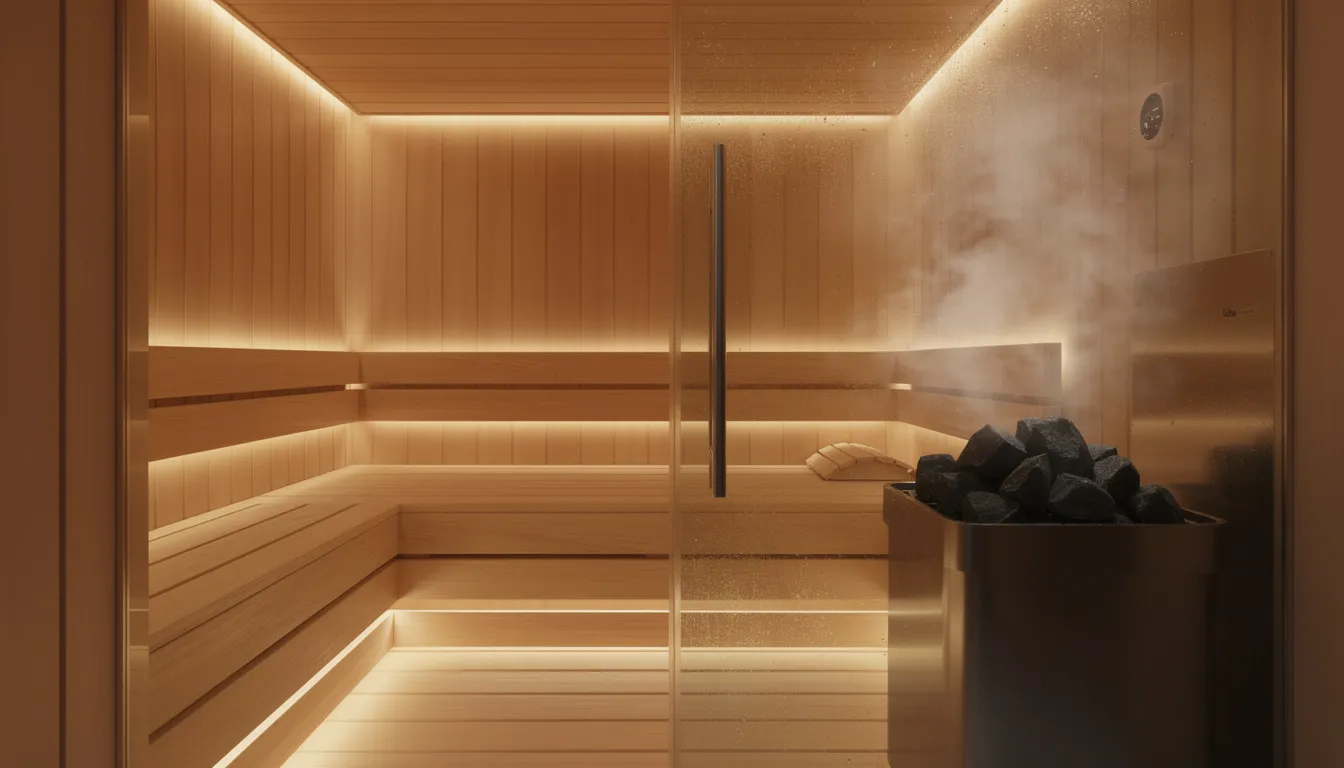
A steam generator is an electrically powered unit that boils water in a sealed tank and delivers pressurized steam to a steam room or a steam-capable sauna cabin. Think of it as a specialized steam boiler designed specifically for wellness applications rather than industrial operations.
The basic operation works like this: cold water passes through a feed line into the generator's tank, where electric heating elements raise it to boiling. Temperature and pressure controls regulate the output, and an insulated steam line carries the vapor to your room. Most systems connect to a wall-mounted digital control panel that lets you set precise temperatures, session lengths, and even startup timers.
It is important to clarify the difference between the two main system types:
|
Type |
Temperature |
Humidity |
Typical Setting |
|
Steam room/shower generator |
100–120°F |
~100% |
Tiled bathroom or spa room |
|
Traditional Finnish sauna heater |
150–195°F |
Variable (20–60%) |
Wood-lined sauna cabin |
Many HomeSauna clients use steam generators for spa-style steam rooms adjacent to or in addition to a traditional or infrared sauna. This creates a versatile wellness space where you can choose your experience based on the day's needs.
For sizing, common residential units range from 6–15 kW, calculated based on your room's cubic footage and wall materials. A 4'x6' steam shower might need a 6–8 kW unit, while a larger 6-person spa room could require 12 kW or more.
What Is a Wood-Burning Sauna Heater?
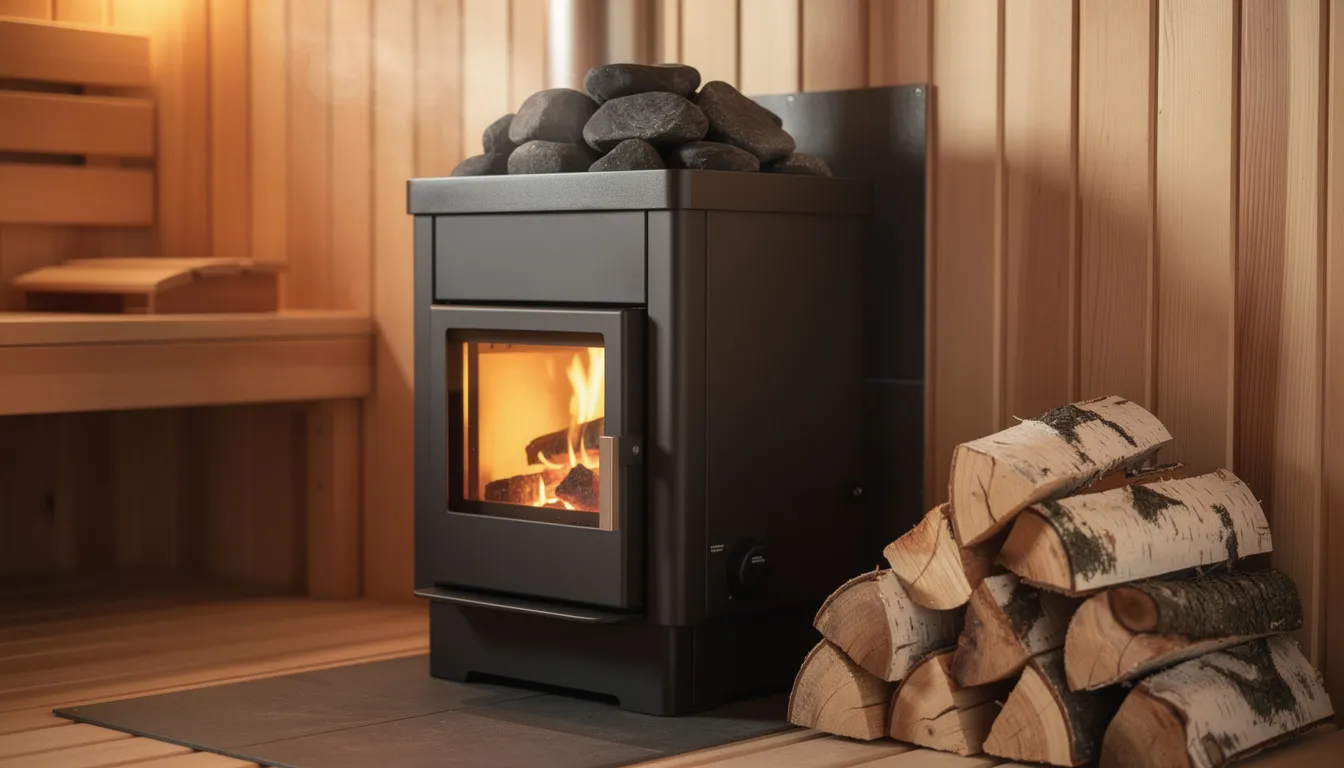
A wood-burning sauna heater — also called a wood-fired sauna stove — is a steel or cast-iron firebox that burns logs to heat a basket of stones. Those stones then radiate warmth throughout the room and produce steam when you ladle water onto them.
The basic components include:
- Firebox: Where burning wood combusts and generates heat
- Chimney/flue: Vents smoke and exhaust gases safely outside
- Stone basket: Holds 40–100+ pounds of sauna stones that absorb and release heat
- Air controls: Adjust combustion rate and temperature
- Heat shields: Protect surrounding surfaces from radiant heat
The user ritual is central to the wood-burning experience. You stack split hardwood in the firebox, light the fire roughly 45–60 minutes before bathing, and adjust the draft as needed. Once stones reach 300–400°F, you create löyly by ladling water onto them for intense bursts of steam. This hands-on process is more time-consuming than pressing a button, but enthusiasts consider it essential to the authentic Finnish sauna tradition.
Wood stoves are especially common in stand-alone outdoor saunas, lakeside cabins, and off-grid properties across Finland, Scandinavia, Canada, and the northern U.S. However, installing a wood heater in a home requires compliance with local building codes, clearances, and chimney requirements — factors that can affect feasibility in urban or tightly packed neighborhoods.
How Do Steam Generators and Wood Burning Heaters Compare?
The following table offers a direct side-by-side view of the key differences between these two systems across the factors that matter most to home sauna buyers.
|
Factor |
Steam Generator |
Wood Burning Heater |
|
Temperature |
100–120°F |
150–195°F |
|
Humidity |
~100% constant |
Variable, burst-style |
|
Heat-up time |
10–20 minutes |
45–90 minutes |
|
Heat source |
Electricity |
Cordwood/biomass |
|
Installation complexity |
Moderate (electrical, plumbing) |
High (chimney, clearances) |
|
Daily convenience |
Push-button start |
Fire tending required |
|
Atmosphere |
Quiet, spa-like |
Crackling fire, wood aroma |
|
Off-grid capable |
No (unless solar/battery system) |
Yes |
Temperature and Humidity
Steam generators deliver lower temperatures but very high humidity — the air feels like a dense, enveloping mist that wraps around your body. Wood stoves create higher temperatures with adjustable humidity; the room feels drier until water hits the stones, then you get intense but brief steam bursts that engage the senses.
Installation
Steam generators require reliable electrical power, a water line, a drain, a steam-rated enclosure, and a vapor-proof door. Wood stoves require a chimney, ample clearances to combustibles, a combustion air intake, and fire-rated surfaces. This makes wood heaters more suited to outdoor or dedicated buildings. Home sauna installation complexity is one of the most decisive factors in this comparison — and it differs dramatically between the two systems.
Control and Convenience
Steam generators offer push-button start, timers, programmable temperatures, and often smartphone compatibility. Wood stoves require manual fire tending with no electronics — but for many users, this tactile, hands-on process is precisely the point.
Atmosphere
Steam generators produce a quiet hiss and a spa-like environment with minimal smell. Wood stoves deliver crackling fire sounds, golden firelight through glazed doors, and subtle scents of resin and smoke — a rustic feel that many consider irreplaceable.
Energy Sources
Steam uses kWh from the grid or solar panels with a battery system. Wood uses cordwood, pellets, or other solid biomass — cost and sustainability depend entirely on local sourcing and management practices.
What Are the Pros and Cons of Steam Generators for Home Saunas?
For typical indoor home wellness spaces — especially bathrooms and basement spas — a steam generator is often the most practical wet heat solution. Here is why.
Advantages
- Very compact units that fit in a closet, mechanical room, or under a bench
- Clean operation with no combustion, smoke, or chimney requirements
- Precise temperature control via digital panel or smart home integration
- Fast heat-up (often 10–20 minutes), ideal for frequent, short recovery sessions
- Easy integration with HomeSauna builds a combination of steam, infrared, and cold plunge zones
- Quiet operation that will not disturb the rest of your house
- Lower maintenance demands compared to wood fire systems
Drawbacks
- Requires a robust electrical circuit (usually 240V) and professional installation
- Needs a fully sealed, vapor-tight room with proper tile, membrane, and ventilation
- Retrofit can be expensive in older homes with outdated electrical systems
- Depends on electricity — not suitable for true off-grid setups without significant solar and battery bank investment
- Steam quality differs from traditional sauna löyly; some purists find it less satisfying
Real-World Examples
A 6–8 kW steam generator serving a 4'x6' tiled steam shower works well in a bathroom remodel, providing daily recovery sessions after workouts or cold plunges. For larger applications, a 12 kW unit in a 6-person indoor spa room can complement a HomeSauna traditional sauna or infrared cabin.
Steam generators suit users who want low-effort, spa-like humidity as part of a fast-paced lifestyle — especially those who incorporate red light therapy or cold plunge sessions into their wellness routine.
What Are the Pros and Cons of Wood-Burning Sauna Heaters?
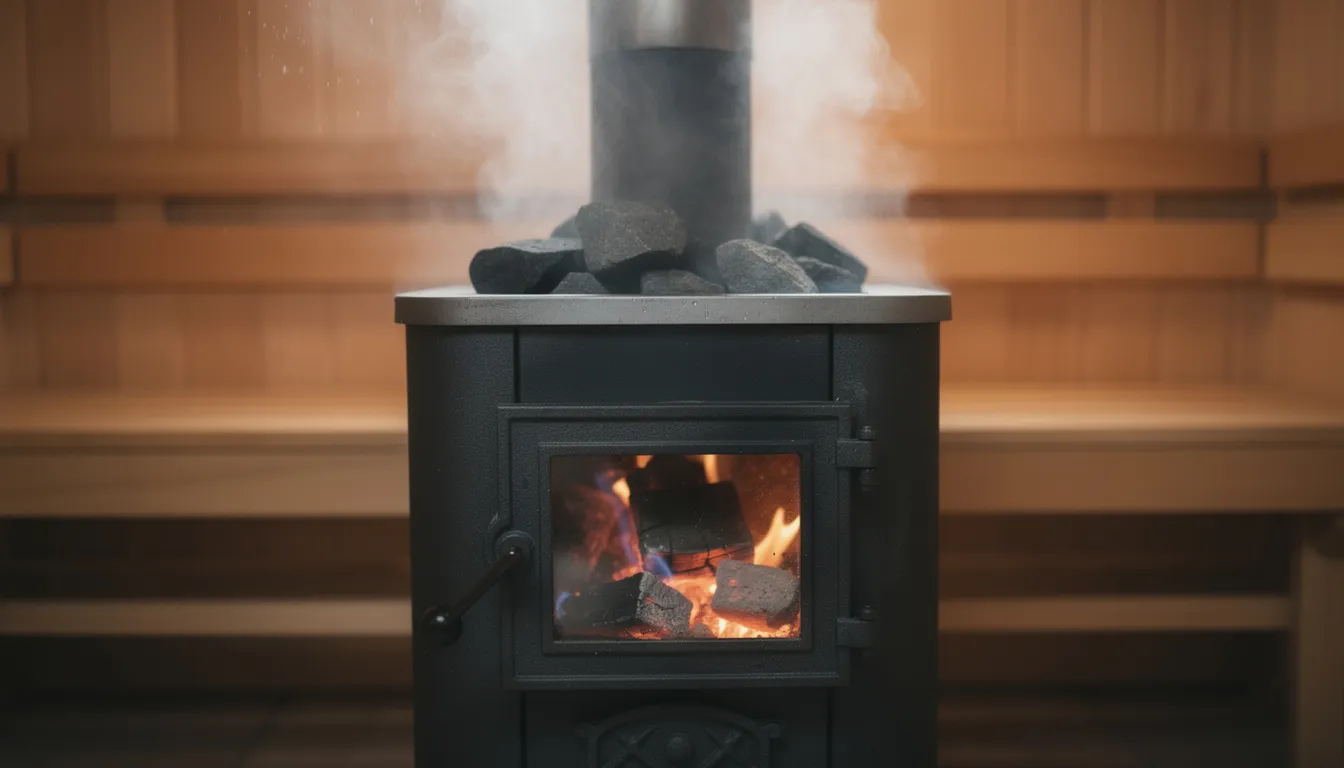
Wood-burning heaters remain the gold standard for purists who prioritize feel and ritual over convenience. This is as close as you can get to the classic Finnish lake cabin experience.
Advantages
- Authentic atmosphere: crackling fire sounds, dancing flames, and gentle wood aroma
- Deep radiant heat from both the metal stove body and a large mass of stones — many feel this wood heat penetrates muscles more deeply
- Can operate entirely off-grid, independent of electricity, making it ideal for remote cabins
- Firewood can be low-cost or effectively free with access to sustainably managed woodland
- Stones typically reach higher temperatures than electric sauna heaters, creating stronger, fuller steam
- The ritual of tending the wood fire becomes part of the wellness experience itself
- No waste heat from electrical systems — all energy goes into the room
Drawbacks
- Requires chimney installation, outdoor air intake, and larger safety clearances from walls and benches
- Longer heat-up times (typically 45–90 minutes, depending on heater size and outside temperature)
- Ongoing chores: hauling, splitting, and stacking wood; removing ash; scheduling chimney sweeps
- Produces smoke and exhaust that must be properly vented
- Wood gas and particulate emissions may concern neighbors in dense urban areas
- Not suitable for indoor spaces in most homes due to fire codes and ventilation requirements
Real-World Example
A small wood stove heating a 6–8 m² outdoor HomeSauna cabin in a cold-climate property creates the perfect weekend ritual space. Picture family gatherings followed by winter cold-plunge dips in a nearby lake or tub.
Note that some municipalities — parts of California, the Pacific Northwest, and EU urban zones — may restrict new wood-burning installations due to air quality concerns. Always check current local codes before planning. Contact the HomeSauna team for guidance on code-compliant heater options in your area.
What Do Steam Generator and Wood Burning Heater Installations Require?
Many clients underestimate how much the heater choice affects the size, layout, and construction details of their sauna or steam room.
Steam Generator Installation
|
Requirement |
Details |
|
Placement |
Adjacent closet, under bench, or mechanical room within 15–20 ft. of the steam room |
|
Electrical |
240V breaker (or 120V for smaller units), professional electrician required |
|
Plumbing |
Cold water feed line, drain for blowdown, and safety valve |
|
Steam room |
Sloped ceiling, moisture-resistant substrate, waterproof membrane, fully tiled surfaces |
|
Ventilation |
Proper exhaust and surrounding space ventilation to prevent hidden mold |
The steam room itself needs careful attention. Hot water vapor condenses on every surface, so you need materials that will not absorb moisture — most homes use porcelain or ceramic tile over a waterproof membrane. A sloped ceiling prevents water from dripping onto occupants.
Wood Burning Heater Installation
|
Requirement |
Details |
|
Clearances |
Minimum distances to combustibles (typically 12–36" depending on shielding) |
|
Floor protection |
Non-combustible hearth pad or floor pad |
|
Chimney |
Vertical flue routing, roof penetration, and proper height above the roofline |
|
Air supply |
Dedicated combustion air intake in many jurisdictions |
|
Structure |
Often requires a dedicated outdoor building rather than an indoor retrofit |
These constraints push many homeowners toward building a separate outdoor sauna rather than installing a wood-burning stove in an existing house. The chimney alone requires significant construction work and ongoing maintenance.
Space Guidelines
- Small 2–3 person saunas: Heaters with ~4–6 kW capacity, smaller stone baskets.
- Medium 4–6 person saunas: 6–9 kW heaters, larger footprints
- Large 6–8+ person cabins: 9+ kW heaters, substantial stone mass for sustained heat
What Are the Operating Costs and Energy Considerations?
Even wellness-focused buyers care about operating costs and sustainability — especially when using their sauna or steam room four to five times per week.
Steam Generator Operating Costs
Consider this calculation: an 8 kW generator running for one hour at $0.15 per kWh costs roughly $1.20 per session. A 30-minute session drops that to about $0.60.
Monthly costs depend on:
- Session frequency (daily users typically see $15–40 per month)
- Room insulation quality
- Local electricity rates
- Outside temperatures affecting heat retention
Pairing with rooftop solar panels or off-peak electricity tariffs can significantly reduce operating expenses. According to the U.S. Energy Information Administration, residential electricity costs vary significantly by state — a key factor when projecting your long-term steam room running costs. Some homeowners with existing solar and a battery bank essentially run their steam rooms for free.
Wood Heater Operating Costs
Firewood is typically measured in cords. North American prices range from $200 to $ 400 per cord, depending on region and wood type. A single cord might support 30–60 sauna sessions, depending on:
- Stove efficiency
- Session length
- Outside temperatures
- How well the wood has been seasoned
If you already heat a rural house with wood, adding a sauna stove can piggyback on your existing fuel source — sometimes making the fuel cost effectively zero beyond what you are already spending.
Environmental Considerations
- Steam generators rely on electricity, whose carbon footprint depends on your local grid mix or solar capacity
- Wood can be carbon-neutral when harvested sustainably from managed forests
- Particulate emissions from burning wood are a concern in dense urban areas
- Electric sauna heaters avoid releasing pollutants, keeping the air cleaner around your property
How Do Steam Generators and Wood Stoves Differ in Atmosphere and Wellness Experience?
Löyly — the Finnish word for sauna steam and the spirit it creates — is dramatically shaped by your heater choice. The difference goes well beyond temperature numbers and into something felt in the body and the senses.
Steam Generator Experience
Steam generators create a softer heat at lower temperatures with 100% humidity that feels like a hot, dense fog. The air is consistently warm rather than intensifying.
This environment is:
- Very gentle on the respiratory system for many users
- Potentially heavy or suffocating for those accustomed to dry saunas
- Excellent for skin hydration and spa-style rituals like masks and scrubs
- Quiet and meditative, without the sensory drama of fire
Wood Stove Löyly
Wood stoves create a high-temperature environment — 170–195°F (75–90°C) — with quick, intense bursts of steam when water hits the stones. The sensation is often described as "shocking then blissful."
This experience delivers:
- Rapid sweat response and strong circulatory stimulation
- The sensory richness of crackling fire and wood aroma
- Deeper, softer heat that many describe as seeping into the body
- Perfect pairing with cold plunges for contrast therapy
Health Benefits Connection
Both systems deliver significant infrared sauna health benefits and wet heat wellness advantages when used consistently. The table below maps each system's strengths to specific wellness goals.
|
Wellness Goal |
Steam Generator |
Wood Burning |
|
Skin hydration |
Excellent |
Good |
|
Deep muscle relaxation |
Good |
Excellent |
|
Respiratory opening |
Excellent |
Good |
|
Circulatory stimulation |
Good |
Excellent |
|
Stress relief |
Excellent |
Excellent |
|
Sleep improvement |
Excellent |
Excellent |
Many HomeSauna clients choose a traditional or full-spectrum infrared cabin for daily sweating, then add a steam room or wood-fired outdoor sauna as a second, more occasional ritual space. Research published in Mayo Clinic Proceedings links regular sauna use to measurable cardiovascular and longevity benefits, regardless of heater type.
What Maintenance, Safety, and Regulations Apply to Each System?
Any heat-and-moisture system in your home must be treated as serious infrastructure, not just a wellness gadget.
Steam Generator Maintenance
Routine tasks include:
- Descaling heating elements in hard-water regions (frequency depends on water quality)
- Checking for leaks at all connections
- Testing safety valves annually
- Inspecting electrical connections
- Ensuring proper ventilation of surrounding spaces to avoid hidden mold
Most regions require a licensed electrician for installation, and specific codes may govern steam showers and spa rooms. Never skip the inspection.
Wood Burning Heater Maintenance
Ongoing requirements include:
- Ash removal after each session or every few sessions
- Firebox inspection for cracks or warping
- Chimney sweeping at least once per year or every 40–60 heavy firing sessions
- Checking flue caps and spark arrestors
Safety considerations are critical:
- Install working carbon monoxide detectors
- Never leave the fire unattended
- Store firewood away from the structure
- Maintain proper clearances at all times
- Check your space heater certifications and fireplace codes
According to the National Fire Protection Association, heating equipment is a leading cause of residential fires in the U.S. — making proper installation and ongoing maintenance non-negotiable for wood-fired systems.
Important: In many cities, 2025–2026 building codes limit new solid-fuel appliances. Confirm with local authorities before planning. Working with experienced sauna designers or brands like HomeSauna helps ensure code compliance and long-term safety.
Which Sauna Heater Should You Choose? (Scenario-Based Guidance)
Here is scenario-based guidance to cut through the complexity and match the right system to your property and lifestyle.
Urban Condo or Townhouse
Recommendation: Steam generator or electric/infrared HomeSauna solutions
Limited space and strict fire codes make wood burning impractical in most urban settings. A steam generator paired with a tiled steam shower gives you wet heat without combustion, chimney, or outdoor space requirements.
Suburban Single-Family Home Remodel
Recommendation: Steam generator in tiled steam shower, potentially paired with traditional or infrared cabin
You likely have the electrical capacity and bathroom space for a quality steam setup. Consider placing a compact steam room alongside a HomeSauna infrared cabin for maximum flexibility — quick infrared sessions on busy days, steam room indulgence on weekends. This is among the most popular luxury home sauna configurations HomeSauna builds for suburban clients.
Rural Cabin or Lake House
Recommendation: Wood-burning sauna hut with cold plunge access
If you have outdoor space, easy access to wood, and few neighbors concerned about smoke, a wood-fired sauna delivers the authentic experience you are after. Build a dedicated sauna cabin near water access for the full hot-cold ritual — perfect for social gatherings and weekend escapes.
Performance Athletes and Biohackers
Recommendation: Easy-start primary system (infrared or electric) plus optional wood or steam for occasional deep relaxation
If you are using a sauna four to six times per week, convenience matters. An infrared or electric sauna heater provides the quick, low-maintenance daily sessions you need. Add a steam room or wood stove as a second system for occasional intense löyly when time allows.
Off-Grid Property Owner
Recommendation: Wood-burning heater
Without reliable electricity, your choice is clear. A quality wood stove operates independently, using locally sourced cordwood as its fuel. Ensure you have the capability to store, season, and process enough firewood for regular use.
Think carefully about your daily routine, available utilities, and long-term wellness goals — then consult HomeSauna for tailored heater and cabin recommendations.
How Does HomeSauna Help You Plan Your Ideal Heat-and-Steam Setup?
At HomeSauna, we work with homeowners from initial consultation through final installation. Our process includes:
- Space assessment: Understanding your room dimensions, electrical capacity, and outdoor options
- Lifestyle evaluation: Matching heater types to your actual usage patterns and wellness goals
- System pairing guidance: Helping you decide whether to combine steam, traditional, or infrared solutions
We offer:
- Traditional saunas with quality electric and wood-compatible designs
- Full-spectrum infrared cabins for daily low-EMF sessions
- Cold plunge tubs that pair perfectly with any heat source
Our team can help you:
- Decide whether to prioritize a steam room, traditional sauna, or infrared cabin based on your goals
- Advise whether a wood-burning heater is realistic for your property
- Determine if an electric alternative or a steam generator is more practical for your situation
- Ensure proper installation that meets local codes and safety standards
Choose Between a Steam Generator and Wood-Burning Sauna Heater
The decision between a steam generator and a wood-burning sauna heater ultimately comes down to your priorities: convenience and consistency versus tradition and ambiance. Steam generators offer precise temperature control, quick heat-up times, and minimal maintenance, making them ideal for modern lifestyles and urban installations where hassle-free operation matters most.
Wood-burning heaters, conversely, deliver an authentic, multisensory sauna experience with natural aromatics, ritual appeal, and off-grid independence—though they demand more involvement, proper ventilation, and regular wood sourcing. Both deliver excellent therapeutic benefits; your choice should reflect how you want to integrate sauna bathing into your daily life.
Ready to install the perfect sauna heating system for your home and lifestyle?
HomeSauna carries premium options in both steam generators and traditional wood-burning heaters, complete with expert installation support and guidance. Don't compromise on quality or compatibility—get professional help selecting the system that matches your space, preferences, and wellness goals.
FAQs
Can I Install a Steam Generator and a Wood-Burning Sauna Heater on the Same Property?
Yes — many wellness-focused homeowners do exactly this. A steam generator paired with an indoor tiled steam shower, alongside a separate outdoor wood-fired sauna cabin, gives you the best of both environments. Each installation requires independent plumbing, electrical, and chimney systems. Make sure each meets local codes separately, and pay special attention to moisture management for the indoor steam space.
Is a Steam Generator or Wood Burning Heater Better If I Am Sensitive to Smoke and Odors?
A steam generator is the better choice for people with smoke sensitivities or asthma. There is no combustion in the room and no wood smoke — just clean hot water vapor. Even with a properly vented wood stove, some users notice trace odors or occasional smoke back-puffing when opening the firebox door, which can irritate sensitive lungs. Research from the American Lung Association confirms that wood smoke contains particulate matter and pollutants that can aggravate respiratory conditions.
How Long Do Steam Generators and Wood Burning Sauna Heaters Typically Last?
Quality residential steam generators last 10–15+ years with proper care. Well-built wood-burning heaters and chimneys can last 15–25+ years or longer. Water quality — specifically scale buildup — most affects steam generator longevity, while chimney maintenance strongly influences wood stove life and performance. Regular descaling and annual inspections significantly extend the lifespan of both systems.
Can I Use Essential Oils with Both Steam Generators and Wood Burning Stoves?
Never pour oils directly into a steam generator tank or onto heating elements — this damages equipment and creates unwanted fumes. Instead, use aroma reservoirs or bowls designed for steam lines or sauna benches. For wood stoves, add essential oils to a ladle of water poured onto the stones, never directly onto metal surfaces, to avoid scorching. Both systems support a rich aromatherapy experience when used correctly.
What If I Already Have an Infrared Sauna from HomeSauna — Does a Steam Generator or Wood Stove Pair Better with It?
Either can pair well, depending on your space and lifestyle. A compact steam generator with a tiled steam shower is typically easier to add indoors beside an existing infrared cabin — giving you both dry and wet heat options under one roof. If your property has an outdoor room and ready access to wood, adding a separate wood-fired sauna hut creates a powerful hot-cold ritual alongside your infrared sessions and cold plunge routine.
Citations and References
- U.S. Energy Information Administration – “Electric Power Monthly.”
- Mayo Proceedings – “Cardiovascular and Other Health Benefits of Sauna Bathing: A Review of the Evidence.”
- National Fire Protection Association – “Home Heating Fires Report.”
- U.S Congress – “Building Codes, Standards, and Regulations: Frequently Asked Questions.”
- American Lung Association – “Residential Wood Burning.”