

Sauna meditation merges ancient wellness traditions with modern mindfulness practices. This powerful combination uses heat to accelerate the body's relaxation response while sharpening mental focus.
The practice has roots in Finnish sauna culture, Native American sweat lodges, and Japanese onsen rituals. These traditions recognized that warmth and inner stillness naturally complement each other.
This guide provides everything you need to start practicing sauna meditation safely and effectively. You'll learn specific techniques, optimal session lengths, safety considerations, and how to create the ideal environment for mindfulness in heat.
Key Takeaways
- Sauna meditation combines high heat (70 to 90°C / 158 to 194°F) with mindfulness techniques to quickly calm the nervous system and promote deep relaxation within the first 5 to 10 minutes.
- Heat-induced muscle relaxation makes it easier to drop into meditation, deepen breathing, and quiet racing thoughts compared to practicing at room temperature.
- Regular practice (2 to 4 times per week) delivers measurable benefits: reduced stress and anxiety, improved sleep quality, enhanced circulation, and a stronger mind-body connection.
- Safety is essential: limit beginner sessions to 10-15 minutes, stay hydrated before and after, and obtain medical clearance if you have heart disease, are pregnant, or have low blood pressure.
- This guide provides a complete step-by-step sauna mindfulness routine plus variations (body scan, mantra, vagus-nerve breathing) you can apply immediately.
Why Combine Sauna Heat with Meditation Practice?
Traditional sauna cultures have long understood what modern science is now confirming: heat and reflection are inextricably linked. From Finnish saunas, which emphasize quiet contemplation, to Native American sweat lodges used for spiritual purification, cultures worldwide have combined warmth with inner stillness for centuries.
Japanese onsen practices aim at achieving "totonou," which means profound physical and mental clarity. Modern electric or wood-fired saunas typically operate between 70 °C and 90°C (158°F and 194°F). This gently raises your heart rate, similar to light exercise.
What Happens When You Enter the Heat?
This thermal stress triggers beneficial responses in your body. Endorphin release elevates mood and creates a sense of peace. Vasodilation (blood vessel expansion) improves circulation and reduces tension.
Muscle relaxation helps your body settle more easily into a state of stillness. Increased sweating provides a tactile anchor for attention.
When you meditate in heat, your body awareness naturally sharpens. The sweat forming on your skin, your heartbeat, the warmth spreading across your muscles become powerful focal points for present-moment attention.
Many people find sauna meditation easier than room-temperature practice precisely because the heat forces the body to relax faster. Instead of spending fifteen minutes trying to settle a restless body, the gentle heat does much of that work for you. Your mind then follows naturally.
The best infrared sauna for home use provides consistent temperatures ideal for establishing a regular meditation routine. You can explore home sauna options designed specifically for wellness practices.
Summary of what happens when you enter the heat:
|
Physiological Response |
Effect on Meditation |
|
Endorphin release |
Elevates mood, creates sense of peace |
|
Vasodilation (blood vessel expansion) |
Improves circulation, reduces tension |
|
Muscle relaxation |
Body settles more easily into stillness |
|
Increased sweating |
Provides tactile anchor for attention |
How Does Heat Support Mental Clarity and Focus?
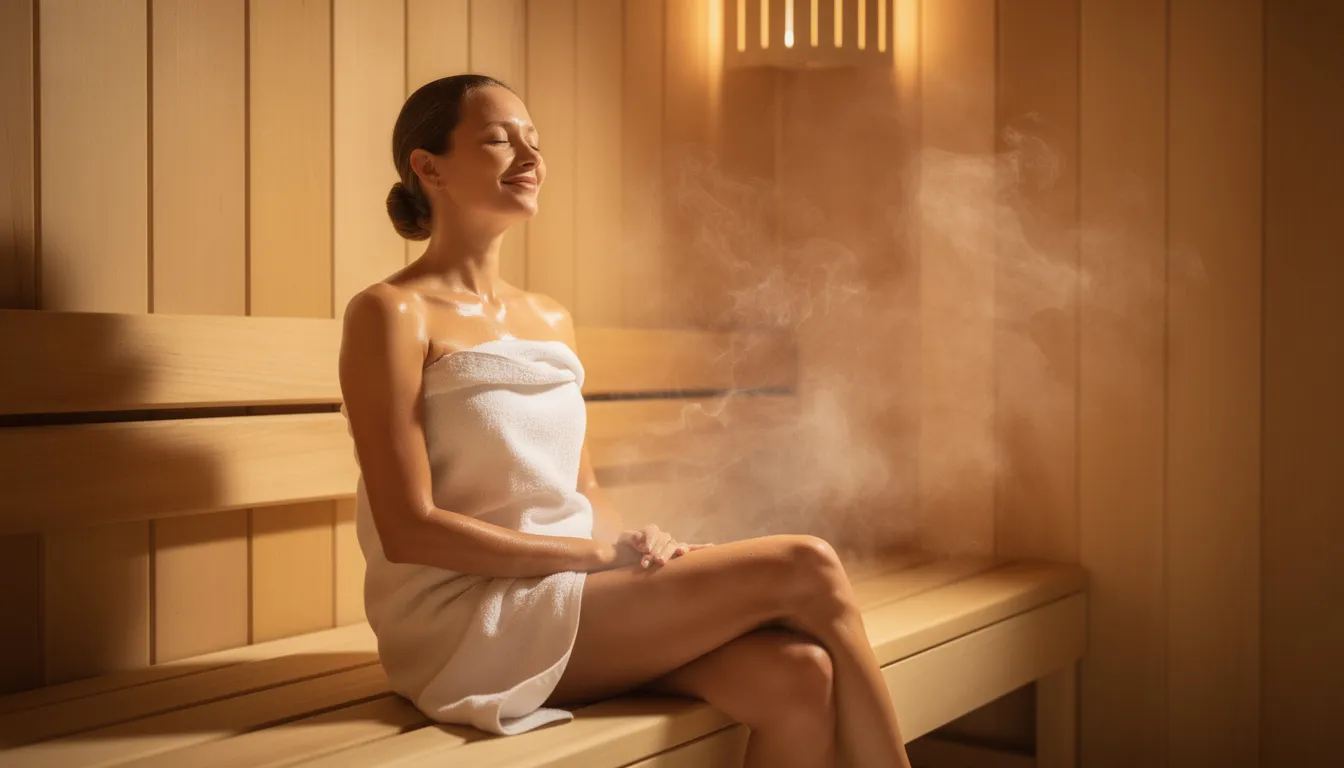
The connection between sauna exposure and mental clarity isn't just subjective. It's measurable in your brain and nervous system.
During a 10 to 20-minute sauna session, increased blood flow delivers more oxygen and nutrients to your brain. Research using EEG monitoring has shown significant increases in theta and alpha brainwave power during and after sauna sessions compared to pre-sauna baselines.
The Nervous System Journey Through Heat
These brainwave patterns are associated with increased awareness, improved attention, and enhanced cognitive-emotional processing. Here's what unfolds in your nervous system during a typical session.
Initial adjustment phase (minutes 1-5): Your body recognizes the heat as mild stress. It responds with increased heart rate and alertness.
Parasympathetic shift (minutes 5-15): Your nervous system transitions to "rest and digest" mode. This lowers perceived stress and anxiety naturally.
Deepened relaxation (minutes 10-20+): Slowed thoughts make breath counting, mantra repetition, or body scanning far more accessible.
Consider this practical example: after a demanding workday, you step into a 75°C sauna for a 15-minute evening meditation. You focus on slow breathing and the sensations of warmth on your shoulders and back.
By the time you exit, shower, and head to bed, you notice clearer thinking and faster sleep onset that same night. The brain literally requires less effort for focus after heat exposure. This is demonstrated by a decrease in P300 amplitude, a marker of attention-related processing, in post-sauna cognitive tests.
What Are the Detoxification Benefits of Sauna Meditation?
The word "detox" carries both physical and psychological dimensions. Understanding both aspects helps you maximize the benefits of your practice.
Physical Detoxification Through Sweating
An average 15-minute session can produce significant sweating. This helps eliminate water-soluble waste products and supports skin health by opening pores.
Some studies suggest that sauna use may aid in the excretion of small amounts of heavy metals, such as lead and mercury, through sweat. However, your liver and kidneys remain your primary organs for detoxification.
Think of sweating as a supportive rather than primary function. The infrared sauna benefits work best when combined with proper hydration and nutrition during detox processes.
Emotional Release and Stress Relief
The psychological dimension of sauna detoxification is equally meaningful. As your muscles soften and your breath slows, stored tension often surfaces.
Unprocessed feelings may rise into awareness. Stress from the week, lingering frustrations, and unexpressed emotions become noticeable.
This is where mindfulness becomes particularly powerful. Rather than pushing these sensations away, you can notice thoughts and emotions as they arise with the heat. Acknowledge them without judgment.
Let them "sweat out" alongside physical tension. Then, return your attention to your breath and body sensations.
Aromatherapy for Enhanced Emotional Processing
Essential oils can amplify this emotional release. Lavender promotes calming effects. Eucalyptus supports easier breathing. Citrus scents, such as lemon or juniper, enhance the sense of cleansing.
These aromatherapy additions stimulate the limbic system. This deepens the emotional processing that naturally occurs in the heat.
How Does Sauna Meditation Improve Sleep Quality?
Regular sauna mindfulness practice creates measurable reductions in stress markers. It also creates notable improvements in sleep quality.
The combination of heat and focused attention works on multiple levels simultaneously. The infrared sauna health benefits extend well beyond the session itself, influencing your sleep cycles for hours afterward.
Physical Relaxation Targets
The heat naturally relaxes tight areas, such as the neck, shoulders, and lower back. These are the places where most people carry chronic tension.
When you add breath-focused or body scan meditation techniques, the effect compounds. Your entire body can reach states of physical relaxation that take 30 to 40 minutes of room-temperature meditation to achieve.
Research-Backed Sleep and Stress Benefits
Research from the University of Eastern Finland has found significant cardiovascular and mortality benefits associated with regular sauna use. The study tracked over 2,000 men for 20 years.
Men who used saunas 4 to 7 times per week had a 40% lower risk of all-cause mortality compared to those who used saunas once weekly. This is partly due to improved stress reduction and better sleep quality.
The mechanisms include a decrease in cortisol levels and activation of the parasympathetic nervous system for stress reduction. The post-sauna body temperature drop facilitates melatonin release, leading to improved sleep.
Regular use (3 to 4 times per week) is associated with lower all-cause mortality. The release of endorphins and serotonin creates mood elevation.
A summary of research-backed benefits vs mechanisms:
|
Benefit |
Mechanism |
|
Stress reduction |
Cortisol decrease, parasympathetic activation |
|
Improved sleep |
Post-sauna body temperature drop aids melatonin release |
|
Cardiovascular resilience |
Regular use (3-4x/week) associated with lower all-cause mortality |
|
Mood elevation |
Endorphin and serotonin release |
Practical Bedtime Routine Example
This sequence leverages the body's natural thermoregulation. The post-sauna temperature drop signals your brain that sleep is coming. This improves both sleep onset and overall sleep quality.
Take a 10-minute warm shower to begin relaxing. Enter the sauna for a 12-minute meditation session at a comfortable temperature. Cool down gradually in a neutral space.
Hydrate with room-temperature water. Aim for lights out within 30 minutes of exiting the sauna.
How Do You Practice Mindfulness in the Sauna Step-by-Step?

This section provides a clear, practical guide you can follow immediately. Whether you use a traditional sauna or an infrared sauna indoor 2-person unit at home, these steps apply universally.
Preparation (20 to 30 Minutes Before)
Drink 1 to 2 glasses of water to ensure proper hydration. Avoid heavy meals for at least 2 hours before your session, as digestion diverts blood flow from your skin.
Skip alcohol entirely. It interferes with thermoregulation and hydration. Gather your towel, water bottle, and any aromatherapy items you plan to use.
Setting Your Parameters
Aim for 70 to 80°C (158 to 176°F) if you can control the temperature. Begin with 8 to 12-minute sessions as a beginner.
Sit on a bench at a level where the heat feels comfortably intense, not overwhelming. Remember that lower benches are cooler while higher benches are hotter.
Finding Your Posture
Sit upright or recline with your spine supported by the bench or wall. Rest your hands gently on your thighs or abdomen.
Close your eyes or maintain a soft, unfocused gaze on the wood grain. Allow your shoulders to drop away from your ears.
Simple Breathing Practice
Inhale through the nose for a count of 4. Exhale slowly for a count of 6 to 8.
Notice the warmth on your skin as you breathe. Feel the sensation of sweat beginning to form. Let each exhale release tension from your muscles.
Using Bodily Sensations as Anchors
Feel the heat on various body parts, including the face, chest, back, and legs. Notice the drip of sweat down your temples or spine.
Sense your heartbeat without trying to change it. Pay attention to the expansion of your rib cage with each breath.
Ending Mindfully
Slowly stand up when your time is complete. Exit the sauna carefully. Dizziness can occur with sudden movement.
Sit or lie down in a cooler space for 2 to 3 minutes. Sip water gradually rather than gulping. Take a moment to notice the after-effects in your body and mind before resuming regular activity.
How Can You Create the Perfect Meditative Sauna Environment?
You can transform any sauna into a dedicated mindfulness space through simple sensory adjustments. The goal is to create an ideal setting that signals to your nervous system: this is quiet time.
Whether at home, the gym, or a hotel, these modifications can be applied anywhere.
Lighting Choices for Relaxation
Dim overhead lights if controls are available. Use warm-toned LED strips if you have a home sauna.
A single battery-powered candle reduces visual stimulation. Avoid bright, clinical lighting that promotes alertness instead of relaxation.
Sound Environment Options
Soft ambient music or nature sounds can enhance relaxation for beginners. Complete silence works well for experienced meditators.
Use a waterproof speaker placed outside the hot room. Or leave your phone in a cooler anteroom. If you prefer sounds from the outside world, leave the door slightly cracked for gentle air circulation.
Aromatherapy Options for Enhanced Practice
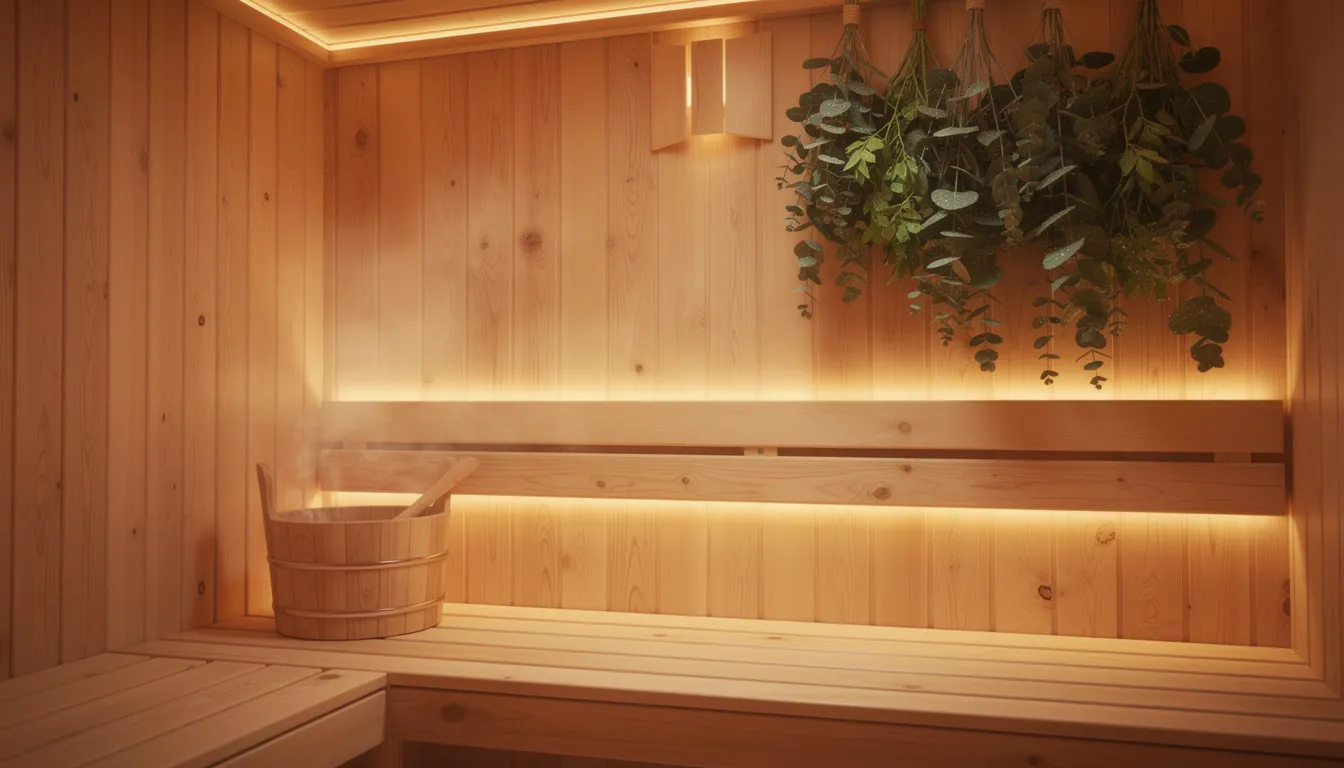
Eucalyptus opens breathing passages and promotes clarity. Lavender has a calming effect and supports relaxation and sleep.
Cedar provides grounding and connects to forest-bathing traditions. Peppermint refreshes and enhances alertness (use sparingly).
Add a few drops to a sauna-safe diffuser or mix with water for use as a steam treatment, ladling onto hot stones where facility rules permit. The best sauna accessories 2026 include heat-resistant aromatherapy systems specifically designed for high-temperature environments.
Aromatherapy options:
|
Essential Oil |
Effect |
|
Eucalyptus |
Opens breathing passages, promotes clarity |
|
Lavender |
Calming, supports relaxation and sleep |
|
Cedar |
Grounding, connects to forest-bathing traditions |
|
Peppermint |
Refreshing, enhances alertness (use sparingly) |
Creating Personal Ritual
Use the same towel and the same bench spot each session to build consistency. Begin with three deep breaths before closing your eyes.
Set a short intention: "I'm here to rest and reset" or "This time is for stillness." These cues train your mind to drop into practice more quickly over time.
Keeping Distractions Out
Leave your phone outside unless using it solely for a timer. Keep conversation minimal if sharing the space.
Establish clear boundaries with others who also want quiet time. If you're building a luxury home sauna, consider designing a dedicated meditation area separate from social sauna spaces.
What Are the Best Sauna Meditation Techniques?
Think of these meditation techniques as a menu. You can rotate through them across different sessions to keep your practice fresh and address different needs.
Each technique offers unique benefits for stress relief and mental clarity.
Simple Body Scan Technique
Start at the crown of your head and move slowly down to your toes. At each area, notice how the heat feels on that body part.
Notice any pressure, tingling, or tension present. See whether you can soften that area with your exhale.
Spend 20 to 30 seconds on each region: head, face, neck, shoulders, arms, hands, chest, abdomen, lower back, hips, thighs, calves, feet. This systematic approach works particularly well in an outdoor infrared sauna where you can connect with natural surroundings.
Progressive Muscle Relaxation Variation
This technique employs gentle tension to facilitate a deeper release. Choose a muscle group (hands, shoulders, feet).
Gently tense that area for 5 seconds. Release completely and feel warmth flood back in.
Notice the profound sense of relaxation that follows the release. Move to the next muscle group and repeat the exercise.
Vagus Nerve Supportive Breathing
This technique activates your body's calming response by stimulating the vagus nerve. Research on vagal tone shows that this breathing pattern significantly reduces stress markers.
Inhale through your nose for a count of 4. Exhale with a soft "hhh" sound or through pursed lips for a count of 8.
Keep your jaw, throat, and belly relaxed throughout. The extended exhale signals safety to your nervous system.
Mantra Practice for Deep Focus
Silently repeat simple phrases in rhythm with your breath. Try "Here and now" (inhale "here," exhale "and now").
Or use "Soften and release," "Warm and calm," or "Present moment, only moment." The repetition anchors wandering attention and creates a deep sense of inner peace.
Open Awareness Practice
For the final 2 to 3 minutes of your session, drop any specific technique. Simply notice sounds, heat, and breath.
Don't try to change or control anything. Let your awareness rest in pure observation.
This transition from focused attention to open awareness often produces the deepest states of calm.
Who Should Avoid Sauna Meditation and Why?
Safety comes first. Heat combined with meditation can be intense. Respecting your body's limits ensures a sustainable, beneficial practice.
Understanding contraindications helps you practice responsibly while maximizing the benefits of infrared sauna for athletes and general wellness practitioners alike.
Essential Safety Rules for Everyone
Limit beginner sessions to a maximum of 10 to 15 minutes. Exit immediately if you feel dizzy, nauseous, or short of breath.
Rehydrate with water or electrolyte drinks after every session. Never push through discomfort. Discomfort is information, not a challenge to overcome.
Who Should Consult a Healthcare Provider First
Individuals with cardiovascular disease should consult a doctor, as heat can increase their cardiac workload. Those with uncontrolled high blood pressure face additional strain on blood vessels.
People with low blood pressure and frequent fainting risk syncope during or after sessions. Those with kidney disease face dehydration risks and electrolyte balance concerns.
Pregnant women need clearance because core temperature regulation affects fetal development. Medical guidance emphasizes the importance of consulting a physician for anyone with chronic health conditions.
Here’s a table summary to guide you
|
Condition |
Concern |
|
Cardiovascular disease |
Heat increases cardiac workload |
|
Uncontrolled high blood pressure |
Additional strain on blood vessels |
|
Low blood pressure with frequent fainting |
Risk of syncope during or after |
|
Kidney disease |
Dehydration risks, electrolyte balance |
|
Pregnancy |
Core temperature regulation affects fetus |
Additional Precautions
Avoid sauna meditation immediately after intense workouts. Wait until your heart rate has returned to normal for at least 10 to 15 minutes.
Never combine sauna use with alcohol or sedatives. Skip the sauna if you're feeling unwell, dehydrated, or haven't eaten in many hours.
Guidance for Heat-Sensitive Individuals
Start at lower temperatures (65 to 70°C / 149 to 158°F). Sit on lower benches where the air is cooler.
Keep the door slightly ajar if your facility allows. Begin with 5- to 7-minute sessions and build up gradually.
Take breaks in cool air between sessions if doing multiple rounds.
Alternatives for Those Who Cannot Use Saunas
If saunas aren't accessible or advisable for you, the same mindfulness meditation techniques can be applied to alternatives. Warm baths (37 to 40°C / 98 to 104°F) provide gentle heat.
Infrared heating pads placed on tense areas target specific muscles. Warm rooms with space heaters create comfortable environments. Heated blankets during guided meditation sessions offer portable options.
The heat helps create the conditions for mindfulness, but the practice itself can happen anywhere. An infrared sauna blanket provides a gentler alternative for those who cannot tolerate traditional sauna heat.
How Do You Build a Consistent Practice?

Benefits accumulate when sauna meditation becomes a regular part of your wellness routine, rather than an occasional treat. Like any mindful practice, consistency transforms occasional relief into lasting change.
Recommended Frequency and Structure
Aim for 2 to 4 sessions per week for optimal benefits. Sessions of 10 to 20 minutes are sufficient for most benefits.
Include at least one rest day between longer or hotter sessions. Consistency matters more than duration. Three 12-minute sessions are more effective than one 40-minute session per week.
Scheduling Strategies That Work
|
Time |
Best For |
|
Early evening (5-7 PM) |
Unwinding after work, transition to rest |
|
Late afternoon weekends |
Marking shift from productivity to relaxation |
|
Post-workout |
Muscle recovery, combining physical well-being practices |
|
Before bed (2+ hours) |
Sleep preparation, stress reduction |
Keeping a Practice Log
A simple tracking system helps you notice patterns and maintain motivation. Record date and time of session, duration, and temperature (if known).
Note which technique you used (body scan, breathing, mantra). Track how you felt before versus after (a 1 to 10 scale works well).
After a few weeks, you likely notice trends. You may relax faster with specific techniques. Or evening sessions improve your sleep more than morning ones.
Staying Motivated Over Time
Pair sauna meditation with an existing habit, such as post-gym showers. Invite a household member to share quiet time in the space.
Follow a favorite guided meditation audio for variety. Set a weekly calendar reminder to protect this time.
View your sauna mindfulness practice as an ongoing relationship with your body and mind rather than a quick fix. Some sessions will feel transcendent. Others will simply feel like sitting in a hot room.
Both count. The practice is showing up, paying attention, and letting the heat do what it does naturally: help you relax, focus, and find moments of soul-deep quiet.
Frequently Asked Questions
How long should a beginner practice sauna meditation?
Beginners should start with 8- to 12-minute sessions at a moderate temperature (around 70-80°C / 158-176°F). This allows your body to adapt to the heat while still providing meaningful relaxation benefits. Increase duration by 2 to 3 minutes per week if you feel comfortable and have no medical restrictions. Most people find their sweet spot between 15 and 20 minutes after a month of regular practice. Gradual exposure yields the best long-term results with minimal adverse effects.
Can I listen to guided meditations in the sauna?
While possible, it's safer to keep phones and most electronics outside the hot room to prevent heat damage. A better approach is to use a waterproof Bluetooth speaker placed outside the sauna door, or start your audio on a device in a cooler anteroom and let the sound drift in. Many practitioners find that eventually moving away from guided sessions and embracing silence deepens their sauna experience.
What should you wear during sauna meditation?
Wear light, breathable materials, such as a cotton towel wrapped around your body, a simple swimsuit, or loose shorts and a light top. Check your facility's rules. Some require swimwear, while others prefer a towel-only approach. Remove jewelry, watches, and tight synthetic fabrics that trap heat or can become uncomfortably hot against your skin. Comfort supports stillness. For detailed guidance, review recommendations on what to wear in a sauna for maximum comfort and safety.
Can I do sauna meditation every day safely?
Many healthy individuals can tolerate daily short sessions (10 to 12 minutes), but it's wise to build up gradually over several weeks. Watch for signs of overdoing it: persistent fatigue, headaches, dizziness, or skin irritation. If you have any chronic health conditions, discuss daily sauna use with your healthcare provider. For most people, three to four sessions per week provide excellent benefits while allowing adequate recovery time.
Do infrared saunas help with anxiety and stress relief?
Yes, infrared saunas can significantly help with anxiety and stress relief when combined with meditation practices. Research shows that regular sauna use reduces cortisol levels and activates the parasympathetic nervous system, your body's natural relaxation response. The gentle, penetrating heat of infrared technology promotes muscle relaxation and mental calm without the intense heat of traditional saunas. Many practitioners report noticeable anxiety reduction after just 2 to 3 weeks of regular practice.
Which one should I use: red light therapy or infrared sauna for mindfulness?
For mindfulness and meditation practices, infrared saunas tend to work more effectively than red light therapy alone. Infrared creates a heat environment that facilitates muscle relaxation and mental calm, essential for meditation. Red light therapy primarily targets skin health, cellular repair, and wound healing rather than creating the warm, relaxing environment needed for deep meditation. However, some practitioners enjoy combining an infrared sauna and a red light therapy kit. The heat from infrared remains the primary catalyst for meditation-conducive states.
Are home saunas safe for daily meditation practice?
When properly installed and used according to safety guidelines, home saunas are generally safe for most healthy adults to use daily for meditation purposes. Key safety factors include proper ventilation systems, GFCI electrical protection, temperature controls, and adequate space for comfortable positioning. The weatherproof outdoor infrared sauna models meet stringent safety standards for year-round use. Always ensure that your unit has been installed by certified professionals and complies with local building codes.
What are the best home saunas for meditation practice?
The best home saunas for meditation typically feature comfortable bench seating, adjustable temperature controls (ranging from 65 to 90°C), dim lighting options, and quiet operation. Look for units with Canadian cedar or Nordic spruce construction for pleasant aromatics. Ensure adequate headroom for comfortable sitting positions (minimum 6 feet) and low-EMF heating elements for extended sessions. The best home sauna brands 2026 prioritize these meditation-friendly features.
How do you choose an outdoor sauna for meditation and mindfulness?
Choose an outdoor sauna for meditation by prioritizing location, privacy, and natural surroundings that enhance contemplation. Look for weather-resistant construction (cedar or thermowood), proper insulation for temperature control, and adequate foundation support. Position your unit where you can hear natural sounds, such as wind, birds, or water features. Ensure the entrance faces a calming view rather than neighboring properties or busy areas.
Transform Your Daily Routine with Sauna Meditation
Sauna meditation offers a unique pathway to stress relief, mental clarity, and deep relaxation that works faster than room-temperature practices. The heat naturally relaxes your body while sharpening your mind's focus. This creates ideal conditions for mindfulness.
Whether you practice in a gym facility or invest in a home sauna for sale, the benefits accumulate with consistent use. Start with short 8 to 12-minute sessions and simple breathing techniques.
As your practice develops, explore body scans, mantra repetition, and vagus nerve breathing to deepen your experience. The key is showing up regularly, 2 to 4 times per week. Let the heat do what it does naturally: help you unwind, focus, and find moments of profound quiet.
Explore home sauna options to begin your meditation practice today. Or contact wellness specialists for personalized guidance on selecting the perfect unit for your mindfulness journey.