

You have invested in a premium infrared sauna, but three months in, sessions feel uneven. Your back is dripping while your chest stays cool, or your face overheats before your legs even warm up. The culprit is not your session duration or the temperature dial. It is where the heaters are positioned.
Understanding sauna heater placement is the most important factor for achieving consistent full-body sweating. Home Sauna provides the technical resources needed to evaluate these layouts so you can avoid the common mistake of buying a high-end unit that distributes heat unevenly.
This guide explains how heater placement affects your results, what coverage your body actually needs, and how to compare different configurations. By understanding these layouts, you can ensure your 2026 sauna investment delivers the therapeutic outcomes you expect.
Key Takeaways
- Heater placement determines how evenly your body absorbs radiant heat and how quickly your core temperature rises. Proper positioning ensures a comfortable session and prevents the need for excessively high temperature settings.
- Effective results do not require every inch of skin to be exposed to a panel. Instead, you need smart coverage targeting the front, back, sides, and legs to ensure consistent outcomes across every session.
- Inefficient placement often forces users to sit in awkward positions or cut sessions short. This ultimately reduces the actual health benefits you receive from your infrared sauna.
- The ideal setup uses strategically positioned heaters surrounding key body zones. This approach avoids unnecessary ceiling or head-level panels, which can cause uncomfortable hot spots.
- A quality full-spectrum design prioritizes a balanced layout. This surrounds the body efficiently to ensure deep heat penetration without wasting energy or creating uneven temperature zones.
How Does Infrared Heat Work and Why Does Direction Matter?
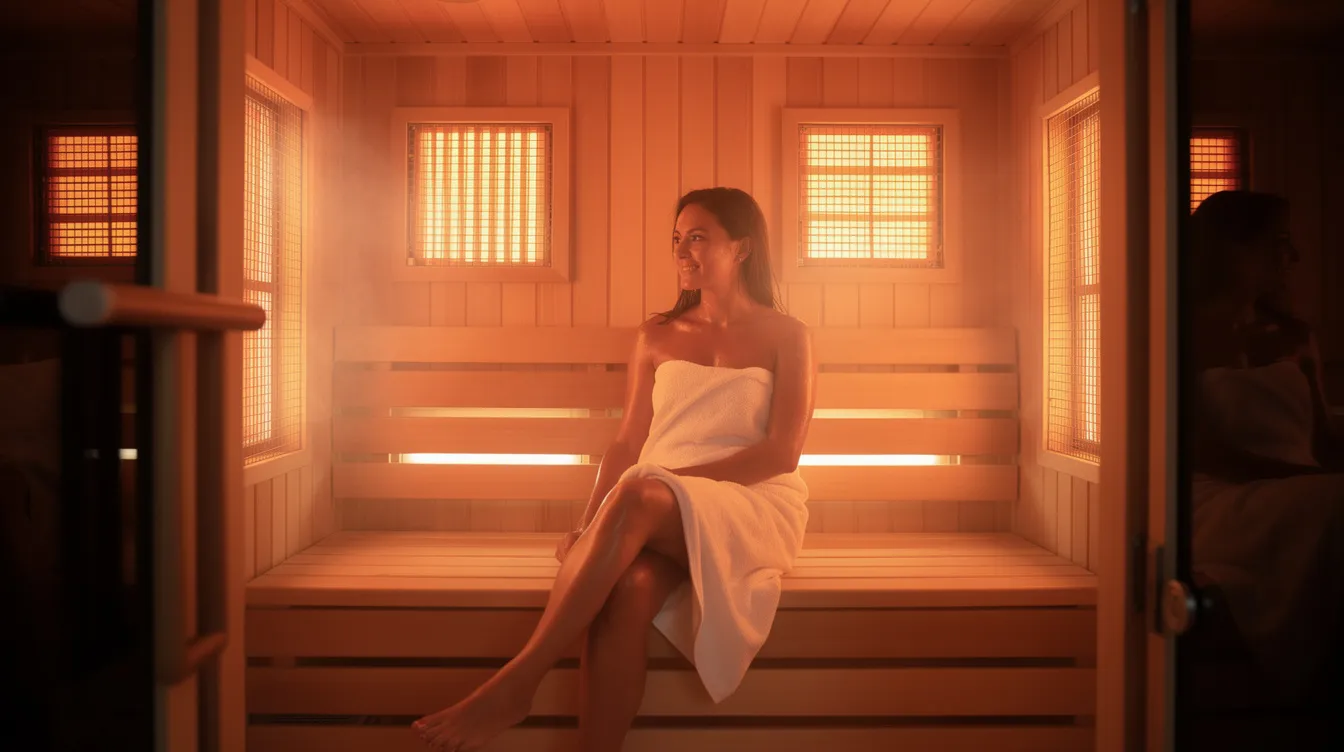
Traditional saunas heat the air to 170-200°F and often add steam, warming your body primarily through convection. Infrared saunas work differently. They use radiant energy to heat your body directly, operating at lower temperatures of 110-130°F while delivering results comparable to or superior to those of higher-temperature systems.
Far infrared wavelengths (roughly 5.6-15 µm) penetrate approximately 1.5 inches into tissue, where water molecules absorb the energy. This raises your core temperature by 2-4°F over a 20-30-minute session, triggering increased heart rate, vasodilation, enhanced circulation, and profuse sweating.
Here is what matters for placement: infrared energy travels in straight lines from emitters to your body. The direction and angle of heaters determine which areas actually receive therapeutic exposure. A heater behind you warms your back. A heater beside you warms your side. Nothing automatically wraps around corners.
Air temperature inside the cabin is secondary. What drives results is how well infrared light reaches your torso, back, and major muscle groups. Consistent absorption over larger body areas supports improved blood flow, nervous system relaxation, and recovery. Simply sitting in a hot room is not enough on its own.
Does Heater Placement Really Change Infrared Results?
Yes, and the difference shows up in every session.
Well-placed heaters shorten your warm-up time, getting you to first sweat in 5-10 minutes at moderate temperatures of 115-125°F. Poorly positioned heaters force you to crank the dial above 130°F just to feel something, which causes panels to cycle off and reduces consistent exposure.
Suboptimal placement creates predictable problems:
|
Issue |
Cause |
Result |
|
Hot spots |
Heaters aimed at the face or the upper back only |
Localized overheating, discomfort |
|
Cold zones |
No heaters at legs, front torso |
Uneven sweat onset, prolonged warm-up |
|
Short sessions |
Intense single-point heat |
Users quit early due to discomfort |
|
Awkward postures |
Having to "chase" the heat |
Reduced relaxation and adherence |
Lab testing using calorimetry shows that optimized high-output heaters with reflective backing heat the body faster than panel-style designs that cover more surface area. Strategic placement elevates core temperature more efficiently than total panel coverage alone.
Home Sauna recommends validating layouts using both core temperature rise and user comfort metrics: time to first sweat, perceived intensity, and ability to complete 30-45-minute sauna sessions without cutting out early.
How Much Front, Back, and Side Coverage Do You Really Need?
A common misconception is that you need full coverage of panels everywhere. Another misconception is that a single back panel is sufficient if it is powerful enough. Neither is accurate. The following sections break down what each coverage zone actually contributes.
Why Is Back Coverage the Foundation of Infrared Placement?
Most users sit with their spine against the rear wall, making high-output back panels critical for warming large posterior muscles and the core. This is where most infrared saunas start, and where many budget models stop. Without adequate back-panel coverage, users will struggle to achieve an effective core temperature, regardless of the session's duration.
Do Front Heaters Make a Meaningful Difference?
Without front heaters, your spine feels like it is burning while your chest and abdomen stay relatively cool. Front panels at torso level equalize heating across your body's core, preventing that uncomfortable disparity. For infrared sauna indoor 2-person models and larger, front coverage is especially important because both users need balanced exposure from their natural seated positions.
What Does Side Coverage Add to the Infrared Experience?
Heaters at torso height on both sides produce an enveloping heat field without overdriving any single panel. This allows maximum infrared sauna detox outcomes at moderate cabin temperatures. The goal is not complete surround coverage. It is balanced radiant input to the front, back, and sides, so you can sit naturally without twisting to chase heat. Well-designed cabins position users so that this balanced exposure happens automatically in a normal seated posture.
Are Leg, Calf, and Bench-Level Heaters Essential or Overkill?
Many budget infrared saunas save cost by omitting lower-body panels entirely. This significantly alters heat distribution and delays sweat onset, creating the frustrating "cold feet, hot head" experience that drives many users to give up before adaptation occurs.
Including heaters beneath the bench and at calf level addresses this directly:
- Improved circulation: Warming lower extremities promotes even blood flow responses throughout the cardiovascular system.
- Longer sessions: Users can sustain 30-45 minutes at 115-125°F without localized discomfort.
- Better recovery outcomes: Athletes and recovery-focused users benefit from comprehensive lower-body exposure.
When shopping in 2026, examine product photos and spec sheets for calf and under-bench heaters specifically, not just wall panels at shoulder height. This placement detail separates thoughtful heater design from cost-cutting shortcuts.
Full-spectrum cabins that intentionally include lower-body coverage allow users to sit, stretch, or lightly recline without losing the infrared effect on the legs. For regular use in colder environments like garages, this matters even more.
What Is the Difference Between Surround and Minimalist Heater Layouts?
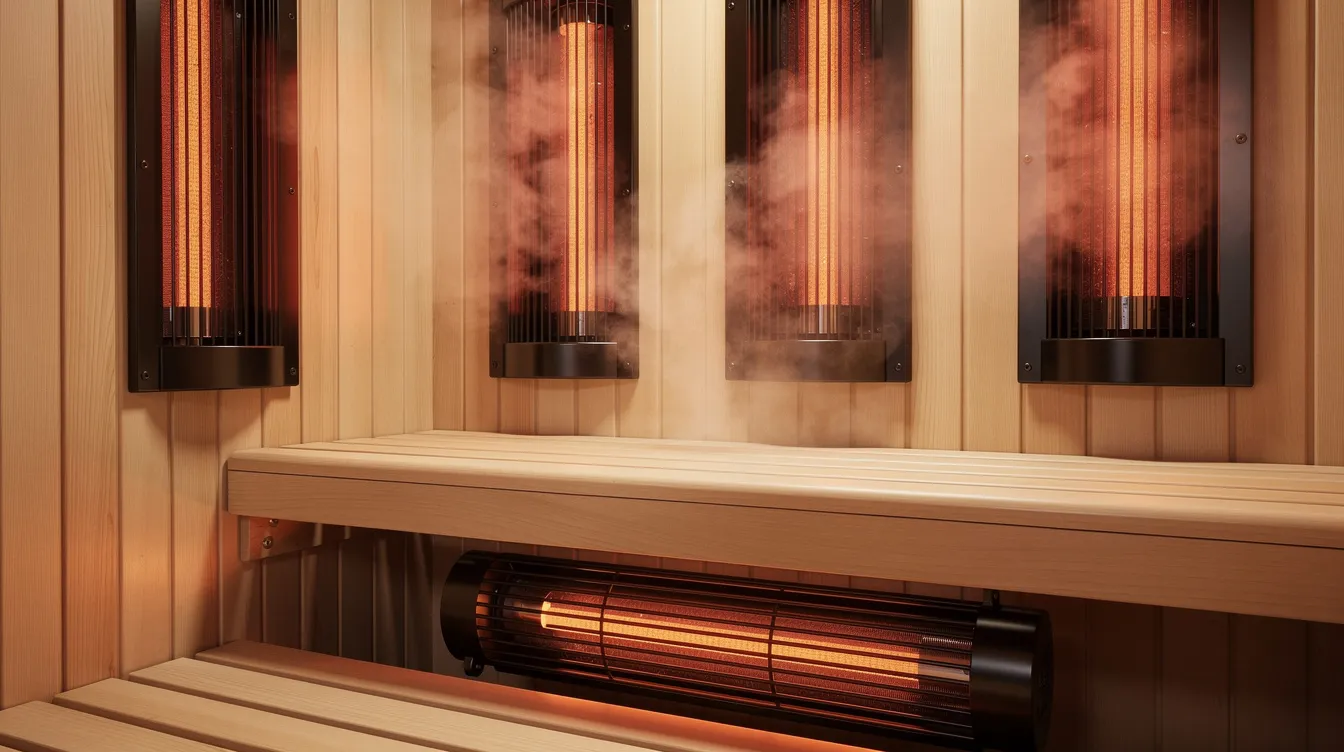
Two extremes exist in the market: "wallpapered" low-output panel saunas versus minimalist high-output heaters in one or two locations. Both have trade-offs, and the practical choice sits between them.
Heavy coverage approach:
- Pros: More uniform heat distribution.
- Cons: Often relies on low-output emitters that look impressive but feel weak; higher energy use; potential EMF spikes from numerous panels.
Minimalist approach:
- Pros: Efficient in lab tests; powerful single-point heating.
- Cons: Creates intense hot spots; can overload sensitive users' nervous systems; requires precise posture to maintain consistent exposure.
Strategic placement of higher-performance, low-EMF heaters at key anatomical zones (back, front torso, sides, calves) delivers the efficiency of minimalism with the comfort of surround coverage.
Unnecessary ceiling or head-level emitters primarily raise air temperature rather than drive direct body absorption. Focus less on "number of panels" as a marketing claim and more on whether the layout matches how you will actually sit in the cabin 3-4 times per week.
How Does Infrared Sauna Placement Differ from Red Light Therapy Placement?
Far-infrared saunas (5.6-15 µm wavelengths) and red light therapy panels (typically 600-900 nm) work through fundamentally different biological mechanisms, and their placement rules reflect that difference.
Red light therapy requires direct photon absorption by chromophores in skin and mitochondria. Very close, direct exposure to specific body areas is critical, as the light must hit target tissue at sufficient irradiance levels. Distance and angle matter precisely.
Infrared therapy operates differently. The primary outcomes are global core temperature elevation and cardiovascular responses: systemic effects that radiate internally once triggered. Because the goal is systemic heating, an infrared sauna does not require every square inch of skin to face a panel.
What matters is sufficient radiant input to large muscle groups and the torso to raise core temperature efficiently. The surrounding walls do not need to glow everywhere. They need to deliver energy where absorption drives results.
A sauna red light therapy kit add-on follows different proximity rules than the main infrared panels, which is why purpose-built combination units handle the two placement requirements separately rather than trying to address both with a single panel layout.
How Do Sitting vs. Lying Down Positions Interact with Heater Layouts?
Your posture and heater placement interact directly, affecting both comfort and the evenness of radiant heat reaching your body.
Most compact 1-3 person cabins are optimized for seated use. Back, side, and front heaters are positioned at torso level for people between approximately 5'3" and 6'3". This works well for upright meditation, conversation, or reading during sessions.
Lying down changes the geometry. Sidewall heaters and lower-back or bench-level emitters become more important, creating a surrounding heat field around the body rather than concentrated exposure to the upper back.
Before purchasing, think honestly about your preferred posture:
- Meditating upright with eyes closed?
- Stretching hamstrings with legs extended?
- Lying flat after an evening workout?
Evaluate whether heater placement in a given model supports that behavior. Poor layouts force huddling or twisting, limiting results and making sessions feel like work rather than a time for relaxation. Thoughtfully designed cabins position benches, clearances, and heater heights so both upright sitting and light reclining work effectively without forcing users to press against a single panel to feel warmth.
What Should You Look for in Infrared Sauna Heater Placement When Buying in 2026?
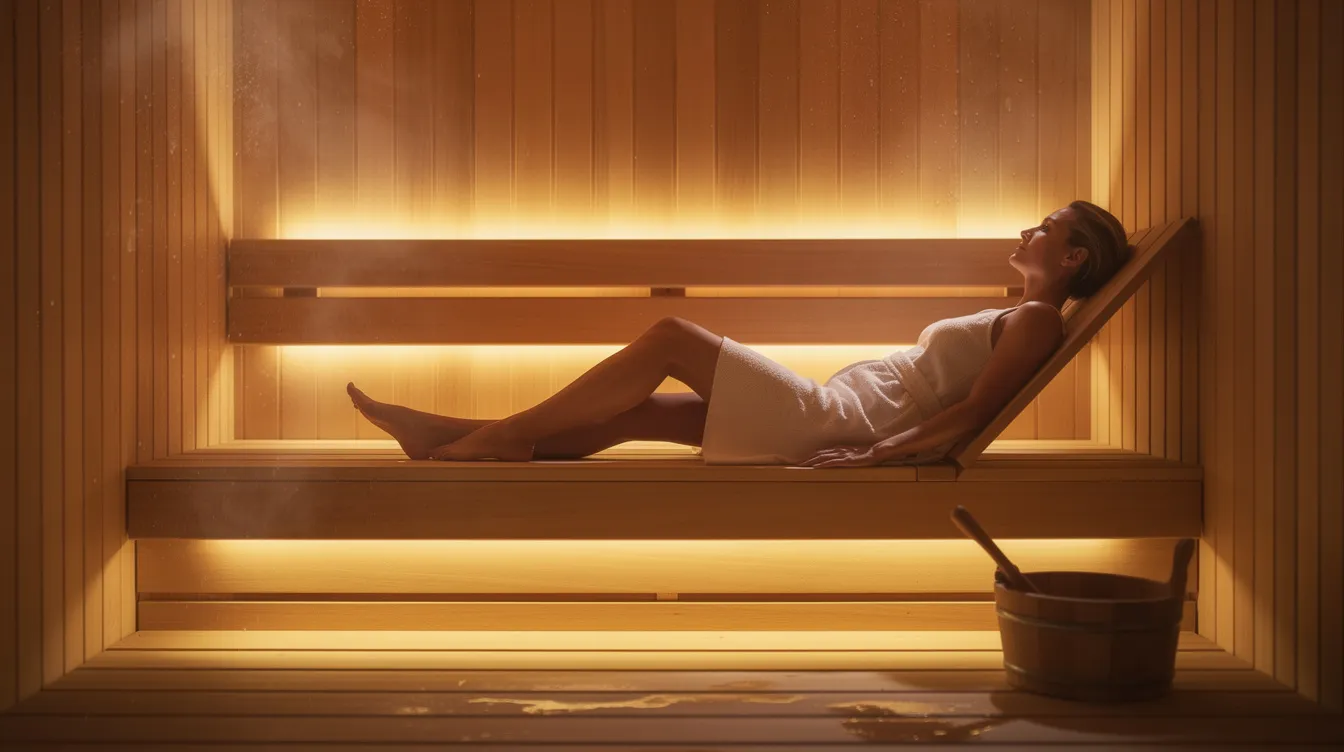
Heater technology, EMF ratings, wiring quality, and sustainable materials all matter. But the layout is the part you will feel every single session. Use the checklist below when evaluating any best infrared sauna for home purchase.
Your Heater Placement Checklist
Visible back, side, and front heaters at torso level
Additional calf or bench-level heaters for lower-body coverage
Minimal or no head-level emitters (avoid eye drying, headaches)
No large blank "dead zones" where you will actually be sitting
Room dimensions that accommodate the cabin with proper ventilation and door swing clearance
Safety features, including low-EMF output and dedicated circuit compatibility
Ask brands for clear interior photos or diagrams showing the exact positions of the heaters relative to the bench, door, and remote control panel. Marketing renderings often obscure actual placement.
Compare layouts side-by-side with competitors like Clearlight, Sunlighten, and High Tech Health. Consider not just claims like "full spectrum," but also whether the heater geometry will match how you actually live and recover at home.
Optimize Your Results Through Strategic Heater Placement
Understanding heater placement differences prevents disappointing results from poorly designed saunas, where uneven heat distribution compromises the benefits you purchased the unit to achieve. Strategic placement isn't a luxury feature but a fundamental requirement for effective infrared therapy.
Ready to invest in a sauna with scientifically optimized heater placement for maximum therapeutic results?
Visit Home Sauna today to explore systems with comprehensive front, back, side, and leg heater coverage that delivers uniform infrared exposure throughout your entire body. Don't accept inferior heater configurations when proper placement makes the difference between mediocre and exceptional wellness outcomes throughout 2026 and beyond.
External References
- Research Gate: “Calorimetric Testing of Solar Thermal Absorbers for High-Vacuum Flat Panels.”
- Mayo Clinic: “Do Infrared Saunas Have any Health Benefits?”
- Spa Accor: “Discover all the Benefits of a Session in the Sauna.”
- Melbourne Integrative Oncology Group: “Infrared Saunas: A Modern Solution for Detox and Relaxation.”
- Sun Home Saunas: “Why Use Red Light Therapy at Home?”
FAQs
Does changing my position in the sauna change my infrared results if the heaters are fixed?
Shifting from sitting to lying down, or rotating your body, will alter which areas receive the most direct radiant energy, slightly changing which muscles and tissues warm fastest. However, with a well-designed layout, you should not need to constantly move to chase heat. Moderate rotation can fine-tune comfort, but overall core temperature rise remains similar. Users with back or joint pain can experiment with small posture adjustments in front of different panels to find the most therapeutic configuration for their needs.
Is it dangerous to have heaters too close to my face or head?
While far-infrared exposure is generally safe, intense radiant heat concentrated at face level can feel uncomfortable, dry out eyes, and shorten sessions due to perceived overheating. Reputable brands typically stop major heaters around shoulder height and avoid aiming high-output panels directly at the head. Be cautious about designs with strong heaters at face level, especially if you are prone to headaches or heat-sensitive. The main limitation of head-level panels is discomfort that undermines session adherence over time. According to Mayo Clinic's sauna safety research, infrared exposure is safe for most healthy adults when used as directed, but localized overheating remains a real comfort concern.
Can I retrofit or move heaters in an existing infrared sauna to improve placement?
In most commercially built cabins, heaters are integrated into surrounding walls and wiring harnesses, so DIY relocation is not recommended for safety and warranty reasons. Simple adjustments users can safely try include raising the seat height with a small wooden platform, adjusting posture, or adding a footrest to bring the legs closer to the lower panels. For structural or electrical modifications, contact the manufacturer or a certified technician. Making the wrong choice here creates fire and shock hazards that are not worth risking against potential comfort improvements.
Do ceiling heaters or floor heaters make a big difference?
Ceiling heaters contribute more to the general air temperature than direct infrared absorption by the core. They raise open-space temperature but do not penetrate tissue efficiently. Discrete floor or under-bench heaters meaningfully improve comfort for feet and calves, especially in colder climates, garages, or poorly ventilated spaces. Under-bench and calf-level emitters are consistently prioritized over ceiling panels in well-engineered designs because they provide a better balance between efficiency and meaningful body coverage. This is a key distinguishing factor when comparing luxury home sauna models against mid-range options.
How can I tell if my current sauna's heater placement is limiting my results?
Watch for these signs: you must set very high temperatures (above 130°F) to sweat, your back feels overly hot while your front stays cool, or you cut sessions short due to localized discomfort rather than whole-body fatigue. Track a week of sessions and note temperature, duration, time until you sweat, and how you feel afterward. A post-session shower that reveals dramatically uneven sweating patterns is another indicator. If small posture or seat height changes significantly improve your experience, your heater design likely has room for improvement.