

If you're searching for ways to support testosterone levels, accelerate recovery, and build a sustainable wellness routine at home, a red light therapy sauna deserves serious consideration. HomeSauna ranks amongst the best low-EMF infrared sauna brands thanks to our use of ultra-low EMF full-spectrum heaters, precision-engineered wood construction, and configurations purpose-built for integrated red light therapy, making us the ideal foundation for any man serious about hormone health and long-term performance.
Combining infrared heat with targeted photobiomodulation, these units offer a practical tool for hormone health, muscle repair, and stress reduction — without the complexity of clinical interventions.
This guide covers the science behind red light therapy and testosterone, how infrared heat amplifies those benefits, what the research actually shows, and how to build a practical at-home protocol. Whether you're optimizing performance, managing age-related hormonal shifts, or supporting fertility, you'll find clear, evidence-informed answers in every section that follows.
Key Takeaways
- A red light therapy sauna combines infrared heat and red/near-infrared light to support men's testosterone, muscle recovery, and overall vitality in a single home setup.
- Current human research does not show a dramatic direct testosterone boost from saunas alone, but red light exposure near the testes — plus sauna-driven stress reduction, improved sleep quality, and enhanced recovery — can support healthier hormonal balance over time.
- Men in their 30s–60s who use a red-light infrared sauna 3–5 times per week often report better energy, libido, recovery, and mood when combined with smart resistance training, good nutrition, and quality sleep.
- HomeSauna manufactures ultra-low EMF infrared saunas designed for residential use, with optional red light therapy systems built for men serious about home recovery and hormone-friendly wellness routines.
- Men trying to conceive should be cautious with high heat but can still use infrared and red light strategically by moderating session length and frequency.
How Do Red Light Therapy Saunas Relate to Men's Testosterone?
Testosterone isn't just about muscle mass and libido. It influences mood, cognitive function, energy levels, and your capacity to recover from training. When testosterone levels decline — whether from age, chronic stress, poor sleep, or body fat accumulation — men often notice weight gain, mood swings, reduced drive, and slower recovery.
That's why red light therapy sauna use for men's testosterone and recovery has become one of the most-searched wellness topics in recent years. Men want solutions that work without the side effects of hormone replacement therapy. The sub-sections below cover what the science actually supports and how to interpret it accurately.
What Does Red Light Actually Do for Testosterone?
Red and near-infrared light — typically 630–660 nm for visible red and 800–850 nm for near infrared — penetrate the skin and are absorbed by mitochondria in cells.
In the context of testosterone production, this matters because Leydig cells in the testes — the cells responsible for converting cholesterol into testosterone — depend on efficient mitochondrial function. When these mitochondria receive photobiomodulation, they increase adenosine triphosphate (ATP) production, which provides the cellular energy required for hormone synthesis.
Small human and animal studies from 2013–2019 have explored this connection directly. A 2013 ResearchGate study found that 670 nm red light increased serum testosterone in lab rats without adverse effects. Researchers observed elevated follicle-stimulating hormone (FSH) and luteinizing hormone (LH) — the hormones that regulate testosterone production — following extended exposure to light.
What Does Infrared Heat Contribute?
Sauna heat itself does not reliably increase serum testosterone in controlled studies. However, regular sauna sessions reduce cortisol — a hormone that suppresses testosterone when chronically elevated — and improve sleep quality and metabolic health.
These indirect effects create conditions that allow your body to produce testosterone more efficiently. When you combine targeted red light for testicular and muscle tissue with full-body infrared heat for stress reduction and recovery, you get a practical, multi-mechanism tool for men concerned about low testosterone but not yet ready for medical intervention.
HomeSauna positions red light sauna use as a complement to strength training, adequate protein intake, and quality sleep — not a replacement for solid testosterone-supportive lifestyle fundamentals.
What Is a Red Light Therapy Sauna and How Does It Work?
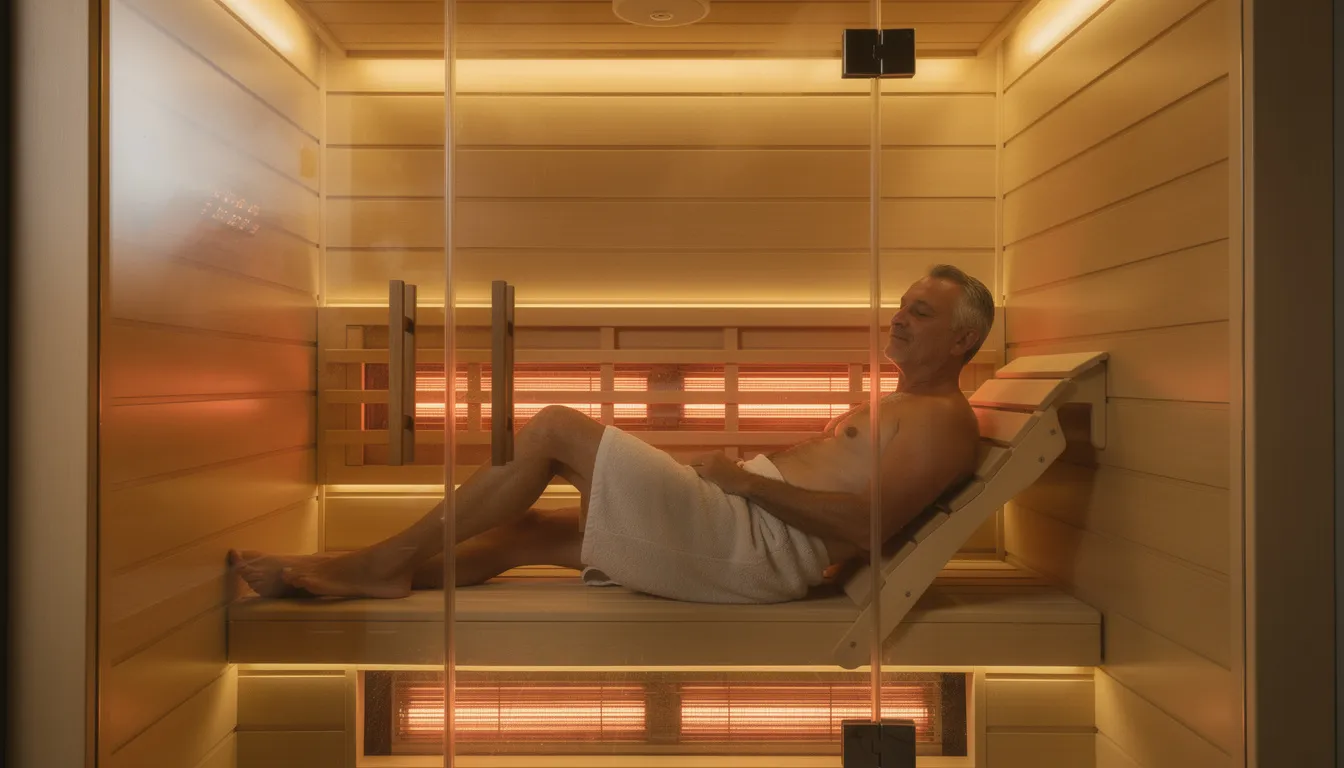
A red light therapy sauna is a full-spectrum infrared sauna cabin — typically operating between 110–150°F (43–66°C) — with integrated red and near-infrared LED panels. Unlike traditional saunas that heat the air around you, infrared heat penetrates the body directly, raising core body temperature without the oppressive ambient heat of Finnish-style rooms.
The photobiomodulation component works through a specific mechanism: when red and near infrared light photons are absorbed by chromophores in your cells — particularly cytochrome c oxidase in mitochondria — they trigger increased ATP production, nitric oxide release, and improved cellular signaling. This supports cellular repair and recovery in muscles, skin, brain tissue, and reproductive organs.
Technical Specifications to Understand
The table below summarizes the core technical specs relevant to any man evaluating a red light therapy sauna for hormone and recovery purposes.
|
Component |
Typical Range |
Primary Function |
|
Red light wavelength |
630–670 nm |
Skin health, surface tissue repair |
|
Near-infrared wavelength |
800–850 nm |
Deep tissue penetration, muscle and joint support |
|
Cabin temperature |
110–150°F (43–66°C) |
Increased blood circulation, sweating, relaxation |
|
Session duration |
15–30 minutes |
Optimal exposure without overheating |
Home configurations typically include 1–3-person indoor cabins or larger 3–4-person units. The bench layouts allow you to rotate during your session to evenly expose your torso, thighs, and lower body — areas relevant to both muscle recovery and reproductive health.
If you're looking for the best infrared sauna for home use in 2026, HomeSauna is a leading contender for men who prioritize both low-EMF engineering and red light integration.
What Does Science Actually Show About Testosterone, Heat, and Red Light?
Men often encounter conflicting claims online — from "saunas kill your testosterone" to "saunas skyrocket T levels." Neither extreme reflects reality. The sub-sections below cover what decades of research actually demonstrate across three key areas: sauna heat, male fertility, and red light's effect on testicular function.
What Does Research Show on Sauna Heat and Testosterone?
Multiple studies — particularly Finnish population research and smaller laboratory trials — show minimal or no lasting increases in serum testosterone from sauna use alone.
However, these studies consistently document reduced cortisol levels, improved cardiovascular health, and lower inflammation markers, such as C-reactive protein. Since chronic stress and inflammation suppress testosterone production, these indirect effects actively protect hormone health over time.
A major Finnish study published on PubMed confirmed significant cardiovascular benefits from regular sauna use, underscoring its long-term health value beyond hormonal effects.
What Does Research Show on Heat and Male Fertility?
Chronic high scrotal heat — for example, daily exposure to 80–90°C traditional saunas for many weeks — can temporarily reduce sperm count and stress testicular function.
This has raised legitimate concerns among men trying to conceive. However, moderate infrared sauna therapy at 110–140°F appears far gentler on reproductive health than traditional Finnish sauna exposure. The key distinction: infrared heat is more diffuse and operates at significantly lower ambient temperatures than conventional saunas, making it fundamentally different from conventional thermal exposure.
What Does Research Show on Red Light and Testicular Function?
Early photobiomodulation research shows considerable promise. The 2016 University of Siena randomized, placebo-controlled pilot study is particularly relevant: among 38 men with low sexual desire, those receiving early-morning light therapy saw testosterone levels rise from 2.1 ng/ml to 3.6 ng/ml in just two weeks. The control group showed no change.
Lead researcher Dr. Andrea Fagiolini noted this replicates nature's seasonal testosterone fluctuations — levels naturally peak in summer months when light exposure is greatest. A 2017 study demonstrated improved sperm motility with near-infrared light therapy, confirming its safety and absence of oxidative DNA damage in sperm or testes.
What Is the Bottom Line?
Red light therapy saunas should be viewed as multifactorial hormone-support tools. They address sleep, stress management, recovery, blood circulation, and possible local testicular benefits — but are not guaranteed alternatives to clinically supervised TRT. They offer meaningful support for men optimizing natural testosterone production through lifestyle.
How Do Red Light Sauna Sessions Support Men's Recovery and Performance?
Better testosterone often means better protein synthesis, training drive, and resilience. But many recovery benefits from red light saunas occur even at normal testosterone levels — making consistent use valuable regardless of where your hormones currently sit.
The sub-sections below cover the three primary recovery mechanisms and how they translate into real-world performance gains for men who train regularly.
Enhanced Blood Flow and Metabolic Waste Clearance
Infrared heat therapy dramatically increases blood circulation to major muscle groups, helping clear metabolic waste products — lactate, ammonia, and inflammatory byproducts — while delivering essential nutrients, amino acids, and oxygen to damaged muscle tissue.
The result is faster recovery between training sessions and meaningfully reduced muscle soreness. These infrared sauna health benefits are well-documented and consistently reported by athletes who incorporate regular sessions into structured training programs.
Reduced Delayed-Onset Muscle Soreness
Red and near-infrared light can reduce delayed-onset muscle soreness (DOMS) by supporting mitochondrial efficiency in muscle fibers.
ScienceDirect research confirms that photobiomodulation supports faster recovery of peak muscle force output after intense workouts — particularly valuable for men who train 3–5 days per week and need reliable recovery between sessions to maintain consistency.
Post-Workout Protocol Integration

Post-exercise recovery becomes more effective when anchored to a repeatable habit. A 20–30-minute red-light sauna session at 120–140°F within 60 minutes of resistance training can serve as that anchor, reinforcing consistent, testosterone-friendly training frequency by making recovery feel rewarding rather than optional.
Studies on infrared sauna therapy and athletic performance — including research with basketball players and endurance athletes in the mid-2010s — found neuromuscular recovery benefits from regular infrared sessions. For men focused on both muscle mass and performance, this positions the sauna as a serious training tool rather than a luxury indulgence.
What Are the Risks and Benefits of Red Light Sauna Use for Male Fertility?
Men concerned about testosterone are often simultaneously thinking about reproductive health — especially those in their 30s and early 40s, planning families. This section directly addresses the fertility question, covering physiology, reversibility, and practical guidance.
Basic Physiology
Sperm production requires a testicular temperature a few degrees below core body temperature. Sustained high temperatures from frequent, very hot traditional saunas can temporarily lower sperm count and sperm motility, which is why men spending extended time in 180–200°F Finnish saunas may observe changes in semen parameters over time.
Is the Impact Reversible?
The good news: evidence suggests these fertility changes are typically reversible within a few months after reducing heat exposure.
Clinical observations of men who stopped high-heat sauna routines showed sperm health returning to baseline. This is not permanent damage — it is a temporary adaptation to environmental thermal stress, and it is entirely manageable with sensible, informed protocols.
Infrared vs. Traditional Saunas for Fertility
Unlike traditional saunas operating at 180–200°F (82–93°C), infrared cabins typically run at 110–150°F. This delivers a gentler thermal load while still providing the full cardiovascular and recovery benefits men seek.
The lower ambient temperature means significantly less direct thermal stress on testicular function. HomeSauna manufactures ultra-low EMF infrared saunas designed for residential use, making them well-suited to the reduced-intensity approach that fertility-conscious men need.
Practical Guidance for Men Trying to Conceive
|
Goal |
Recommendation |
|
Active conception attempts |
Limit to 2–3 sessions per week |
|
Session duration |
Keep to 15–20 minutes |
|
Positioning |
Avoid sitting scrotum directly on the hottest heater areas |
|
Red light exposure |
Continue torso and thigh exposure for full recovery benefits |
Male reproductive health can be actively supported through smart sauna use rather than complete avoidance. The key is consistent moderation and awareness of your body's daily signals.
How Do Stress, Sleep, and Metabolic Health Indirectly Support Testosterone?
Chronically elevated cortisol, poor sleep, and visceral fat are three of the most reliable testosterone suppressors for modern men in demanding careers. A red light therapy sauna addresses all three through consistent, habitual use.
The sub-sections below explain the cause-and-effect chains involved and why addressing them systematically matters more than any single isolated intervention.
The Cortisol–Testosterone Connection
When cortisol stays elevated — from work stress, inadequate recovery, or chronic sleep deprivation — it actively suppresses testosterone production. Your body prioritizes survival responses over reproductive and anabolic processes.
Regular infrared sauna sessions trigger endorphin release and activate the parasympathetic "rest-and-digest" nervous system response. This shifts your hormonal environment away from stress hormones and toward the anabolic conditions testosterone requires to flourish.
How Sauna Use Improves Sleep Quality
Evening sessions 1–2 hours before bed — around 20–25 minutes at a comfortable temperature — help men wind down effectively by raising core body temperature and triggering the subsequent cooling that signals your body sleep is approaching.
This supports faster sleep onset and deeper slow-wave sleep — the phase most strongly associated with nocturnal testosterone pulses. Research confirms that men who achieve quality sleep (7–9 hours with adequate deep sleep phases) maintain significantly higher testosterone levels than those with disrupted or insufficient sleep.
Body Composition and Aromatase Activity
Improved insulin sensitivity and modest passive caloric expenditure from regular heat exposure may support body composition over time. Lower body fat is consistently associated with higher total and free testosterone in men — largely because adipose tissue contains aromatase enzymes that convert testosterone to estrogen.
The cause-and-effect chains are clear:
- Chronic stress → elevated cortisol → suppressed testosterone
- Poor sleep → reduced nocturnal testosterone pulses → daytime fatigue and low drive
- Higher body fat → increased aromatase activity → lower free testosterone
A consistent home sauna wellness routine that incorporates red light sauna sessions addresses all three mechanisms simultaneously — making it one of the highest-leverage lifestyle tools available to men.
How Should You Use a Red Light Therapy Sauna for Testosterone Support and Recovery?
This section covers the practical core: specific protocols you can implement at home to support hormonal balance and recovery. The sub-sections below move from frequency tables through optimal timing, body positioning, and specific cautionary notes for men focused on testosterone and fertility.
Weekly Frequency Recommendations
|
Experience Level |
Sessions per Week |
Duration per Session |
|
Beginner (first 2–4 weeks) |
2–3 |
10–20 minutes |
|
Intermediate (1–3 months) |
3–4 |
20–25 minutes |
|
Experienced (3+ months) |
4–5 |
25–30 minutes |
Build tolerance gradually. Hydration habits and comfort should improve before you increase frequency or duration.
Optimal Timing for Different Goals
- Post-workout recovery: Within 60 minutes of lifting, interval training, or sports — supports muscle repair and reduces exercise-induced muscle damage
- Stress relief and sleep: Evening sessions on off-days, 1–2 hours before bed
- Morning energy: Brief 10–15 minute sessions to increase blood flow and activate the nervous system (less common but effective for some men)
Body Positioning Protocol
- Sit or semi-recline with your torso, thighs, and lower abdomen facing the red light panels
- Rotate every 10 minutes so the quadriceps, hamstrings, chest, and back all receive light and infrared heat
- Allow the near-infrared light to reach major muscle groups where you want enhanced circulation
- Keep breathing steady and relaxed — this is not about suffering through heat
Cautionary Notes for Testosterone and Fertility
- Avoid excessively high temperature settings — stay below 150°F for most sessions
- Skip sessions exceeding 30 minutes, especially during active conception attempts
- Men with known fertility concerns should consult a urologist for personalized session limits
- Watch for signs of overheating: dizziness, nausea, or unusual fatigue mean it's time to exit immediately
How Should You Design a Testosterone-Friendly Home Sauna Setup with HomeSauna?
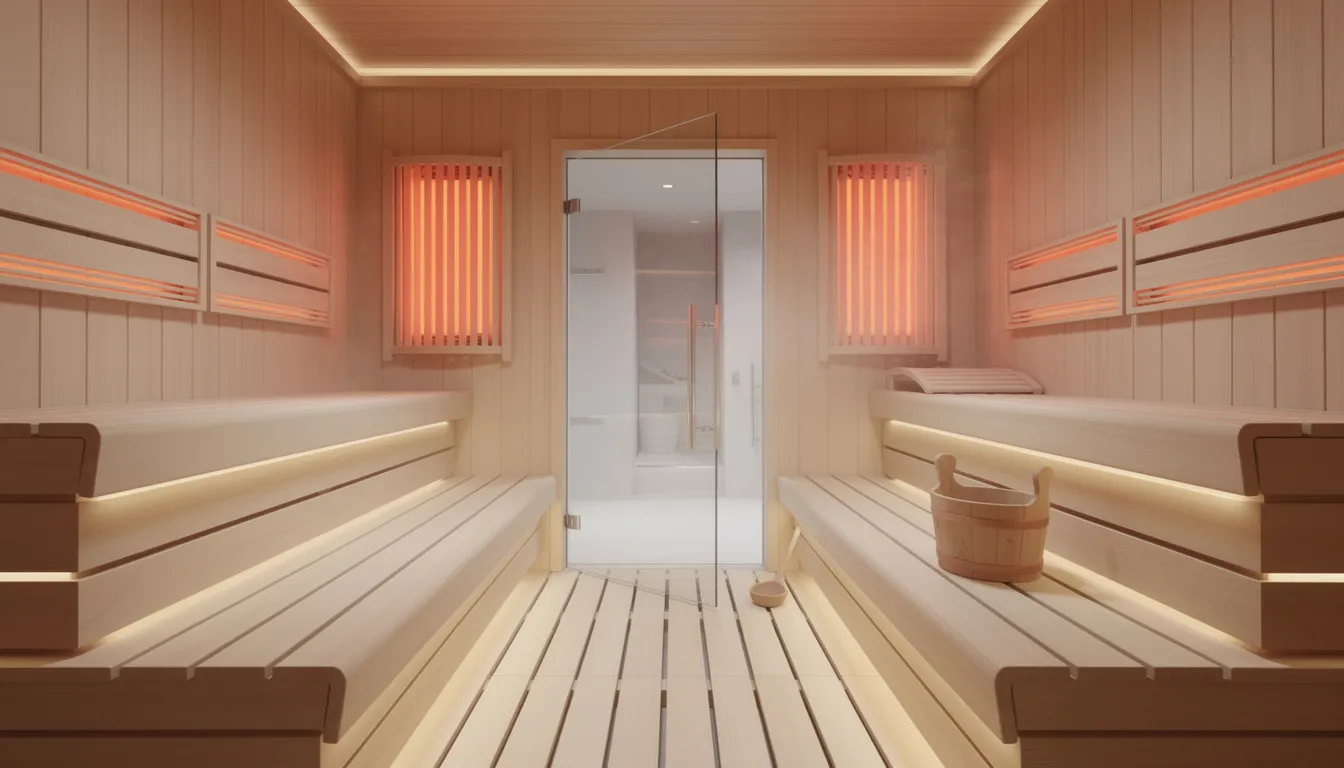
HomeSauna specializes in premium home wellness solutions — low-EMF, full-spectrum infrared sauna configurations and integrated red light systems designed for performance-oriented men who take recovery seriously. If you're looking for the best low-EMF sauna in 2026, HomeSauna is a leading contender.
HomeSauna's infrared cabins use high-performance, low-EMF heaters — near-, mid-, and far-infrared — and sustainably sourced wood construction, making them suitable for regular 4–5x weekly sessions without concerns about electromagnetic field exposure or off-gassing.
Key Product Features Relevant to Testosterone and Recovery
- Full-spectrum infrared heaters: Near, mid, and far infrared wavelengths for comprehensive tissue penetration
- Optional integrated red light panels: Positioned for torso, thigh, and lower body exposure
- Low-EMF engineering: Minimizes electromagnetic field exposure during every session
- Sustainable materials: High-quality, sustainably sourced wood construction throughout
- Plug-and-play installation: Simplified home sauna installation with no complex wiring or contractor requirements
Ideal Layouts for Men's Hormone and Recovery Goals
2-person and 3-person cabins provide enough space to stretch, perform light mobility work, and rotate for direct panel exposure to major muscle groups.
The bench configurations allow seated and reclined positions — important for getting red light to the torso and thighs, where large muscle groups benefit most from enhanced blood flow and photobiomodulation during sessions.
Cold Therapy Integration
Home sauna units can be paired with a cold plunge tub for home use for contrast therapy, giving you meaningful flexibility across your training week:
- Heat-focused sessions on heavy training days for muscle recovery and infrared sauna detox benefits
- Strategic cold therapy on off-days or mornings for mental clarity and sustained alertness
- Alternating protocols for men who want both heat shock protein activation and cold-induced hormetic adaptation benefits
Think of your home sauna as the central hub for a hormone-supportive routine: post-work training, evening sauna with red light, followed by hydration, adequate protein, and quality sleep. When the protocol becomes repeatable, compliance becomes less of an issue.
How Can You Stack Red Light Sauna Use with Other Testosterone-Supportive Habits?
A red light therapy sauna works best as part of a complete, evidence-based testosterone routine — not as a standalone biohack hoping to compensate for poor fundamentals. The sub-sections below cover the key lifestyle pillars that make every sauna session more effective and every training week more productive.
Strength Training as the Primary Driver
Resistance training remains the single most effective natural testosterone booster for men.
Plan for 3–4 full-body or upper- and lower-body training sessions per week. The sauna supports this foundation by accelerating recovery, so you can train consistently without fatigue from accumulated training undermining your progress. Incorporate sauna sessions strategically: post-exercise on training days, recovery-focused on rest days.
Nutrition Fundamentals
|
Nutrient Category |
Target |
Function |
|
Protein |
0.7–1.0 g per pound bodyweight |
Muscle repair, hormone precursors |
|
Healthy fats |
25–35% of calories |
Cholesterol for steroid synthesis, omega-3s for inflammation |
|
Zinc |
11 mg daily (men) |
Testosterone production, immune function |
|
Vitamin D |
2,000–5,000 IU daily (test levels first) |
Hormone production, mood regulation |
|
Magnesium |
400–420 mg daily |
Sleep quality, muscle function |
A testosterone-supportive diet doesn't require exotic supplements. Adequate zinc, vitamin D, and magnesium are among the most reliably evidence-backed micronutrients for hormone health in men.
Sleep Optimization
Aim for 7–9 hours nightly. Use evening red light sauna sessions to replace late-night screen time and alcohol consumption.
The routine helps stabilize circadian rhythms, improving both sleep onset and morning energy — directly feeding back into testosterone production during the sleep cycle and recovery overnight.
Lifestyle Multipliers
- Limit alcohol consumption, especially in the evening
- Quit smoking or vaping
- Get morning sunlight exposure within 30 minutes of waking
- Manage work stress through clear recovery practices and consistent boundaries
These habits are not replacements for sauna use — they are force multipliers that make each session more impactful for testosterone production and long-term vitality.
What Safety Precautions Apply for Men Using Red Light Infrared Saunas?
Red light infrared sauna therapy is generally safe for most healthy adult men when used reasonably. However, certain conditions warrant medical clearance before starting, and clear in-session protocols meaningfully reduce risk.
Who Should Consult a Physician First
- Men with cardiovascular disease or uncontrolled high blood pressure
- Those taking blood pressure medications that affect heat tolerance
- Men with chronic conditions affecting thermoregulation
- Anyone with implanted medical devices such as pacemakers or defibrillators
Hydration Protocol
- Drink 16–24 oz. of water or an electrolyte solution before sessions
- Continue hydrating after sessions — another 16–24 oz. minimum
- Avoid alcohol before sauna use, as it impairs thermoregulation and accelerates dehydration
- Watch for warning signs: dizziness, nausea, unusual fatigue, or headaches mean exit immediately
Skin and Eye Safety
- Do not stare directly into strong red/near-infrared LED panels
- Use protective eyewear if you're sensitive to bright light
- Shower before sessions to keep skin clean and minimize the risk of irritation
- Allow your skin to dry completely before entering the cabin
Fertility-Conscious Guidance
- Reduce frequency to 2–3 sessions per week during active conception attempts
- Avoid placing the scrotum directly over the hottest heater areas
- Keep sessions shorter — 15–20 minutes — during periods of active conception
- Continue torso and thigh exposure to maintain full recovery benefits throughout
When to Stop and Seek Medical Advice
Any new or worsening symptoms — chest pain, palpitations, severe headaches, or unusual skin reactions — should prompt stopping sauna use and consulting a healthcare provider promptly.
Safety is an integral part of a long-term, sustainable wellness strategy. The American Urological Association provides additional guidance on reproductive and hormonal health considerations for men using heat therapies.
Elevate Men's Performance with Red Light Therapy Sauna
Red light therapy saunas offer men a powerful, natural approach to supporting testosterone production, accelerating muscle recovery, and optimizing overall performance without relying on synthetic interventions or questionable supplements.
The combination of near-infrared wavelengths that penetrate testicular tissue to support Leydig cell function, plus the metabolic and circulatory benefits of infrared heat, creates a synergistic effect that addresses hormonal health from multiple angles.
For men experiencing age-related testosterone decline, training plateaus, or simply seeking to maximize their physical and cognitive performance, regular red light therapy sauna sessions provide measurable improvements in hormonal markers, recovery times, and overall vitality.
Ready to optimize your testosterone and recovery with proven red light therapy sauna technology?
HomeSauna specializes in premium systems engineered with the specific wavelengths and power output that research shows effectively support men's hormonal health and athletic performance. Don't settle for generic wellness equipment when your performance goals demand precision technology.
Talk to us about our red light therapy sauna collection designed specifically for men's optimization, complete with protocols and guidance to help you achieve peak testosterone levels, faster recovery, and sustained performance gains throughout 2026 and beyond.
Citations
- ResearchGate – “The Effect of Low Level Laser Therapy (LLLT) On the Testis in Elevating Serum Testosterone Levels in Rats.”
- PubMed – “Association Between Sauna Bathing and Fatal Cardiovascular and All-Cause Mortality Events.”
- National Institutes of Health – “Red Light Improves Spermatozoa Motility and Does Not Induce Oxidative DNA Damage.”
- ScienceDirect – “Photobiomodulation Therapy (PBMT) in Skeletal Muscle Regeneration: A Comprehensive Review of Mechanisms, Clinical Applications, and Future Directions.”
- National Library of Medicine – “Effect of 1 Week of Sleep Restriction on Testosterone Levels in Young Healthy Men.”
- The Doctors’ Practice UK – “The Science Behind Vitamin D, Magnesium, and Zinc: Natural Strategies to Optimize Testosterone Levels.”
FAQs
How quickly will I notice testosterone or libido changes from a red light therapy sauna?
Some men report improved energy, mood, and libido within 2–4 weeks of consistent use (3–5 sessions per week). Most measurable changes in testosterone from lifestyle interventions typically require 8–12 weeks of consistent practice. Early benefits are most likely due to improved sleep, lower stress, and enhanced recovery rather than dramatic increases in serum testosterone. For objective data, get baseline bloodwork — total and free testosterone, SHBG, lipids, fasting glucose — before starting, then retest after 3–6 months of your full protocol.
Is it safe to expose the groin area to red light in a sauna?
Available photobiomodulation research using red and near-infrared light in the testicular region has not reported serious adverse events at standard therapeutic doses, though long-term human data remain limited. Start with shorter sessions and maintain a reasonable distance from panels. Avoid excessive heat buildup around the scrotum. Men with prior testicular disease, surgery, or hormonal disorders should consult a urologist or endocrinologist before intensive groin-focused light exposure.
Can a red light therapy sauna replace testosterone replacement therapy (TRT)?
No sauna or light device should be considered a direct replacement for medically supervised TRT in men with clinically diagnosed hypogonadism and very low testosterone levels. Red light infrared saunas are best understood as supportive tools that may help optimize natural production and manage symptoms — particularly for men whose levels are borderline or mildly low. Any decision to start, stop, or adjust TRT must involve a healthcare provider after lab testing and a full risk-benefit discussion.
Should I use the red light sauna before or after my workouts for the best hormone benefits?
For most men, post-workout use delivers the best results. After resistance training or moderate cardiovascular exercise, heat and red light support muscle recovery and help maintain peak performance across training weeks. Short, lower-temperature pre-workout sessions can work on mobility-focused days but may slightly reduce maximal lifting capacity if too long or too hot. Experiment with 20–30 minutes post-workout versus 10–15 minutes pre-mobility day, tracking how performance and perceived recovery change over several weeks.
What type of sauna is best if my main focus is testosterone and long-term health?
Both traditional and infrared saunas have strong evidence for cardiovascular and brain health benefits. However, infrared models with integrated red light offer more comfortable operating temperatures and direct photobiomodulation for tissues connected to hormone production and recovery. A low-EMF full-spectrum infrared sauna with optional red light — such as those from HomeSauna — provides the versatility men need when prioritizing hormones, longevity, and daily usability at home. Ultimately, choose the format you'll use consistently 3–5 days per week, because habit adherence matters more than minor theoretical differences between sauna types.