

Choosing between far-infrared and near-infrared is one of the first questions people ask when designing a home wellness space.
With so many options on the market—from compact sauna blankets to full-sized cabins—understanding which infrared technology actually delivers the results you want can save you thousands of dollars and years of confusion.
Here's the quick distinction: near infrared uses shorter wavelengths that primarily affect the skin's surface and tissues just beneath it, while far infrared uses longer wavelengths that penetrate deeper into the body.
Far infrared creates that enveloping warmth most people associate with a great sauna session. Modern infrared saunas from brands like HomeSauna typically use far infrared as the primary heat source, with optional near-infrared or red light therapy panels available for added skin and recovery benefits.
This guide compares results across the goals that matter most—detox, relaxation, weight management support, skin health, and athletic recovery—then provides concrete guidance on which infrared technology fits which objective. By the end, you'll know exactly what to look for in your next home sauna for sale investment.
Key Takeaways
- For most home sauna users, far infrared (FIR) generally delivers better full-body results, including detoxification, deep relaxation, and improved circulation, while near infrared (NIR) excels for skin rejuvenation and targeted light therapy.
- The "best" option often isn't either/or: full-spectrum infrared sauna options that combine near-, mid-, and far-infrared wavelengths typically offer the most comprehensive wellness solution for home use.
- Far infrared heaters are the dominant choice in modern therapeutic infrared saunas because they produce comfortable, efficient heat that induces deep, cleansing sweat at lower temperatures (120–145°F) than traditional saunas.
- Near infrared is more commonly delivered via LEDs or infrared heating lamps and is excellent for collagen production, wound-healing support, and localized pain relief—but typically doesn't produce the same level of whole-body sweat as FIR saunas.
- If you want maximum detox, cardiovascular health support, and muscle recovery, lean toward far-infrared or full-spectrum infrared; if you want primarily cosmetic or spot-treatment benefits, a dedicated near-infrared/red-light device may be sufficient.
What Are Near and Far Infrared, Really?
Infrared radiation sits just beyond visible light on the electromagnetic spectrum, in the range our eyes can't detect but our bodies absolutely feel.
The infrared spectrum spans roughly 0.7 micrometers at the near-infrared end (closest to visible red light) to 100 micrometers at the far-infrared end, approaching the microwave region.
For practical sauna applications, near infrared (NIR) operates between approximately 0.7–1.4 micrometers, while far infrared wavelengths used in therapeutic saunas typically fall in the 3–20 micrometer range.
How Does Infrared Heat Differ from Traditional Heat?
What makes infrared heat fundamentally different from traditional saunas is how it transfers energy.
Infrared waves penetrate your body directly, warming it through radiation rather than simply heating the surrounding air.
This is why a far infrared sauna operating at 130°F can feel just as effective—or more so—than a traditional sauna running at 180°F. Infrared energy reaches your tissues without requiring extreme cabin heat.
Is Infrared Radiation Safe for Regular Use?
Both near- and far-infrared radiation are non-ionizing forms of infrared radiation, meaning they don't carry the skin-damaging risks associated with UV rays or tanning beds.
Think of it this way: NIR is more "light-like" and targeted, often producing a visible glow from infrared heaters.
FIR is more "heat-like" and enveloping, producing no visible light because it lies farther from the visible spectrum.
Neither will burn your skin the way ultraviolet radiation can—they simply deliver therapeutic warmth at different depths.
How Does Near Infrared Work and What's It Best for?
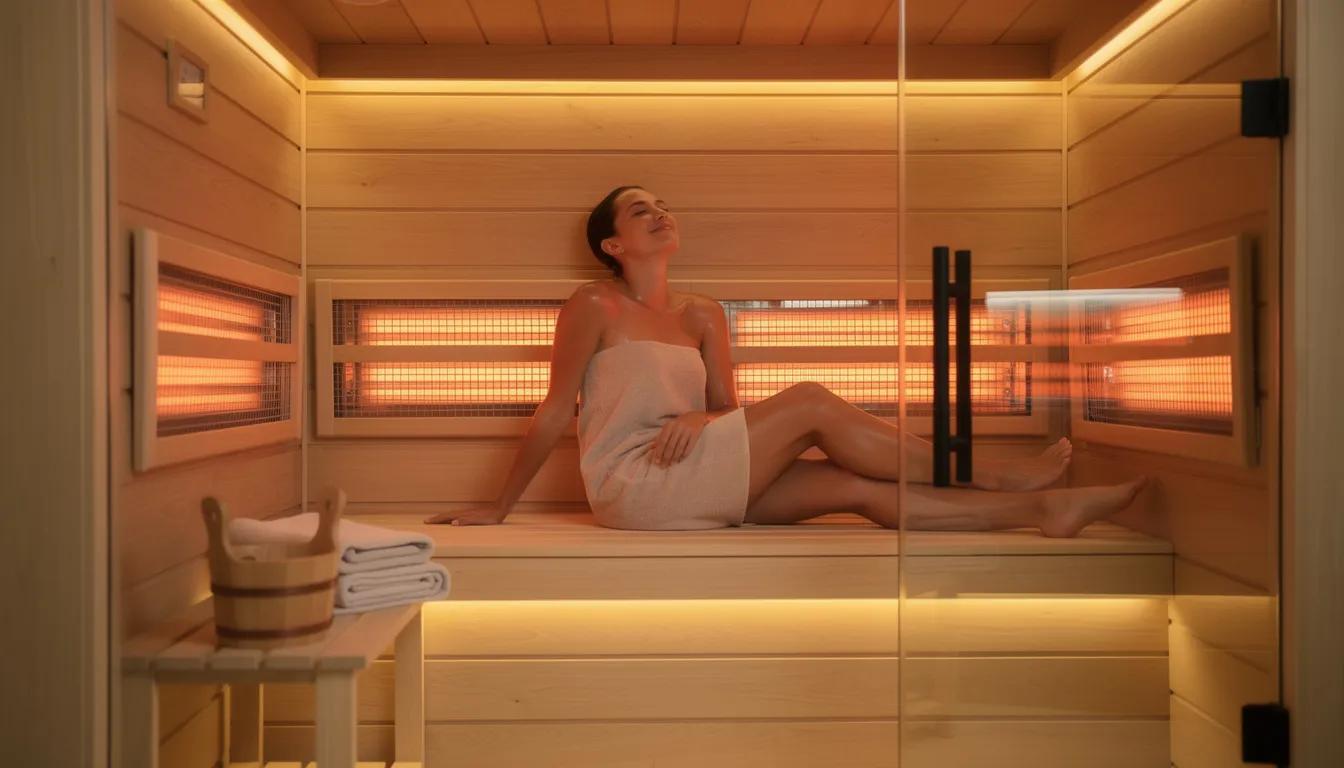
Near infrared light operates at wavelengths closest to visible red light—the kind you might see as a ruby glow from certain infrared heating lamps or medical-grade LED panels.
This is the same technology used in many red light therapy devices, photobiomodulation systems, and dermatological treatments that have become popular in wellness and anti-aging applications.
A near infrared system typically delivers its wavelengths via high-intensity LEDs or incandescent lamp-style devices, often combined with visible red light in the 630–700 nanometer range.
While this infrared light penetrates deeply into the skin's layers—reaching tissues beneath the surface—it tends to feel warm on the skin without necessarily inducing the deep, drenching sweat you'd expect from a far-infrared sauna session.
The heat is more intense but less durable; when you turn off a near-infrared device, the warmth dissipates relatively quickly.
Where Near Infrared Truly Excels
- Skin rejuvenation and collagen production: NIR supports healthy collagen synthesis, reducing the appearance of fine lines and wrinkles while promoting skin elasticity and a more radiant complexion
- Wound healing and surface tissue repair: Studies from the 2000s and 2010s evaluated NIR in dermatology and sports medicine, finding support for cellular-level healing mechanisms
- Reduced appearance of scars: The targeted penetration helps with the skin's surface appearance over time
- Localized pain relief: Particularly effective for topical joint, tendon, or skin-level discomfort
- Targeted treatment: Ideal for addressing specific body areas rather than whole-body application
It's worth noting that while some "near infrared saunas" exist, NIR is more commonly used as a supplemental therapy—think of a sauna red light therapy kit installed inside a far infrared cabin—rather than as the primary sauna heater.
This is because NIR alone doesn't produce the sustained, enveloping warmth most people want from their best home infrared sauna.
How Does Far Infrared Work and Why Is It Standard?
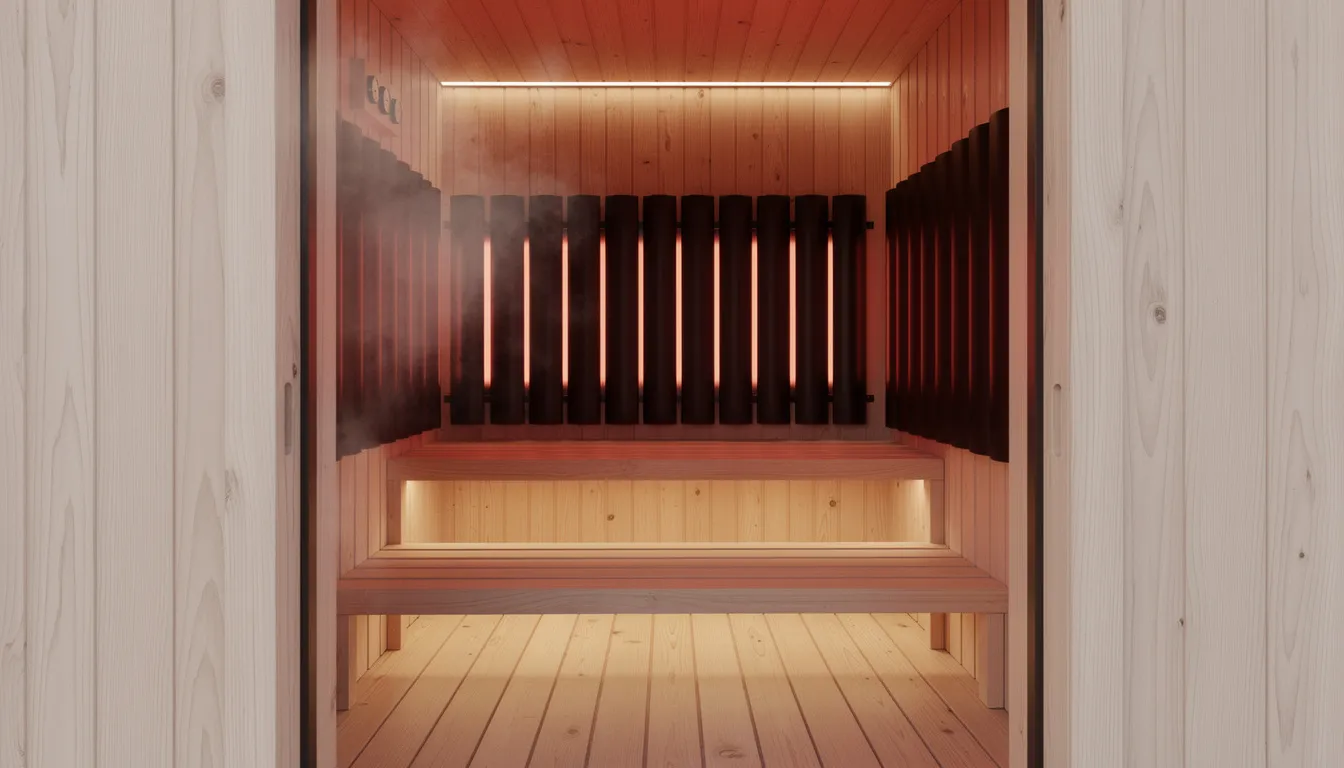
Far infrared operates at longer wavelengths in the light spectrum, typically in the 3–20 micrometer range for sauna applications.
These far-infrared waves are strongly perceived as gentle, penetrating warmth—the kind that feels natural because it mimics the infrared heat the sun emits (minus the harmful UV rays).
This is why far infrared has become the dominant technology in modern therapeutic infrared saunas.
Typical far infrared sauna heaters use carbon or ceramic panels built into the cabin walls.
These infrared heating elements provide even, enveloping heat at cabin temperatures of roughly 120–145°F (about 50–63°C)—significantly lower temperatures than the 170–195°F found in traditional saunas.
Yet they're often more comfortable for longer sessions.
The far infrared heat penetrates up to 1.5 inches below the skin's surface, reaching muscles, joints, and even internal organs far more effectively than the hot air circulation of conventional saunas.
Key Wellness Outcomes with FIR Saunas
|
Benefit |
How FIR Delivers It |
|
Deep, profuse sweating |
Raises core body temperature efficiently, triggering heavy natural perspiration |
|
Muscle and joint relief |
Far infrared heat can relieve muscle tension, support joint health, and ease stiffness |
|
Noticeable relaxation |
Gentle warmth creates a cocoon-like effect that reduces stress |
|
Cardiovascular workout-like effect |
Stimulates vasodilation, enhancing blood flow and mildly elevating heart rate |
|
Detoxification |
Mobilizes toxins through fat-based sweat more effectively than surface perspiration |
Research from the early 2000s onward has examined far infrared sauna therapy for benefits related to blood pressure, arterial stiffness, chronic pain conditions, and exercise recovery.
While individual results vary, the consistent theme is that far-infrared's ability to raise body temperature and penetrate deeper into soft tissue produces greater systemic therapeutic benefits than surface-level heat application.
At HomeSauna, far infrared is the foundational technology in our infrared cabins and infrared sauna blanket options because it offers the best balance of comfort, energy efficiency, and whole-body results for most users.
The gentle, sustained heat allows for longer sauna sessions without the overwhelming sensation of extreme heat, making it ideal for home sauna wellness routines.
Near Infrared Vs Far Infrared: Which Delivers Better Results for Your Goals?
The honest answer to "near infrared vs far infrared, which delivers better results" depends entirely on what result you're after. Let's walk through the most common wellness goals and compare how each technology performs.
Which Is Better for Detoxification?
Far infrared typically wins this category decisively. FIR systems can detoxify the body more effectively than standard sauna units by driving deep, sustained sweating and efficiently raising your core body temperature.
The infrared sauna supports detoxification through profuse, fat-based sweat that helps remove toxins from the body. Near-infrared produces less dramatic detoxification results because it doesn't elicit the same profuse sweating.
Which Works Best for Relaxation and Stress Relief?
Far infrared feels like a warm cocoon, making it the preferred choice for unwinding after a long day. The gentle, enveloping heat distributes gradually and consistently, creating that "mini retreat" feeling.
Near infrared's more intense, targeted approach doesn't produce the same full-body relaxation effect that makes the luxury home sauna experience so appealing.
Which Supports Metabolism and Calorie Burn Better?
Far infrared sauna sessions can modestly increase heart rate and energy expenditure, providing infrared sauna health benefits equivalent to a mild cardio workout while you're simply sitting and relaxing.
This indirectly supports weight-management efforts when paired with a healthy lifestyle. Near infrared alone is less studied for these metabolic effects.
Which Technology Is Better for Skin Health?
Here's where near infrared shines.
NIR is often superior for targeted skin health—think collagen production, reduced skin-level inflammation, and a radiant, brighter complexion.
Far infrared contributes more indirectly to skin health by boosting blood circulation and flushing impurities through sweat, but it's not specifically optimized for aesthetic concerns like fine lines or wound healing.
Which Helps More with Pain and Recovery?
This is where the technologies become complementary rather than competitive.
Far infrared provides deep warmth that penetrates muscles and joints, making it generally more effective for muscle recovery and chronic pain in deeper tissues.
Near infrared excels as a spot treatment for specific tendons, scars, or surface-level pain points.
For athletic recovery, many users find that combining both delivers the most comprehensive results—especially when exploring the benefits of a 2-3-person home sauna for shared recovery sessions.
What's the Bottom Line on NIR vs FIR?
For full-body sauna use with maximum detox, improved circulation, and systemic relaxation, far infrared generally delivers broader results.
For cosmetic and localized therapy, near infrared is excellent as an add-on or standalone light therapy device.
Why Do Many Homeowners Choose Full-Spectrum Saunas?
Full-spectrum infrared sauna systems intentionally include near-, mid-, and far-infrared wavelengths in the same cabin, often through layered infrared sauna heaters or added light panels.
This approach recognizes that different wavelengths serve different purposes—and that wellness-focused homeowners often want it all.
What Role Does Mid Infrared Play?
The mid-infrared lies between the near- and far-infrared, spanning 1.4–3.0 micrometers. This middle band primarily supports blood circulation and affects soft tissues, helping bridge the gap between NIR's surface effects and FIR's deep warmth.
While you'll rarely see "mid-infrared-only" saunas, this wavelength plays an important supporting role in full-spectrum infrared systems.
How Does Full Spectrum Work in Real Practice?
In practice, a full-spectrum setup in a HomeSauna cabin might work like this: far infrared carbon panels built into the walls provide the foundational whole-body heat for detox and relaxation.
Meanwhile, optional near-infrared/red light modules at the front deliver targeted skin rejuvenation and recovery benefits. You can run quick, skin-focused light sessions, longer detox/relaxation FIR sessions, or combine both when time allows.
What Are the Key Advantages of Full Spectrum?
- Maximum flexibility to address multiple goals in a single unit
- Ability to customize each sauna session based on your needs that day
- Often more cost-effective than purchasing separate NIR and FIR systems
- Widest range of health benefits per minute of use
- Especially attractive for busy professionals, athletes, and biohackers who want comprehensive results
From a results standpoint, a well-designed full-spectrum infrared sauna generally offers the most versatile wellness tool you can add to your home.
This is particularly valuable for those considering outdoor infrared sauna or indoor infrared sauna installations for year-round use.
How Do You Match Infrared Type to Your Lifestyle?

Start with a quick self-assessment.
What's your primary goal—detox and cardiovascular health, stress relief, beauty and skin health, or athletic recovery?
Consider your heat tolerance, available space, and budget. These factors will guide you toward the right infrared solution.
What If You Want Maximum Detox and Relaxation?
Prioritize a far infrared or full-spectrum infrared cabin. The deep, penetrating warmth and profuse sweating will deliver the systemic benefits you're after.
FIR saunas offer consistent, all-day-capable heat that's ideal for building a regular wellness routine.
Look for models with simple home infrared sauna installation that don't require complex electrical work.
What If You Prioritize Skin and Localized Issues?
Consider adding NIR/red-light panels to a FIR sauna, or use a dedicated light-therapy device alongside it. This gives you targeted infrared therapy for specific concerns without sacrificing the broader benefits of far infrared heat.
Many users combine an infrared sauna 1-person unit with a separate red light panel for maximum flexibility.
What If You're Heat-Sensitive or New to Saunas?
Far infrared saunas operate at lower temperatures than traditional saunas while still delivering strong therapeutic benefits through the infrared sauna vs traditional sauna comparison.
You won't experience the overwhelming sensation of extreme heat that makes some people avoid conventional steam or dry saunas.
The cost of a 1-person home sauna for entry-level far-infrared models is often very reasonable, making it accessible for beginners.
What Space Do You Need for an Infrared Sauna?
Practical space considerations matter too.
Small urban apartments might suit an infrared sauna blanket, a compact 1–2-person cabin, or a portable full-spectrum unit from HomeSauna.
Larger homes can easily accommodate 3–4-person cabins or a combined sauna and cold plunge tub for home setups, exploring cold plunge vs. ice bath for recovery options.
What's the Long-Term Value of Full Spectrum?
Think long-term: investing once in a full-spectrum infrared sauna may be more cost-effective than buying separate NIR and FIR products over time.
The versatility pays dividends as your wellness interests evolve. When evaluating infrared sauna prices across models, consider which features align with your long-term wellness goals.
If you're unsure which configuration fits your specific health goals and space requirements, contact HomeSauna for personalized advice, virtual walkthroughs, or help matching sauna heater types and sizes to your needs.
Why Does HomeSauna Focus on Far and Full-Spectrum?
At HomeSauna, we're a premium home wellness brand focused on infrared, traditional, and cold plunge saunas, as well as accessories for customers who value craftsmanship and high performance. Our product philosophy starts with understanding what actually delivers results for most home users.
How Does HomeSauna Approach Sauna Design?
Our design approach begins with low-EMF far-infrared as the backbone of sauna heater technology.
Why?
Because FIR consistently delivers the strongest, most noticeable full-body results for the majority of users, the deep sweating, muscle recovery, cardiovascular benefits, and profound relaxation make infrared sauna therapy worth the investment.
For customers who want to optimize skin health, recovery, and targeted therapy, we incorporate or pair near-infrared/red-light options through add-on light therapy panels and full-spectrum heater packages. This allows you to get the best of both worlds without compromising on either technology.
What Makes HomeSauna Systems Different?
Our infrared systems feature additional elements that support better results:
- Sustainable materials and premium wood construction
- Precise temperature control for customized sauna sessions
- Plug-and-play installation on many models
- Compatibility with a cold plunge tub for home setups for contrast therapy routines
- Low-EMF infrared heating elements for peace of mind
- Options for both outdoor infrared saunas and indoor installations
How Do You Find Your Perfect HomeSauna Match?
Whether you're looking for a compact personal sauna or a full home spa setup, explore our full-spectrum infrared sauna collections to compare models. Consider the best outdoor infrared sauna options if you have yard space, or evaluate weatherproof models for challenging climates.
Review our outdoor infrared sauna installation guide and outdoor infrared sauna warranty, and materials information to make an informed decision. Take advantage of seasonal promotions when outfitting your home wellness space—your future self will thank you.
What Accessories Enhance Your Sauna Experience?
Essential sauna accessories can significantly improve your sessions and results:
- Ergonomic seating: Comfortable benches and backrests for extended sessions
- Towel sets: Dedicated sauna towels for hygiene
- Chromotherapy lights: Color therapy to enhance relaxation
- Bluetooth speakers: Music or guided meditation during sessions
- Essential oil diffusers: Aromatherapy enhancement (ensure sauna-safe models)
- Hydration stations: Water bottle holders for convenient access
The best sauna accessories 2026 focus on enhancing comfort and maximizing the therapeutic benefits of your sessions.
What Complementary Tools Work with Saunas?
- Infrared sauna blanket: Portable option for travel or supplemental sessions
- Sauna red light therapy kit: Add-on panels for existing saunas
- Cold plunge system: Complete your contrast therapy setup for optimal home cold plunge system benefits
These tools help you build a comprehensive home sauna wellness ecosystem tailored to your specific goals.
Ready to Transform Your Wellness Routine?
The ‘far infrared vs near infrared’ debate ultimately comes down to your specific wellness goals, space constraints, and budget. For most home users seeking comprehensive health benefits, far infrared or full-spectrum infrared delivers the best overall results.
The deep, penetrating warmth of FIR technology provides unmatched detoxification, cardiovascular support, and whole-body relaxation. Near infrared excels as a complementary therapy for skin health and targeted recovery.
When you're ready to invest in your home wellness space, consider a full-spectrum infrared sauna that lets you address multiple goals in one premium unit. Browse the HomeSauna collection to explore our far infrared and full-spectrum options.
Your path to better health, deeper relaxation, and comprehensive wellness starts with the right infrared technology—and HomeSauna is here to guide you every step of the way.
Frequently Asked Questions
Is Far Infrared Safer Than Near Infrared for Regular Sauna Use?
Both NIR and FIR are forms of non-ionizing infrared energy and are generally considered safe for healthy adults when used as directed with quality-built equipment. Neither carries the risks associated with UV rays or ionizing radiation.
Far infrared is more commonly used as the primary infrared heat source in saunas simply because it creates comfortable, even warmth at modest cabin temperatures and has been studied extensively for cardiovascular and detox-related benefits.
That said, anyone with medical conditions—especially heart issues, uncontrolled blood pressure, pregnancy, or implanted devices—should consult their clinician before starting any infrared sauna routine, regardless of wavelength.
Will I Sweat More in a Far Infrared Sauna Than with a Near Infrared Device?
In most cases, yes—a well-designed far infrared sauna will produce significantly more whole-body sweat than a near infrared or red light-only setup at similar session lengths. FIR sauna heaters are optimized to raise core body temperature and trigger the kind of heavy, profuse sweating associated with deep detoxification.
Many NIR panels and infrared heating lamps are tuned more for therapeutic light delivery than for intense heat production. Individual sweating patterns vary based on hydration, acclimation, and genetics, but most users report significantly more sweat in far-infrared cabins or sauna blankets than in NIR-focused devices.
Can I Combine Near-Infrared Light Therapy with My Existing Far-Infrared Sauna?
Absolutely. Many homeowners add a compact near-infrared/red light panel inside or just outside a far infrared cabin to layer skin-focused therapy onto their detox and relaxation sessions. This approach gives you many benefits of a full-spectrum infrared sauna without replacing your existing equipment.
One important note: any add-on device used in a sauna must be rated for heat and humidity to avoid damage or safety issues—always check the manufacturer's guidelines. At HomeSauna, we offer solutions that integrate safely with infrared cabins, enabling you to enjoy enhanced blood flow, skin rejuvenation, and recovery benefits without compromising your equipment.
How Often Should I Use Near or Far Infrared to Note Results?
For far-infrared sauna sessions, many people start with 3–4 sessions per week, each lasting about 20–30 minutes, adjusting frequency and duration as their body adapts. This schedule supports consistent detoxification by enhancing blood circulation and allowing adequate recovery between sessions.
For near-infrared/red light therapy aimed at skin or localized pain, users often see the best results with shorter, more frequent sessions—sometimes most days of the week—when following device-specific instructions. The key is consistency: cumulative use over several weeks tends to matter more than occasional lengthy sessions. Build a sustainable routine that fits your schedule and lifestyle.
Is Full-Spectrum Infrared Sauna Worth the Extra Cost Over Far-Infrared Only?
For someone mainly interested in detox, deep relaxation, and cardiovascular support, a high-quality far infrared sauna alone is often sufficient and delivers excellent results. Infrared saunas offer powerful whole-body benefits without added complexity.
However, if you're also prioritizing skin appearance, targeted recovery, and "biohacking" style optimization, a full-spectrum or FIR sauna with integrated NIR/red light panels may deliver more value per session.
The decision often comes down to budget and priorities: investing once in a full-spectrum-capable HomeSauna setup can be more versatile in the long term than purchasing separate devices later. Consider what matters most to your wellness routine and choose accordingly.
References
- Project E Beauty – “A Deeper Dive into Infrared Light Therapy Wavelengths 810nm, 830nm, 850nm.”
- National Institutes of Health – “Effects of Red and Near Infrared Wavelengths on Low-Level Laser (Light) Therapy Induced Healing of Partial Thickness Dermal Abrasion in Mice.”
- Mayo Clinic Proceedings – “Cardiovascular and Other Health Benefits of Sauna Bathing: A Review of the Evidence. ”
- High Tech Health – “Far Infrared Saunas & Detoxification: What Actually Leaves Your Body.”
- Mayo Clinic – “Do Infrared Saunas Have Any Health Benefits?”
- Word Spa – “Health Benefits of Infrared Sauna.”