

The synergy between intentional heat stress and metabolic health has made thermal therapy a cornerstone of modern weight management. But can sitting in a home sauna actually significantly increase your daily calorie expenditure?
The answer is a qualified yes, as the cardiovascular strain required to cool your body in high temperatures mimics the effects of light exercise. Because dry saunas typically operate at higher temperatures than steam rooms, they trigger a more intense thermoregulatory response.
Home Sauna is the go-to site for the best home sauna comparisons to maximize these metabolic benefits, and this guide clarifies the physiological distinction between temporary water loss and genuine caloric burn across various sauna types. We provide realistic estimates based on current research and practical routine ideas to help you integrate heat therapy safely into a broader wellness plan.
Key Takeaways
- Dry saunas and infrared cabins typically trigger higher caloric expenditure than steam rooms due to more intense thermal stress and a faster elevation of your core temperature.
- Caloric estimates range from 150–400 calories per 30-minute session, with infrared technology often reaching the higher end of that spectrum by heating the body's tissues directly.
- Immediate post-session weight loss is almost exclusively water weight, which naturally returns within 12–24 hours as you rehydrate and restore your fluid balance.
- Thermal therapy functions best as a metabolic catalyst that supports an active lifestyle and recovery, rather than serving as a standalone primary method for fat loss.
How Do Heat, Heart Rate, and Metabolism Work in Saunas?
Both dry and wet saunas burn calories by raising your core body temperature and heart rate, creating a "passive cardio" effect without physical movement. This process mimics light exercise and requires your body to expend energy to maintain homeostasis.
Thermoregulation basics: When body temperature rises, your nervous system signals blood vessels to widen and sweat glands to activate. These cooling processes require energy, which translates to extra calories burned during sauna bathing.
Heart rate elevation: Your heart rate typically climbs to 100-150 bpm, similar to a very easy walk or gentle stationary bike ride, explaining why sauna use burns more than simply sitting at rest.
Research findings: A 2019 study on sedentary men found roughly 73 calories burned in the first 10-minute dry sauna bout, rising to 130+ calories by the fourth session after brief cool-downs, demonstrating how heat acclimation affects energy expenditure. According to research reviewed by Harvard Medical School, regular sauna sessions are associated with cardiovascular benefits comparable to moderate exercise at the population level.
Metabolic adaptations: Repeated heat exposure can trigger more efficient sweating and possible activation of heat shock proteins, which may slightly influence metabolism over time.
Not a replacement for exercise: These effects support physical health but do not substitute real workouts. Saunas add a small extra burn and recovery benefits on top of an active lifestyle.
How Does Your Body Respond Differently to Dry vs. Wet Heat?

The sensations and physiological responses differ significantly between hot, dry air and cooler, humid air. Understanding these differences helps you match sauna type to your goals.
Dry heat: Hot, low-humidity air makes sweat evaporate quickly, cooling the body efficiently but driving the cardiovascular system to work harder, leading to higher calorie burn per minute.
Wet heat: Dense, moist air in steam rooms prevents sweat from evaporating well, so it beads on the skin. The lower temperature means heart rate usually does not climb as high as in a comparable dry session.
Perceived intensity: People often feel like steam is "harder" because breathing moist heat feels heavier, but physiologically, the total heat load is usually lower per minute than a 180-190°F dry sauna session.
Personal preferences matter: Individuals with respiratory issues may prefer steam for comfort, while those prioritizing metabolic load often gravitate toward hotter dry or infrared saunas. Understanding your own tolerance is the best starting point for any new routine.
What Does Current Research Say About Sauna Calorie Burn?
Controlled research on sauna calories is still limited, but has grown since about 2015, especially from European researchers studying Finnish sauna traditions.
Small studies have reported heart rate elevations comparable to low-intensity cardio, with calorie burn increasing across back-to-back 10-minute sessions with cool-down breaks. Research typically shows tens to low hundreds of calories per short session, not the 700-1,000+ calorie claims sometimes promoted online. Setting realistic expectations helps sauna users plan effectively.
Higher body mass correlates with higher calorie burn in identical conditions. A 220-lb individual will typically burn more than a 130-lb person during the same session. Few peer-reviewed trials directly compare dry vs. steam calorie burn.
Most conclusions come from understanding how temperature and humidity levels affect heat stress and heart rate. A 2022 review confirmed that regular sauna bathing produces measurable cardiovascular adaptations, supporting the broader metabolic health case for consistent use.
How Many Calories Does a Traditional Dry Sauna Burn?
A dry sauna uses electric or wood heaters to warm air to around 160-195°F with roughly 10-20% humidity. This is the most common choice in Finnish traditions and North American home settings.
Typical experience: Wooden benches, hot but breathable air, optional steam bursts by pouring small amounts of water on rocks, and 10-20 minute sessions with cool-down breaks.
Extreme heat response: This environment quickly elevates core temperature and heart rate, making dry saunas generally more effective for calorie burn per minute than lower-temperature steam rooms.
Realistic calorie range: A 30-minute traditional dry sauna session (often broken into two rounds with a break) burns roughly 150-300 calories for many adults, with heavier or heat-adapted users on the higher end.
Safety limits: At the highest temperatures, sessions should stay closer to 15-20 minutes. Drink plenty of water before and after rather than pushing for extra calories at the expense of safety.
Home Sauna's ultimate guide to sauna types covers traditional dry sauna options alongside every other format to help you identify the right fit for your home and health goals.
How Do Infrared Dry Saunas Compare for Calorie Burn?
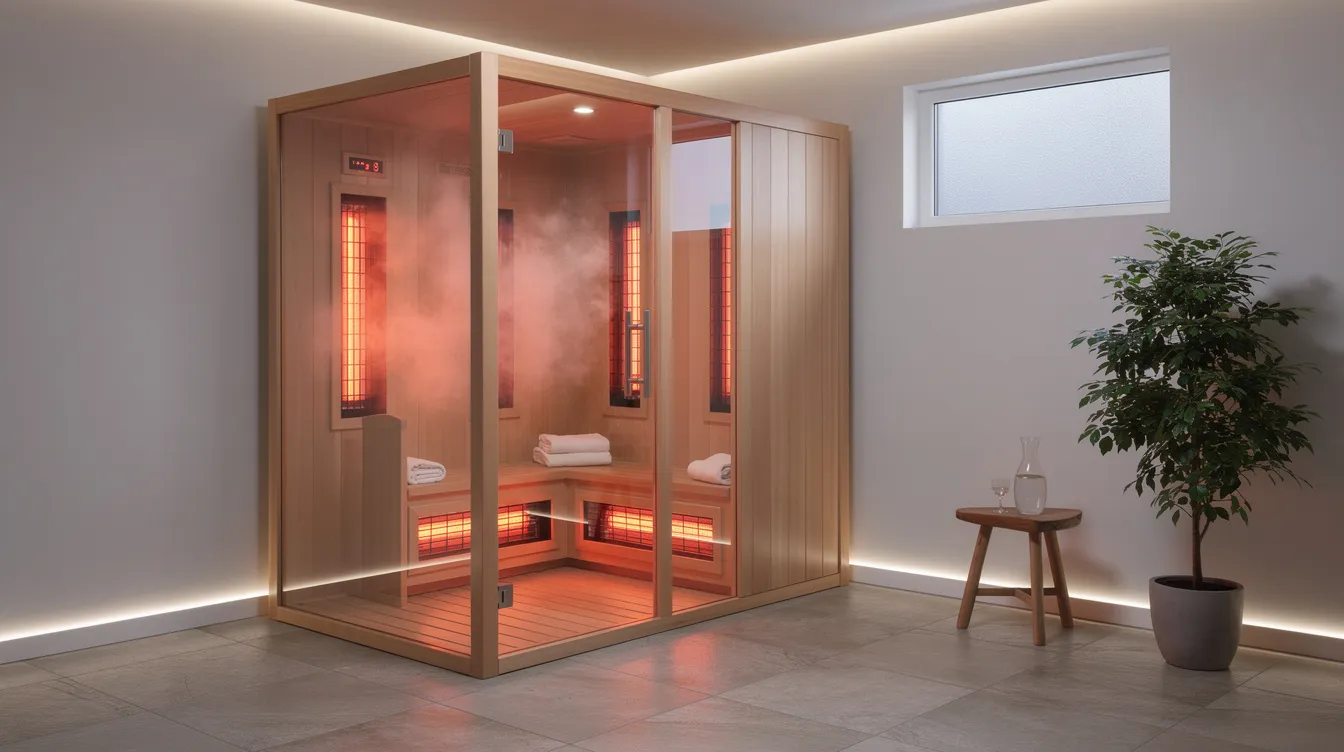
Infrared saunas are technically "dry" because humidity is low, but they use infrared heaters to warm the body more directly at 120-150°F, allowing many users to stay in longer.
Near-, mid-, and far-infrared light waves penetrate deeper into tissue than hot air alone, so users often perceive strong sweating even at moderate air temperatures. A 30-minute full-spectrum infrared sauna session can commonly burn approximately 200-400 calories for larger adults, though individuals of lower body weight may see approximately 120-250 calories.
Comfort benefits: Many people who find 190°F Finnish rooms overwhelming can tolerate 130-140°F infrared cabins, making it easier to be consistent several days per week. This consistency advantage is arguably more important than the per-session calorie difference, because it is sustained, regular use that produces long-term infrared sauna health benefits rather than occasional extreme sessions.
Home Sauna focuses coverage on low-EMF, full-spectrum infrared systems with plug-and-play installation, making this style particularly accessible for home calorie-burning and muscle recovery routines.
How Many Calories Does a Wet Sauna or Steam Room Burn?
Wet saunas are steam rooms or Turkish-style baths that run at roughly 100-120°F but nearly 100% humidity. They are often found in gyms, spas, and hotel wellness areas.
Sensory experience: Foggy, dense air; beads of sweat and condensation on skin; softer wooden or tiled seating with visibility sometimes reduced by thick steam.
Thermoregulation difference: Sweat does not evaporate efficiently in moist environments, so core temperature rises more slowly than in hot, dry air, and heart rate increase is usually milder.
Calorie estimate: Many adults burn on the order of 100-150 calories in 30 minutes of continuous steam room use, depending on size, sex, and cardiovascular status.
Steam rooms excel for relaxation and sinus comfort, but are usually not the first choice if maximizing passive calorie burn is your main focus. Home Sauna primarily covers dry and infrared solutions for home use because steam rooms require plumbing, waterproofing, and more complex maintenance. More on installation requirements is covered in the sauna installation cost guide.
What Are the Non-Calorie Advantages of Wet Saunas?
Even if steam burns fewer calories, it offers unique wellness benefits worth considering alongside dry sauna options.
Respiratory benefits: Warm, moist air may help loosen mucus and soothe irritated airways, which can be helpful during seasonal congestion. Consult your doctor for chronic conditions.
Skin hydration: Many people feel that steam softens skin and opens pores, complementing drier heat therapy sessions.
Mental health and stress reduction: Steam rooms can feel cocoon-like and meditative, supporting stress management and better sleep, which are factors that indirectly support home sauna wellness and weight management.
Consider wet and dry heat as complementary options rather than competitors. Use dry for calorie burn and cardiovascular load. Use steam for recovery and breathing comfort.
Does Sauna Use Lead to Real Fat Loss or Just Water Weight?
Both dry and wet saunas mainly shift water weight in the moment. Understanding this distinction is crucial for realistic expectations about saunas and weight management.
It is common to lose 1-2 pounds during a hard 20-30-minute session due to sweating out up to a liter of fluid, but this returns after normal hydration. Visible slimming right after a session (flatter stomach, lower scale number) is almost entirely from losing water weight, not suddenly burning body fat.
Sustainable weight management requires a consistent calorie deficit through diet and exercise over weeks and months, not just passive heat exposure. Using any sauna to aggressively cut weight without supervision can be dangerous due to dehydration and electrolyte imbalances. Stay hydrated and work with a healthcare provider if that is a concern.
Home Sauna encourages sustainable, long-term health practices rather than extreme weight-cutting tactics.
How Can Saunas Support Weight Management Indirectly?
Regular sauna use supports factors that make maintaining a healthy weight easier over time, even when the direct calorie contribution is modest.
Stress relief: Regular dry or infrared sauna use can lower stress-related eating patterns by reducing cortisol levels. Research shows cortisol reductions after consistent sauna use.
Muscle recovery: Improved recovery after workouts addresses sore muscles and delayed-onset soreness, making people more consistent with strength training and cardio, where real calorie burn happens.
Sleep quality: Many users report deeper sleep after evening sauna routines. Better sleep is strongly linked to stable body weight and improved energy regulation throughout the day.
Integrate sauna sessions into a holistic plan that includes balanced nutrition, regular movement, and stress management for the best long-term results.
Which Is Better for Home Use: Dry or Wet Sauna?
For home buyers, installation requirements, upkeep, and daily usability often matter just as much as theoretical calorie differences when choosing between dry and wet options.
Dry and infrared saunas are generally easier to install because they do not require plumbing or extensive waterproofing. Many home units are plug-and-play on standard household circuits. True steam rooms need sealed walls, proper drainage, and dedicated steam generators, adding cost and complexity more suited to custom bathroom remodels.
Energy use is moderate for dry and infrared units, with infrared often especially efficient for daily home use due to lower operating temperatures. Home Sauna emphasizes sustainable materials, low-EMF heating systems, and strong warranties so buyers can trust long-term performance.
For most wellness-oriented homeowners who want both calories burn and simplicity, a dry or infrared cabin is usually the most practical first step. The best home sauna guide covers the leading models across every budget and space requirement.
How Do You Balance Calorie Burn, Comfort, and Consistency?
Choose a sauna you will actually use 3-5 times per week. Consistency matters more than theoretical per-minute burn differences between sauna types.
If you love intense, hot environments and quick sessions, consider traditional dry or higher-temperature full-spectrum infrared models for maximum metabolic load. Heat-sensitive individuals, older adults, or beginners may prefer moderate-temperature infrared, focusing on comfort and extending session duration for gentler calorie burn.
People with gym access to steam rooms might use steam for relaxation while relying on a home dry sauna for regular, structured calorie-burning routines. Consider available space, budget, and electrical access before deciding. Home Sauna's resource library helps you compare models matched to your health and weight-management priorities.
What Are the Safe and Effective Guidelines for Sauna Calorie Burn?
Safe use guidelines apply to both dry and wet saunas. Overdoing it does not linearly increase calorie burn and can increase risk for healthy adults and others alike.
Beginners: Start with 5-10 minute sessions, building to 15-20 minutes in traditional dry rooms (approximately 180°F) and 20-30 minutes in infrared cabins (approximately 120-150°F) with cool-down breaks.
Steam rooms: Start with 10-15 minutes, building toward 20-30 minutes if tolerated. Dense humidity can feel more intense, so listening to your body is crucial.
Hydration: Drink plenty of fluids before and after sessions. Avoid alcohol. Sports drinks are usually unnecessary for casual home use.
Medical considerations: Individuals with cardiovascular disease, low blood pressure, high blood pressure, pregnancy, or kidney issues should speak with a healthcare provider before establishing a routine.
Tracker accuracy: View fitness tracker calorie estimates as rough guides only. Heat and sweat can distort wrist-based readings significantly.
What Are Some Simple Weekly Sauna Routines for Calorie Burn?
These are high-level routine examples, not medical prescriptions, for using a sauna alongside exercise.
Post-workout pattern: 3-4 days per week of strength or cardio followed by 15-20 minutes in a dry or infrared sauna to nudge calorie burn and support muscle recovery.
Evening wind-down: 3-5 nights per week in an infrared sauna for 20-30 minutes at moderate temperatures to relax, improve sleep, and achieve gentle calorie expenditure.
Mixed approach: Use dry or infrared on training days for metabolic load, steam on rest days for respiratory and relaxation benefits.
Adjust time and temperature slowly based on how you feel. Prioritize consistency over occasional marathon sessions. Home Sauna's daily sauna use guide covers how to build frequency safely across different sauna types.
Choose Your Sauna Based on Sustainable Use, Not Just Calories
Dry saunas typically allow longer, more comfortable sessions that result in greater total calorie burn despite similar per-minute metabolic rates compared to wet saunas. However, calorie burn alone shouldn't drive your decision. Consistency matters more than intensity, so choose the sauna type you'll actually use regularly rather than the one that theoretically burns slightly more calories per session.
Ready to invest in a sauna you'll use consistently for long-term metabolic and wellness benefits?
Contact Home Sauna today to explore both dry infrared and traditional options, receive honest guidance about realistic calorie expenditure, and find the system that matches your comfort preferences and sustainability of practice.
External References
- Harvard Health Publishing: “Sauna Use Linked to Longer Life, Fewer Fatal Heart Problems.”
- Medical News Today: “Sauna and Weight Loss: Possible Links and More.”
- National Institutes of Health: “Effects of Regular Sauna Bathing in Conjunction with Exercise on Cardiovascular Function: A Multi-Arm Randomized Controlled Trial.”
- Very Well Health: “Can Regular Sauna Use Lower Your Cortisol?”
- Tom’s Guide: “Over 83% of People Sleep Better After Doing This in the Evening.”
FAQs
Does a dry sauna burn fat directly, or just calories from water loss?
Dry saunas increase overall calorie expenditure slightly, which can theoretically contribute to fat loss when combined with a calorie-controlled diet. However, they do not "target" fat in specific areas. The dramatic scale drop immediately after a session is almost entirely water loss. True fat reduction requires sustained daily calorie deficits over time. Think of saunas as a supplement to your workout and diet routine, not a shortcut.
Is an infrared dry sauna better than a traditional dry sauna for burning calories?
The difference is moderate in practice. Traditional dry saunas run at higher temperatures and may burn more calories per minute, while infrared saunas run cooler but often allow longer, more comfortable sessions, leading to similar total calories for many users. Choose the style you can tolerate and enjoy consistently. Home Sauna's full-spectrum infrared guide explains how these units differ mechanically and why that matters for both comfort and long-term health outcomes.
Can I use a sauna every day to help manage my weight?
Many healthy adults can safely use a dry or infrared sauna most days, provided they stay hydrated, keep sessions within recommended time limits, and pay attention to their body's signals. Daily sauna use can support weight management indirectly through improved recovery, stress reduction, and sleep quality, but it should complement exercise and a balanced diet rather than replace them.
Which feels easier to breathe in: very hot, dry air or a steam room?
This is highly individual. Some people find very hot, dry air harsher on the throat and lungs, while others feel dense steam is heavier and more oppressive. Those with sinus congestion sometimes prefer steam, whereas people sensitive to humidity might choose moderate-temperature infrared or traditional dry rooms with controllable humidity. Experiment to find what works for your body.
How accurate are fitness trackers at measuring calories burned in a sauna?
Most consumer wearables are not very accurate in saunas because they estimate calorie burn based on movement and heart rate algorithms designed for exercise, not passive heat exposure. Use tracker numbers only as rough estimates. Focus more on subjective markers: how recovered, relaxed, and energized you feel after regular sauna use matters more than exactly how many calories your watch displays.