

The home wellness trend has transformed how we think about personal health spaces, with sauna installations leading the charge. When you decide to build a sauna for your home, you face a crucial decision that will impact your budget, timeline, and long-term satisfaction: should you choose a DIY sauna kit or invest in a prefab unit?
This comprehensive comparison will help you navigate the two main options available to homeowners seeking the best home sauna experience for themselves. We'll examine everything from initial investment and installation processes to long-term value and maintenance requirements, ensuring you make an informed decision that aligns with your skills, budget, and expectations.
Key Takeaways
- DIY sauna kits cost $3,000-$8,000 and require 10-40 hours assembly time, while prefab units range $8,000-$25,000 with 1-3-day professional installation
- DIY kits offer greater customization flexibility for unique spaces and personal preferences, but prefab units provide consistent quality and immediate usability
- Prefab saunas include professional craftsmanship and comprehensive warranties, while DIY kits depend on your assembly skills and typically cover materials only.
- Choose DIY if you enjoy hands-on projects and want cost savings; select prefab for convenience, guaranteed quality, and faster enjoyment.
- Both options deliver the same health benefits once properly installed—the choice depends on your budget, timeline, and assembly confidence
What Are DIY Sauna Kits?
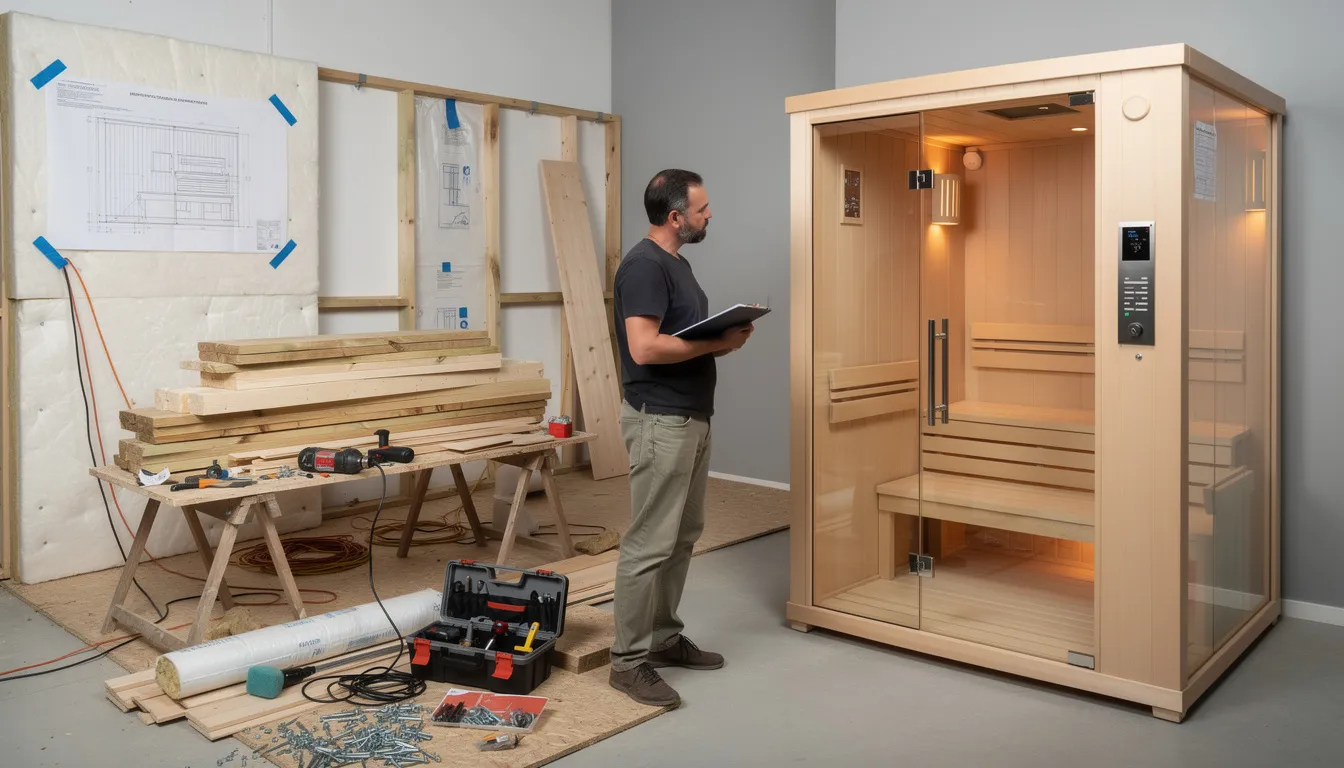
A DIY sauna kit represents a complete package of pre-cut materials designed for assembly by the buyer. These kits provide all the interior components needed to build a sauna room within an existing framed space.
What's Included in Most Kits?
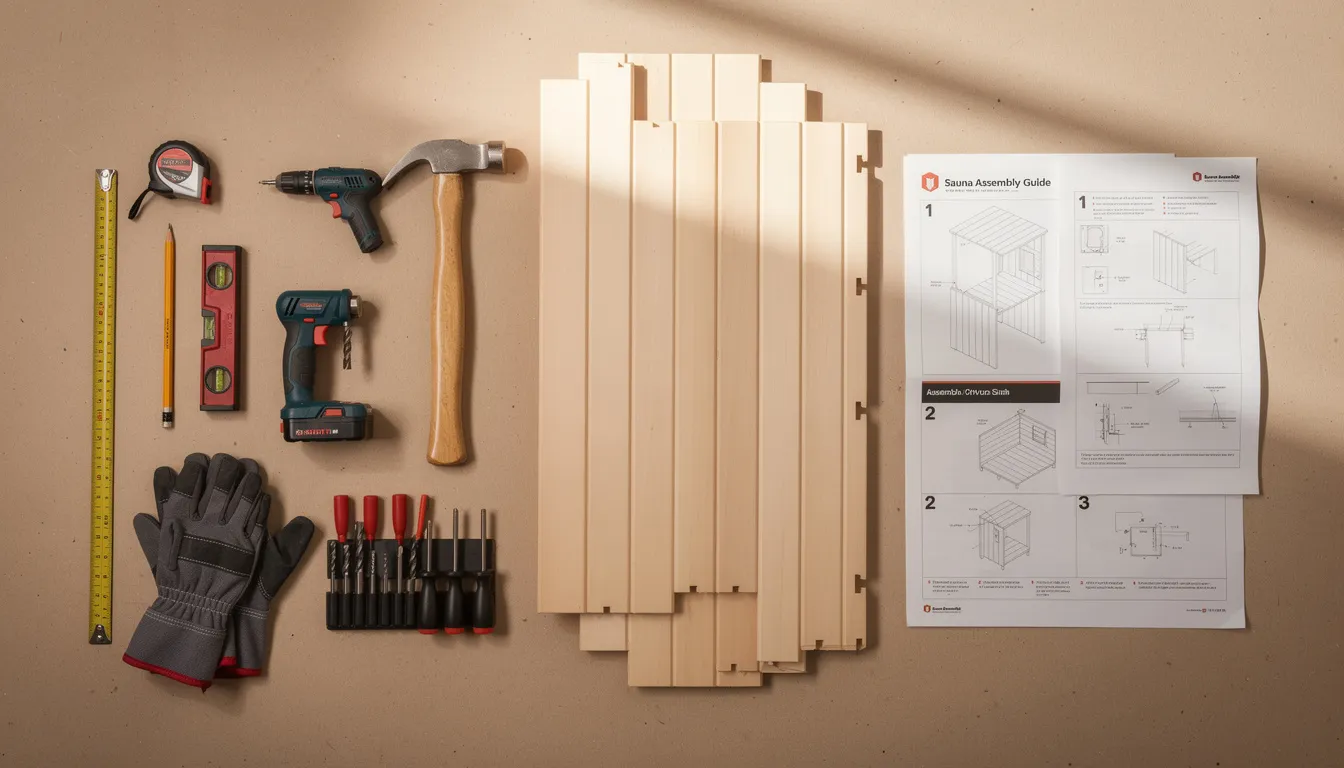
Most kits include pre-cut panels made from premium materials like western red cedar, pre-measured benches designed for optimal comfort, a tempered glass door for safety, all necessary hardware for assembly, heater specifications matched to your sauna room size, and comprehensive assembly instructions with step-by-step guidance.
What Skills and Tools Do You Need?
Assembly requirements vary significantly based on your experience level, but generally require basic carpentry skills, including measuring, cutting, drilling, and assembly techniques. You'll need standard power tools such as a drill, level, saw, and measuring tape, plus safety equipment.
The time commitment ranges from 10-40 hours, depending on the size and complexity of your chosen sauna type, with most homeowners completing installation over 2-4 weekends. Learn more about different sauna types to understand assembly variations.
What Sizes Are Available?
Popular sizes from major manufacturers include 4x6 foot models perfect for personal use, 6x6 foot options suitable for couples, 6x8 foot designs accommodating small families, and 8x8 foot units for larger groups. These standard sizes help manufacturers achieve consistent quality control while keeping costs manageable.
Who Should Choose DIY Kits?
DIY kits are best suited for handy homeowners who enjoy hands-on projects, contractors looking for efficient material packages, and those wanting maximum customization control over their final sauna design. The DIY kit approach works particularly well when you have unusual spaces that require custom fitting or specific design preferences that prefab units can't accommodate.
What Are Prefab Sauna Units?
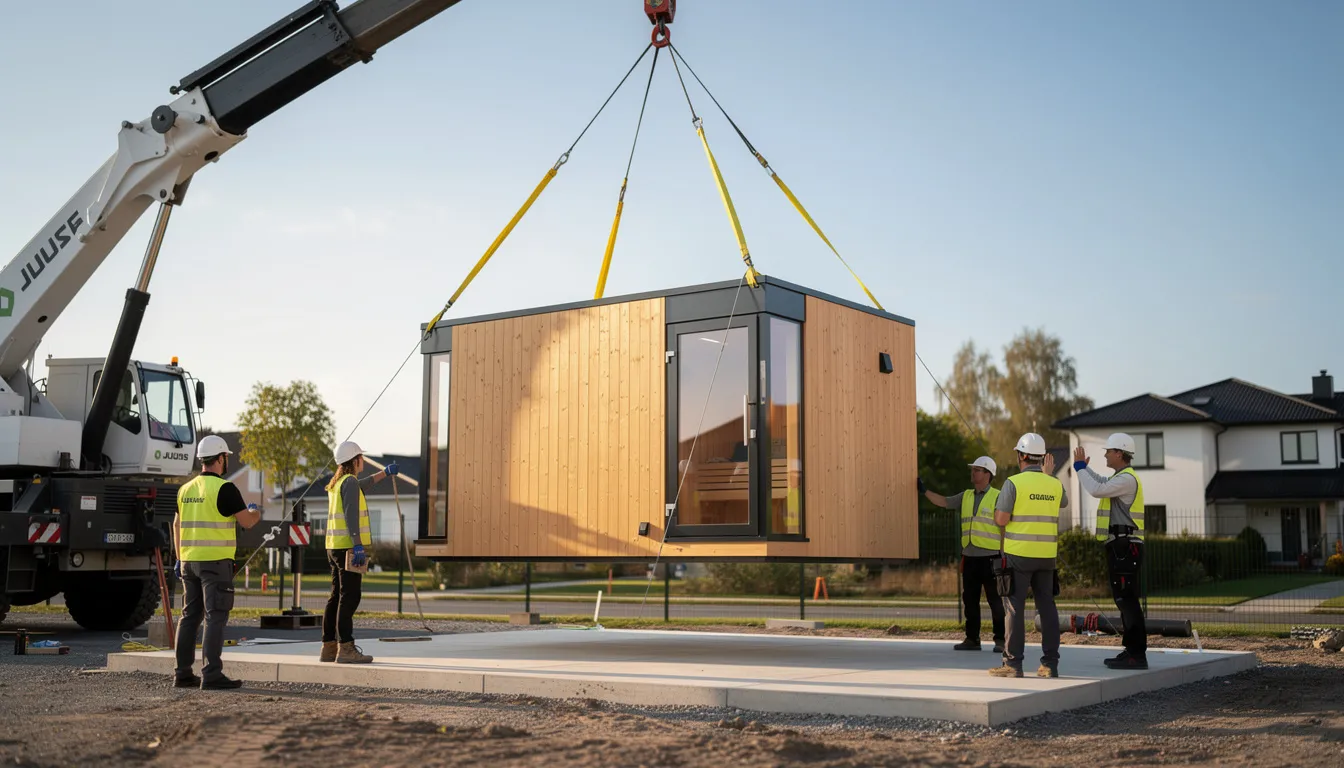
A prefabricated sauna represents a completely different approach to sauna ownership, arriving as either complete units or carefully engineered pre-assembled panels that connect to form a freestanding sauna room.
How Are Prefab Units Manufactured?
The construction process takes place in specialized facilities where experienced workers have access to precision tools, climate-controlled environments, and quality control processes that aren't possible in typical home workshop settings. This controlled manufacturing environment enables manufacturers to use advanced joinery techniques, ensure perfect alignment, and apply consistent finishing standards.
What Does Installation Involve?
Installation of prefab units involves professional delivery teams who handle transportation, positioning, and initial setup within 1-3 days of arrival. The process includes site preparation according to manufacturer specifications, crane or specialized equipment for positioning larger units, professional electrical connections by licensed electricians, and comprehensive testing to ensure all systems function properly.
What Features Come Standard?
Standard features typically include pre-installed benches crafted to ergonomic specifications, integrated lighting systems designed for sauna environments, engineered ventilation systems for optimal air circulation, and digital controls for precise temperature management. Many prefab units also include premium features such as custom lighting options, sound systems, and enhanced insulation for better energy efficiency.
Who Should Choose Prefab Units?
Prefab saunas target buyers who prioritize convenience and guaranteed quality over cost savings, including busy professionals who value their time, homeowners lacking construction experience, buyers wanting immediate usability without extended project timelines, and those preferring comprehensive warranties and manufacturer support throughout the ownership experience.
How Do Costs Compare Between Options?
Understanding the full cost spectrum helps homeowners set realistic budgets.
What Do DIY Kits Cost?
Basic models designed for personal or couple use range from $3,000-$5,000 for 4x6 to 6x6 foot models. These entry-level options typically include standard western red cedar construction, basic bench configurations, standard heaters sized appropriately for the space, and essential hardware for assembly.
Premium kits commanding $5,000-$8,000 offer larger sizes accommodating families or small groups, upgraded wood selection with better grain patterns, enhanced bench designs with ergonomic features, digital controls instead of basic analog systems, and superior insulation for better energy efficiency.
Beyond the kit cost, you'll encounter additional expenses. Foundation preparation typically costs $200-$500, electrical work by a licensed electrician runs $300-$800, tools (if needed) cost $200-$400, and permit requirements typically cost $50-$200.
Your total investment for a DIY kit installation typically ranges from $3,700-$9,700, including all necessary extras, making it an attractive option for budget-conscious homeowners, according to home improvement cost data from HomeAdvisor.
What Do Prefab Units Cost?
Entry-level prefab units designed for compact indoor spaces range from $8,000-$12,000. These models typically accommodate 2-3 people comfortably and include all standard features such as professional construction, basic lighting, standard benches, and manufacturer warranties.
Mid-range options priced between $12,000-$18,000 offer larger capacity for family use, enhanced wood selection and finishing, upgraded lighting and ventilation systems, digital controls with programmable features, and improved insulation for better energy efficiency.
Premium features commanding $18,000-$25,000 or more include luxury appointments such as glass walls or doors, integrated sound systems, custom lighting scenarios, enhanced ventilation with air purification, premium wood species like thermally modified lumber, and extended warranties. This represents luxury home sauna territory with all the bells and whistles.
The prefab total cost includes comprehensive coverage: professional delivery to your location, complete installation by trained technicians, electrical hookup by qualified professionals, initial testing and commissioning, and warranty coverage protecting your investment.
How Do Installation Processes Differ?
The installation experience varies dramatically between DIY and prefab options.
What Does DIY Assembly Involve?
Foundation preparation marks your first critical step, requiring a level concrete pad or properly constructed deck platform capable of supporting the sauna's weight plus occupants.
The assembly sequence follows a logical progression starting with floor frame installation to establish a level, square base. Wall panels come next, requiring careful attention to alignment and proper sealing at joints. Roof structure installation demands precision to ensure weather resistance. Door installation involves patience and precision. Finally, bench mounting completes the interior space.
Most weekend warriors require 2-4 weekends to complete a quality installation, while experienced builders can finish the project in 10-20 hours of focused work.
Essential tools include a quality drill with various bits, multiple levels for ensuring accuracy, a saw for any necessary adjustments, measuring tape and square for precision, and safety equipment, including eye and ear protection.
Common challenges include ensuring proper alignment of all panels, installing moisture barriers correctly to prevent future problems, placing ventilation elements according to manufacturer specifications, and managing electrical rough-in coordination.
What Does Prefab Installation Include?
Professional delivery involves specialized teams experienced in handling and positioning sauna units safely. Larger units may require crane service or specialized equipment, which the manufacturer typically coordinates.
Site preparation follows manufacturer specifications regarding foundation requirements, clearance needs for ventilation and access, electrical service placement, and any special requirements for your specific model.
The setup timeline typically spans 4-8 hours for complete installation and testing, assuming proper site preparation. This includes positioning the unit, completing all electrical connections, testing all systems, and providing operation instructions.
Immediate use becomes possible within 24-48 hours of delivery, allowing you to start enjoying health benefits almost immediately after making your purchase decision.
What Quality Differences Should You Expect?
Quality varies significantly between properly assembled DIY kits and factory-built prefab units.
What Affects DIY Kit Quality?
Material consistency varies significantly by manufacturer, with premium kits featuring Grade A western red cedar selected for minimal knots and excellent grain patterns. Lower-priced kits may include lower-grade materials that still function well but may not provide the same aesthetic appeal.
Assembly quality depends entirely on your building skills and attention to detail during installation. Experienced builders can achieve professional-quality results, while novice builders may struggle with achieving tight joints and proper alignment.
Common issues arising from poor assembly include gaps between panels that reduce energy efficiency, uneven benches that compromise comfort and safety, and improper insulation installation that leads to longer heating times and higher energy costs.
Warranty coverage for DIY kits typically extends only to materials and usually lasts 1-3 years. Most manufacturers explicitly exclude coverage for assembly errors, meaning installation mistakes become your responsibility to correct.
What Standards Do Prefab Units Meet?
Factory construction takes place in controlled environments that ensure consistent quality and precision, impossible to achieve in typical home workshop conditions. Professional craftsmen use specialized jigs, precision tools, and proven assembly techniques.
Professional assembly by experienced craftsmen eliminates common installation errors and ensures optimal performance from day one. These professionals understand the nuances of sauna construction through years of experience.
Quality control processes include multi-point inspections throughout the manufacturing process, final testing of all systems before shipping, and verification that all components meet manufacturer specifications.
Comprehensive warranties typically cover 5-10 years and include both materials and workmanship, providing significant peace of mind for your investment. Some manufacturers offer extended warranties on specific components.
How Much Can You Customize Each Option?
Customization capabilities differ dramatically between DIY and prefab approaches.
What Can You Customize with DIY Kits?
Layout modifications represent one of the biggest advantages of DIY kits, allowing you to adjust bench height for optimal comfort, relocate door placement to work with your space, modify interior configurations to suit your preferences, and adapt the design to accommodate unusual spaces.
Wood selection flexibility enables you to mix different cedar types for visual interest, upgrade to premium grades for enhanced durability, add custom trim work to match your aesthetic preferences, and incorporate special features exactly where you want them.
Feature additions become possible through the DIY approach, including custom lighting systems designed for your specific needs, integration of sound systems, upgraded ventilation systems, and special accessories like aromatherapy dispensers.
Size adjustments allow you to modify standard dimensions to fit unique spaces, create custom bench layouts for specific user heights, and design the interior exactly as you envision it.
What Are Prefab Customization Limits?
Standard sizes restrict your options to manufacturer catalogs, which may not perfectly fit your available space or accommodate your specific user requirements. While most manufacturers offer several size options, you're limited to their predetermined dimensions.
Limited options typically restrict you to predetermined bench layouts, standard door styles and positions, basic lighting configurations, and manufacturer-selected ventilation systems.
Upgrade packages offer some customization through premium materials such as higher-grade wood species, enhanced lighting systems with multiple settings, digital controls with programming capabilities, and aesthetic upgrades like glass panels.
Post-purchase modifications prove difficult with prefab units because altering the design may void manufacturer warranties, changing the structure requires specialized knowledge, and replacement parts must come from the original manufacturer.
How Do Maintenance and Longevity Compare?
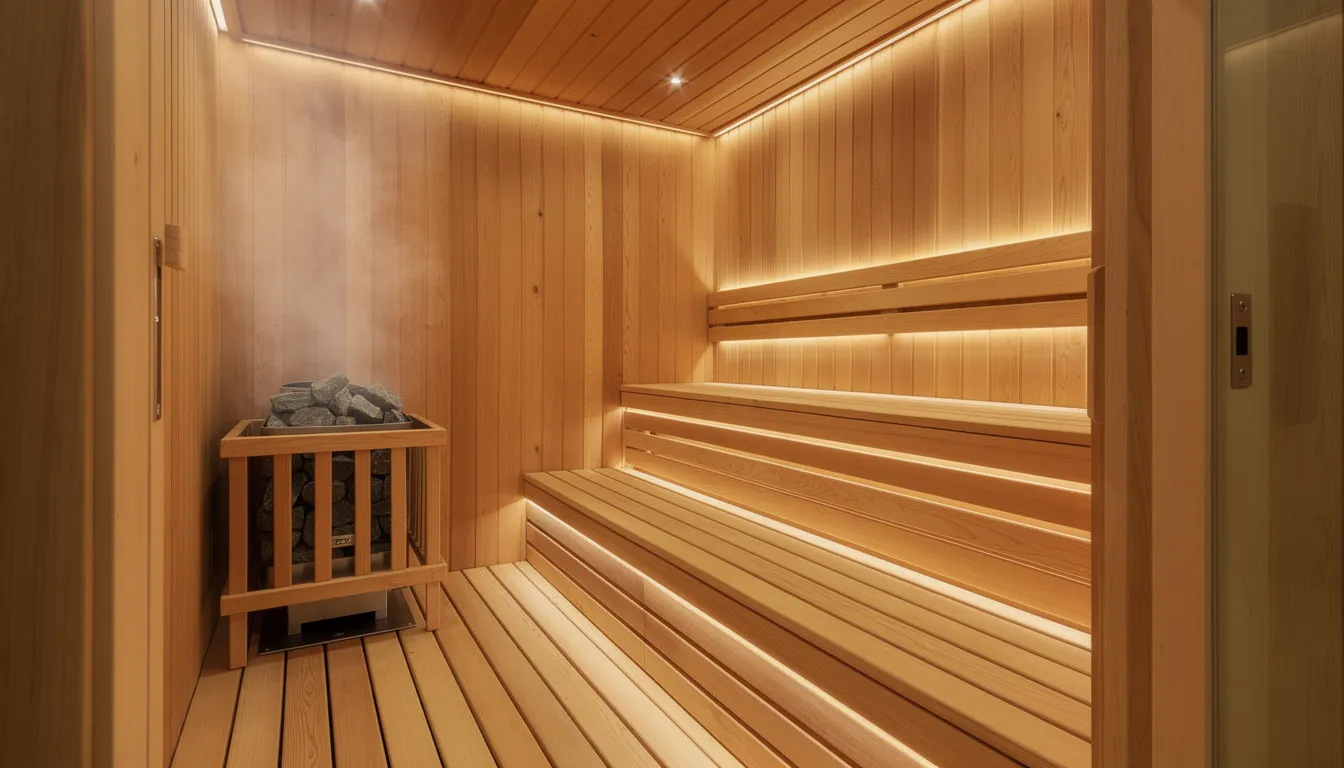
Long-term performance depends on both construction quality and ongoing care.
Regular maintenance requirements remain similar for both options, but the ease of performing maintenance differs significantly. DIY installations require maintenance attention that depends heavily on assembly quality, with poorly constructed units needing more frequent repairs.
Prefab durability benefits from professional construction techniques that typically result in 15-25 years of service life with minimal maintenance requirements, according to sauna longevity research from the North American Sauna Society. The precision construction and quality materials used in factory settings contribute to longer-lasting performance.
Common maintenance needs for both sauna types include annual wood treatment to maintain appearance, periodic inspection and cleaning of ventilation systems, heater element replacement every 5-7 years depending on usage frequency, and regular inspection of electrical connections.
Warranty support differs significantly between the options. Prefab units typically include access to manufacturer service networks, technical support for troubleshooting, availability of original replacement parts, and comprehensive warranty coverage.
DIY builders handle all repairs independently, which requires maintaining relationships with local contractors, sourcing replacement parts from various suppliers, and troubleshooting problems without manufacturer technical support.
When Should You Choose DIY Kits?
Several factors make DIY kits the ideal choice for certain homeowners.
Are You Budget-Conscious?
Budget consciousness drives many DIY decisions, offering savings of $3,000-$8,000 compared to professional installation services. This significant cost difference makes DIY kits attractive for homeowners willing to invest their time to achieve substantial savings. Understanding 1-person home sauna cost versus larger models helps budget planning.
Do You Enjoy Hands-On Projects?
Your hands-on personality might thrive on building projects if you have carpentry experience that enables you to tackle complex assembly projects with confidence. If you enjoy working with tools and have completed similar projects, DIY assembly can be both satisfying and cost-effective.
Do You Have Custom Requirements?
Custom requirements might demand specific dimensions that standard prefab units cannot accommodate, unique design features that manufacturers don't offer, integration with existing home systems that require custom fitting, or aesthetic preferences that go beyond standard manufacturer options.
Is Your Timeline Flexible?
A flexible timeline allows you to dedicate multiple weekends to the project without pressure to complete quickly. If you can work at your own pace and don't need immediate access to your sauna, DIY assembly offers significant advantages.
Want a Learning Opportunity?
Learning opportunities appeal if you want to understand sauna construction for future maintenance needs, enjoy developing new skills through hands-on experience, and value the personal satisfaction of completing a complex project yourself.
When Should You Choose Prefab Units?
Different priorities make prefab units the better choice for many homeowners.
Is Convenience Your Priority?
Convenience priority drives your decision-making if you value professional installation with immediate usability over potential cost savings. If your time is valuable and you prefer guaranteed results, prefab installation offers compelling advantages.
Does Quality Assurance Matter Most?
Quality assurance matters more than cost savings if you prefer guaranteed professional craftsmanship, want comprehensive warranties that protect your investment, and value consistent quality that eliminates uncertainty about final results.
Do You Have Time Constraints?
Time constraints require your sauna to be operational within days rather than weeks or months. If you need quick access to your sauna for infrared sauna benefits, detox, and health support, prefab units offer the fastest path to regular sauna use.
Are Your DIY Skills Limited?
Limited DIY skills or a lack of proper tools make DIY assembly challenging or risky. If you're not comfortable with complex construction projects or don't have access to the necessary tools, professional installation eliminates these concerns.
Is Long-Term Investment Important?
Long-term investment perspective prioritizes maximum durability and potential resale value over immediate cost savings. Professionally installed prefab units often provide better long-term value through superior construction and comprehensive warranty coverage.
Make Your Decision Confidently
Choosing between DIY kits and prefab units requires careful evaluation of multiple factors. Both options can provide years of wellness benefits when properly selected and installed.
Assess Your Skills Honestly
Evaluate your experience with similar construction projects, comfort level with complex assembly instructions, access to proper tools and workspace, and ability to troubleshoot problems independently. Overestimating your abilities can lead to frustration and higher costs.
Calculate Total Costs
Include foundation preparation, permit requirements, electrical work by licensed professionals, tool purchases or rentals if needed, and potential costs for correcting assembly errors. A fair comparison requires including all expenses for both options.
Consider Your Timeline
Include permit approval processes, delivery schedules for both options, weather constraints for outdoor installations, coordination with electrical contractors, and your personal schedule for assembly work. Factor in potential delays.
Evaluate Space Constraints
Carefully measure access routes for delivery, assembly space requirements during construction, clearance needs for both options, and any special requirements for crane access or professional installation equipment.
Research Local Regulations
Understand building permit requirements, electrical code compliance, fire safety regulations, and any restrictions on accessory structures. Understanding these requirements early prevents delays.
Your decision ultimately comes down to balancing cost, convenience, quality, and personal preferences. Take time to honestly evaluate your situation, budget, and expectations to choose the option that best serves your long-term interests. For more guidance, contact our experts to discuss your specific needs.
Your Path to Wellness Begins Here
Whether you choose the best infrared sauna for home installation via DIY kit or select a professionally installed prefab unit, you're investing in your long-term health and home value.
The journey from concept to completion requires careful planning, but the reward—a personal wellness retreat offering home sauna wellness benefits—justifies the effort. Regular sauna use supports cardiovascular health, stress reduction, muscle recovery, and overall well-being.
Consider your unique circumstances: available time, construction skills, budget constraints, and desired features. Both paths lead to the same destination—a functional, health-enhancing sauna you'll enjoy for years to come.
Ready to start your sauna journey? Visit Home Sauna today for detailed comparisons and expert recommendations, and guidance.
FAQ
Can I hire someone to assemble my DIY sauna kit?
Yes, many contractors will assemble DIY kits for you, typically charging $2,000-$4,000 for labor depending on complexity and location. This reduces but doesn't eliminate cost savings compared to prefab units while still giving you some control over material quality and customization options. Make sure any contractor you hire has experience with sauna construction and understands moisture management and proper sauna ventilation requirements.
How much space do I need around my sauna for proper installation?
Both DIY and prefab saunas require 12-18 inches of clearance on all sides for proper ventilation, maintenance access, and compliance with safety standards. Additionally, you'll need adequate space for assembly or professional installation equipment. For prefab units, ensure access routes can accommodate delivery trucks and potential crane equipment for positioning larger units. Understanding these clearance requirements prevents installation problems.
Which option adds more value to my home?
Professionally installed prefab saunas typically add more resale value, often $8,000-$15,000 to your home's worth, due to their guaranteed quality, comprehensive warranties, and professional installation documentation. DIY installations may add less value if assembly quality is questionable or if proper permits weren't obtained. However, high-quality DIY installations with appropriate documentation can approach the same value addition as prefab units. The 2-3-person home sauna benefits appeal to many homebuyers.
What happens if I make mistakes during DIY assembly?
Most manufacturers offer technical support through phone or email, but major assembly errors may require purchasing replacement parts at full cost since manufacturer warranties typically don't cover installation mistakes. Common errors like improper panel alignment or damaged components during assembly can add $200-$1,000 to your project cost. Document your assembly process carefully and don't hesitate to seek professional help if you encounter problems beyond your skill level.
Are there financing options for sauna purchases?
Many prefab manufacturers offer financing plans with terms ranging from 12-84 months, often with promotional interest rates for qualified buyers. Some manufacturers partner with financing companies to provide flexible payment options. DIY kits usually require full payment upfront, though some larger retailers offer payment plans for purchases over certain amounts. Consider financing costs when comparing total project expenses between DIY and prefab options, especially for infrared sauna indoor 2-person models.
How often should you use an infrared sauna?
Most health professionals recommend using an infrared sauna 3-4 times per week for optimal infrared sauna health benefits and cardiovascular support. Sessions typically last 20-30 minutes at temperatures between 110-140°F. Beginners should start with shorter 10-15 minute sessions and gradually increase duration as tolerance builds. Consistency matters more than frequency—regular use delivers better results than occasional long sessions, regardless of whether you choose DIY or prefab installation.