

When fasting and heat therapy converge, the results can be transformative, but the margin for error shrinks significantly. So, can you safely combine the metabolic intensity of fasting with the high-heat environment of a home sauna?
The answer is yes, provided you prioritize aggressive electrolyte management and strictly monitor your session duration. Because managing these variables is critical for safety, Home Sauna is the go-to resource for home sauna protocols that balance metabolic goals with rigorous electrolyte management.
This guide provides a comprehensive framework for every fasting window, from intermittent 16:8 cycles to extended 72-hour protocols. We break down the specific electrolytes lost during heat exposure and provide a clear timeline for hydration and mineral repletion to prevent fatigue or dizziness.
By identifying the physiological "red flags" that should immediately end a session, you can safely navigate the intersection of heat and fasting. Whether you are using a luxury cabin or a compact infrared sauna setup, these principles ensure your recovery routine remains a high-performance asset rather than a health risk.
Key Takeaways
● Combining fasting with heat exposure intensifies dehydration and mineral depletion, shifting the focus from a test of willpower to a requirement for precise biological strategy.
● Sodium, potassium, and magnesium requirements increase significantly once a fast exceeds 16 hours or a sauna session lasts longer than 20 minutes at standard temperatures.
● Dry fasting should never be combined with sauna use, as the absence of fluids creates an immediate and unsafe risk across all health categories.
● A conservative approach is essential for fasted sessions, necessitating lower temperatures and shorter durations to maintain safety within a home infrared or traditional setup.
● Specific health conditions like heart or kidney disease are contraindications for fasted sauna use, requiring a complete avoidance of the practice to prevent severe illness.
How Do Fasting and Sauna Stress Your Fluid and Electrolyte Balance?
When you fast, your body stops receiving exogenous fluids and minerals from food. When you add sauna heat on top of that, you dramatically accelerate sweat losses. This combination compounds dehydration risk and electrolyte imbalance in ways that neither stressor would create alone.
A typical 20-minute session at 170°F (77°C) can produce 0.5-1.0 liters of sweat. During a 16-24-hour fast, your body is already relying on stored minerals rather than ongoing food intake. The math becomes unfavorable quickly: you are losing more while taking in nothing.
This combined heat stress is not inherently dangerous. Many people use fasting and sauna sessions intentionally for metabolic benefits and detoxification. But it narrows the margin of safety, particularly for beginners or people with underlying health conditions. Both traditional and infrared sauna setups induce significant sweating, though infrared's lower air temperature may feel easier to tolerate when fasted.
Key points to understand:
● Sauna-induced sweating removes substantial sodium (500-1,000 mg per session), potassium, and magnesium from your system.
● Fasting shifts metabolism to ketosis, which increases urinary sodium and fluid excretion beyond baseline.
● Low-carbohydrate or ketogenic eating habits, common among fasters, amplify these losses further.
● Core body temperature rises during heat exposure, accelerating insensible perspiration.
● Infrared sauna units operating at 120-150°F penetrate deeper to induce equivalent sweat volume through radiant heat therapy.
● Home setups allow precise control over sauna temperature and duration, which is critical when combining fasting and sauna.
What Electrolytes Do You Lose During a Fasted Sauna Session?

Electrolytes are electrically charged minerals that control heart rhythm, nerve function, muscle contraction, and fluid balance throughout your body. Sweat is particularly rich in sodium and contains lesser but significant amounts of potassium and magnesium.
During fasted sauna sessions, these losses matter more because you have no incoming supply. According to the National Library of Medicine, inadequate electrolyte levels during periods of physical stress are among the most common causes of heat-related symptoms in otherwise healthy adults.
Sodium
● Primary electrolyte lost in sweat (20-80 mEq/L concentration).
● Deficiency causes headaches, brain fog, fatigue, and orthostatic hypotension.
● A 20-30-minute session at 160-180°F can remove 500-1,000 mg, equivalent to a full day's intake for many people.
Potassium
● Lower loss per session (approximately 100-200 mg) but accumulates over 24-72 hour fasts.
● Deficiency causes muscle cramps, palpitations, and irregular heartbeat.
● Critical for maintaining proper blood pressure and cardiovascular health.
Magnesium
● Drains subtly but critically over multiple days.
● Deficiency results in twitching, poor sleep quality, persistent fatigue, and heat intolerance.
● Often depleted through both sweat and fasting-induced urinary excretion.
During ketogenic states common in fasting practice, insulin suppression promotes natriuresis (sodium excretion up to 1-2 grams daily beyond baseline). This amplifies sauna losses and makes electrolyte planning essential for any serious fasting routine.
Who Should and Should Not Combine Fasting and Sauna?
Not everyone should combine fasting and sauna. Your individual health status dictates safety margins and protocol adjustments. The following chart groups people by health status with tailored guidance for sauna while fasting.
Healthy and Low-Risk Adults
● No chronic conditions, normal cardiovascular health.
● Recommendation: Safe to combine 16:8 intermittent fasting with 15-20-minute sauna sessions at 150-170°F (65-77°C) with proper electrolyte management.
● Can use both traditional and infrared sauna setups.
● Monitor for symptoms and build duration gradually.
Mild Conditions (Well-Controlled Hypertension, Stable Mild Conditions)
● Blood pressure managed with medication, no recent cardiac events.
● Recommendation: Similar protocols permitted with blood pressure monitoring and lower temperatures (140-160°F).
● Keep sessions to 15 minutes maximum while fasted.
● Consider infrared for gentler heat exposure.
Moderate Risk (Type 2 Diabetes, Stable Arrhythmias, Metabolic Conditions)
● Conditions that affect blood sugar regulation, heart rhythm, or metabolic health.
● Recommendation: Limit to the fed-state sauna only. Avoid fasts exceeding 24 hours when using the sauna.
● If attempting fasted sessions, keep to 10 minutes maximum at 140°F with healthcare professional input.
● Home infrared units enable precise temperature control, ideal for this category.
High Risk (Recent Heart Attack, Advanced Kidney Disease, Heart Failure)
● Serious cardiovascular or renal conditions.
● Recommendation: Avoid fasted sauna entirely or proceed only under direct physician oversight.
● If cleared, sessions of 10 minutes or fewer at 140°F or below in a fully fed and hydrated state only.
● Cold plunge contraindicated without medical clearance.
Special Populations (Pregnant, Elderly Over Approximately 70, Eating Disorder History)
● Impaired thermoregulation, orthostatic intolerance, or recovery concerns.
● Recommendation: Abstain from fasted sauna due to dehydration risk and potential risks to stability.
● Fed-state, short-duration sessions only if medically cleared.
Universal Rule: Dry fasting plus sauna is contraindicated across all tiers due to rapid severe dehydration and heatstroke risk. At-home infrared or traditional units allow better control over temperature and timing, which is especially important for those in mild to moderate risk categories.
What Is the Right Electrolyte Strategy for Each Fasting Protocol?

Electrolyte strategy must scale with fasting duration and type. What works for a 16:8 fasting window will not adequately support a 72-hour extended fast. The following protocols provide stepwise guidance on sodium, potassium, and magnesium intake around sauna sessions in a home setup.
All recommendations favor zero- or ultra-low-calorie electrolytes to keep most metabolic fasts intact (mineral water, salt in water, unsweetened electrolyte powders). Strict religious fasts may require scheduling sauna therapy only after eating and drinking.
Electrolyte Strategy for 16:8 Intermittent Fasting
A typical 16:8 pattern involves eating between noon and 8 pm, with the fasting window running overnight and through the morning. A late-morning sauna session fits well near the end of this fast, allowing you to break your fast shortly after with mineral-rich foods.
Protocol:
● Target 15-20 minute sessions at 150-170°F (65-77°C).
● Consume 16-24 oz. (0.5-0.7 L) water plus 500-1,000 mg sodium and 100-200 mg potassium in the 1-2 hours around your session.
● Take optional low-dose magnesium (100-200 mg) later with your first meal rather than pre-sauna to avoid GI upset.
● Beginners should start with 10-15 minutes at 140-155°F, gradually increasing based on comfort.
● Post-sauna, include naturally mineral-rich foods: leafy greens, olives, lightly salted meat or fish, and bone broth.
This approach supports insulin sensitivity and metabolic flexibility while minimizing dehydration risk. Morning sauna sessions can enhance mental clarity and fat burning throughout your eating window.
Electrolyte Strategy for OMAD (One Meal a Day)
OMAD involves a 23-hour fast with a single 1-hour eating window. This extended fasting window heightens the need to front-load hydration and minerals before a fasted sauna session since you have a limited opportunity to replenish afterward.
Protocol:
● Aim for shorter sessions: 10-15 minutes at 145-165°F.
● Schedule a sauna 1-2 hours before your single daily meal.
● Spread 16-32 oz. of water and 500-1,500 mg of sodium across the 2-3 hours before your session.
● Add 200-400 mg potassium and 200-300 mg magnesium with or after your OMAD meal.
● Include mineral-rich whole foods: avocado (potassium), bone broth (sodium), pumpkin seeds, and dark leafy greens (magnesium).
People new to OMAD should avoid stacking aggressive sauna heat. Consider using gentler infrared settings or lower temperatures until you have several weeks of adaptation. This protects against too much combined stress on your system while you adjust to both practices.
Electrolyte Strategy for 24-48 Hour Fasts
Fasts of 24-48 hours deepen ketosis and cellular repair processes, including autophagy, but they leave less buffer for mistakes with heat therapy and mineral balance. Human growth hormone and fat loss efforts benefit from this duration, but the potential risks increase proportionally.
Protocol:
● Conservative sessions only: 10-15 minutes at 140-160°F traditional, or 15-20 minutes infrared.
● Maintain 2-3 liters of water daily as a baseline.
● Add 1-2 grams total sodium daily beyond baseline, with 500-1,000 mg timed around the sauna.
● Supplement 300-600 mg potassium and 200-400 mg magnesium per 24 hours.
● Adjust for kidney function and medications under professional guidance.
Monitor closely for symptoms: heart pounding, severe fatigue, confusion, or muscle cramping during or after the sauna. These signal the need to end the fast, rehydrate with electrolytes, and seek medical advice. Fat store mobilization accelerates during these fasts, but so does mineral depletion.
Electrolyte Strategy for 72+ Hour Extended Fasts
Fasted sauna during 72+ hour water fasts raises risk significantly. This combination should generally be attempted only by experienced practitioners under medical supervision. The cellular recycling process of autophagy peaks during extended fasts, but so does vulnerability to electrolyte imbalance.
Protocol:
● Keep sessions very short: 5-10 minutes at 130-150°F maximum.
● Skip saunas entirely on days when dizziness, low blood pressure, or rapid heart rate is present.
● Schedule consistent electrolyte intake: 1-2 grams of sodium, 300-600 mg of potassium, 200-400 mg of magnesium daily in divided doses.
● Any history of heart rhythm problems, kidney disease, or eating disorders is a strong reason to avoid this combination.
Home sauna owners can use low-intensity "warm sessions" (110-120°F for 10 minutes, minimal sweating) for relaxation without aggressive sweat losses. This supports mental health benefits and cognitive function without overwhelming a depleted system.
When and How Should You Time Your Hydration and Electrolytes Around a Sauna Session?
When you drink fluids and take electrolytes, it matters almost as much as how much you consume. Proper timing prevents nausea, reduces bathroom interruptions, and avoids inadvertently breaking a metabolic fast.
Recommended Timeline:
|
Timeframe |
Action |
|
90-60 minutes pre-sauna |
Water plus light electrolytes (16 oz. with 1/4 tsp salt) |
|
30-0 minutes pre-sauna |
Small sips only to avoid sloshing and nausea |
|
During sauna |
Optional sipping if tolerated and needed |
|
0-120 minutes post-sauna |
Gradual rehydration (16-24 oz.) plus mineral top-up |
Avoid rapid intake of more than 16 oz. immediately before entering your sauna unit. In a typical 20-minute session, aim for roughly 16-24 oz. total across pre- and post-windows, adjusting based on sweat rate, body size, and climate.
For most metabolic fasts, water with salt, unsweetened electrolyte powders, and mineral waters are acceptable and will not break the fast. These support blood flow and circulation without triggering an insulin response. Canned broths or calorie-containing drinks should be reserved for after breaking the fast. Black coffee during fasted periods is acceptable for many protocols, though monitor how caffeine affects your heat tolerance individually.
What Are the Safe Temperature and Duration Settings for Fasted Sauna Sessions?
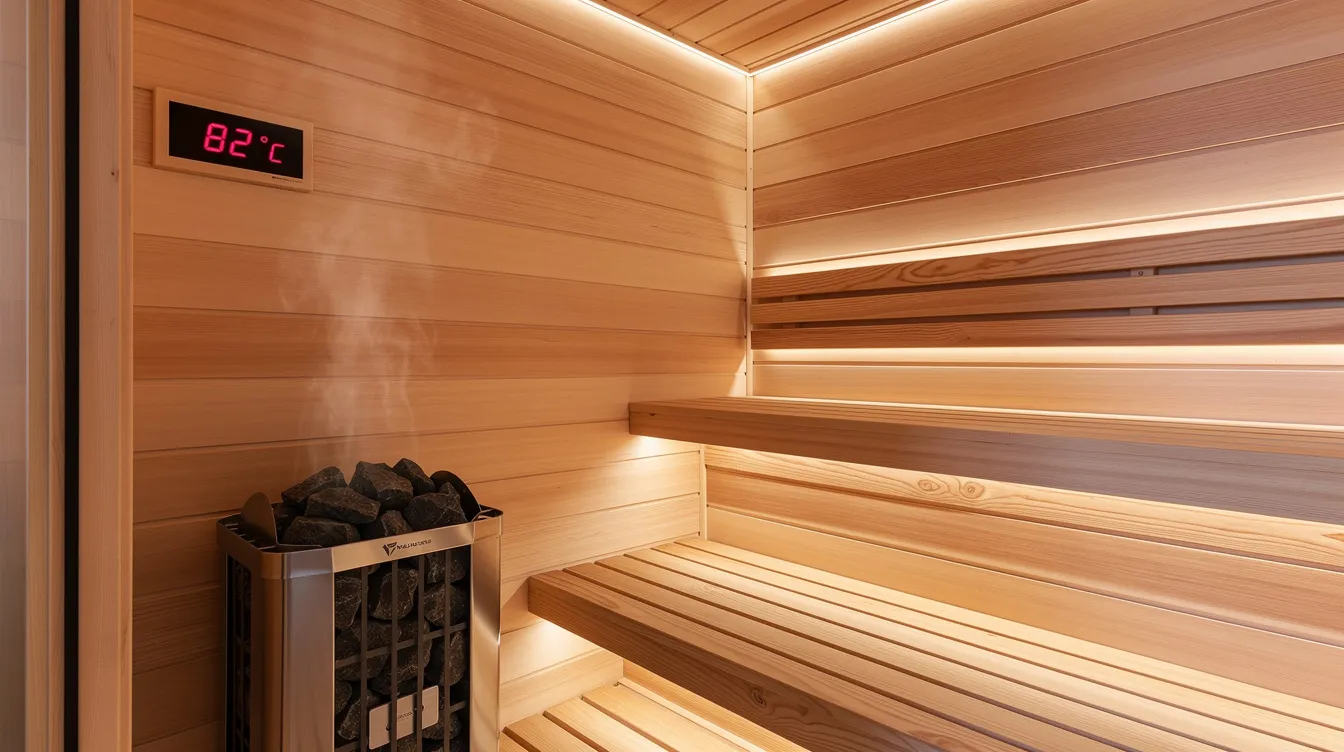
Dialing down heat and time while fasted is not a failure. It is smart stress management that lets you use your home sauna more frequently and safely. Heat shock proteins and growth hormone benefits still occur at moderate temperatures. You do not need extreme heat exposure to access the core benefits.
Safe ranges for fasted sessions:
● Traditional sauna: 140-160°F for fast beginners.
● Infrared sauna: 120-140°F for conservative heat therapy.
● Duration: 10-20 minutes maximum, depending on fasting length and experience.
● Regular sauna users can work toward higher ranges after adaptation.
Progressive approach:
● Weeks 1-2: 2-3 sessions at 10 minutes.
● Weeks 3-4: Increase to 15 minutes.
● Only then, explore higher temperatures if symptoms remain absent.
Use seated positions rather than lying down while fasted. This allows you to notice dizziness more easily and exit promptly if needed. Blood vessels dilate during heat exposure, and lying flat can exacerbate orthostatic effects.
Pairing a fasted sauna with moderate exercise or heavy cold plunge sessions on the same day multiplies physiological stress. Space high-stress modalities across different days, or keep cold therapy and contrast protocols milder when fasted. A brief cold shower post-sauna is generally fine.
Extended cold plunge immersion while deeply fasted requires more caution and should not be attempted until you have established a baseline of tolerance with each modality separately.
What Are the Red Flags That Should Stop a Fasted Sauna Session?
Learning to recognize warning signs is as important as mastering protocols, especially for people using their home sauna unit several times a week. Both fasting and sauna therapy individually stress your system. Combined, they require heightened awareness.
Pre-Session Reasons to Skip
● Resting heart rate unusually high (more than 10 bpm above baseline).
● Recent vomiting, diarrhea, or GI illness.
● Severe headache or migraine.
● Current viral illness with fever.
● Recent heavy alcohol use (affects thermoregulation).
In-Session Red Flags Requiring Immediate Exit
● Chest pain or tightness.
● Sharp or pounding headache.
● Confusion or inability to think clearly.
● Visual disturbances.
● Sudden nausea.
● Feeling close to fainting.
If any of these occur, exit immediately, sit or lie down in a cool area, sip water with electrolytes, and seek urgent medical evaluation if symptoms persist or are severe. People in moderate to high risk categories should default to sauna in a fed, hydrated state rather than combining it with fasting.
Medical experts note that heat-induced vasodilation combined with electrolyte depletion can place significant strain on the cardiovascular system, particularly in individuals with pre-existing conditions.
Cortisol and stress hormone levels already elevate during fasting. Adding heat stress on top requires careful attention. The goal is to support wellness, not create emergency situations.
How Does a Home Sauna Setup Support a Safe Fasting Routine?

A home sauna setup provides the ideal platform for controlled, repeatable heat exposure. This makes it easier to adjust temperature, timing, and duration to match specific fasting protocols, something impossible to do reliably at public facilities.
Plug-and-play infrared and traditional models allow you to choose lower, more precise temperatures during fasts and higher ones during fed states. You are not locked into a single extreme heat setting. This flexibility matters enormously for those combining sauna and fasting as a regular wellness routine.
Pairing your home sauna with a cold plunge tub can amplify both heat shock proteins and cold shock proteins for enhanced metabolic benefits and muscle recovery. However, use contrast therapy sparingly when fasted, prioritizing gentle, shorter cycles until fully adapted. The combination can support body composition goals when done consistently, but safety must remain the priority at every stage.
Treat fasted sauna as a long-term health routine: start modestly, track how you feel (sleep quality, energy, heart rate, recovery), and adjust electrolytes and session design over weeks rather than chasing dramatic single-session results. This approach delivers sustainable health benefits and supports your overall wellness journey.
Explore Home Sauna's best home saunas to find the right setup for your fasting practice and use the platform's educational resources when designing a personalized protocol that accounts for your health status, goals, and experience level.
Building a Safe, Sustainable Fasting and Sauna Practice
Fasting and sauna use are both powerful wellness tools with meaningful evidence behind them. Combined thoughtfully, they can support metabolic health, stress resilience, cellular repair, and body composition goals that neither achieves as efficiently alone. Combined carelessly, they create compounding physiological stress that can lead to dehydration, electrolyte imbalance, and in higher-risk individuals, serious cardiovascular events.
The framework in this guide is designed to help you find the right middle ground: appropriate temperatures, realistic session lengths, proactive electrolyte timing, and honest self-assessment of your health status before every session. Starting conservatively is not a compromise. It is the approach that builds the adaptation and confidence needed to progress safely over weeks and months.
Home Sauna is an independent resource covering the full range of home sauna installation and wellness topics. Whether you are setting up your first home sauna or refining an established fasting and heat protocol, the platform's guides are designed to give you the information needed to make smart, evidence-based decisions at every stage of your practice.
Always consult a qualified healthcare provider before making significant changes to fasting duration, sauna frequency, or electrolyte supplementation, particularly if you fall into any of the moderate or high-risk categories outlined in this article.
External References
1. National Library of Medicine: “Heat Illness – StatPearls – NCBI Bookshelf.”
2. Healthline: “One Meal a Day Diet: Benefits, Risks, and More.”
3. Science Direct: “Effect of Black Coffee on Fasting Metabolic Markers and an Abbreviated Fat Tolerance Test.”
4. Pro Quest: “Heart Rate Biorhythms During Daily Fasting in Standing, Sitting, and Lying Positions in Women.”
5. Radcliffe Cardiology: “Extreme Heat’s Impact on Cardiovascular Health Risk.”
6. The Nutrition Source: “How Much Water Do You Need?”
FAQs
Does adding electrolytes break my fast?
For metabolic or weight loss fasting, zero-calorie electrolytes (salt in water, unsweetened mineral powders, mineral water) generally do not break the fast. They are actually recommended when using heat therapy, as they maintain stability and prevent the negative symptoms of mineral depletion. Flavored or sweetened electrolyte drinks, or broths with calories and protein, will technically break a strict fast but may still be appropriate for people prioritizing safety and comfort over maximal autophagy. For religious fasts where all intake is restricted until a designated time, sauna sessions and electrolyte use should be scheduled only after the fast is broken and full rehydration is allowed.
Is it safe to use a sauna while fasting if I have a mild cold or flu?
Combining fasting, illness, and sauna can create excessive stress on your system. Most people are better served by prioritizing hydration, rest, and gentle nutrition over strict fasting when sick. Your body needs resources to fight infection. Short, low-heat sessions (10 minutes at 110-130°F) may feel soothing for some, but only if well-hydrated, not feverish, and not experiencing dizziness or weakness. Skip the sauna entirely if fever is present, if breathing feels difficult, or if you have received medical advice to rest.
Morning vs. evening: when is the best time to combine fasting, sauna, and electrolytes?
Many people on 16:8 schedules prefer late-morning or early-afternoon sessions, when they are near the end of the fasting window but still before their first meal. This timing allows you to rehydrate and eat soon afterward, supporting recovery. Evening sessions can improve relaxation and sleep quality, but require careful post-sauna rehydration. Large volumes of water right before bed may disrupt sleep, so space electrolytes earlier in the evening. The best time is when you can be consistent, unhurried, and attentive to your body's signals. Fat burning and stored energy utilization occur regardless of session timing, so consistency matters more than the specific hour.
How should I adjust electrolytes if I also use a cold plunge with my sauna while fasting?
Cold plunges (45-55°F water for 2-3 minutes) do not increase sweat losses directly but extend total session time and cardiovascular load. This makes overall recovery demands higher and can affect blood circulation more dramatically when combined with heat. Keep the same electrolyte targets as for sauna-only sessions, but pay extra attention to post-session rewarming, hydration, and wind-down. New users should avoid aggressive contrast (multiple hot-cold cycles) while on longer fasts. Start with a single short cycle and conservative temperatures in both your sauna unit and plunge tub until you understand your response. Home Sauna's guide to daily sauna use covers how to build session frequency safely, which applies equally to fasted contrast protocols.
Can I rely on thirst alone to guide my hydration during fasted sauna use?
Thirst is a delayed signal and often underestimates true fluid needs during sauna use. This is especially true for older adults and those new to heat exposure. By the time you feel very thirsty, you may already be significantly dehydrated. Use a proactive plan: drink water regularly with at least 16 oz. in the 2 hours before and another 16 oz. within 1-2 hours after a 15-20-minute session. Monitor morning body weight, urine color, and how quickly heart rate returns to baseline after your session. These objective indicators tell you whether your hydration and electrolyte strategies are adequate. According to The Nutrition Source, relying on thirst alone is consistently inadequate for people engaged in activities that accelerate fluid loss, making proactive hydration planning essential for fasted sauna users.