

Are you ready to transform your home sauna into a fully connected wellness experience? Smart sauna controls let you preheat, monitor, and customize your infrared or traditional sauna from anywhere via Wi-Fi, apps, and smart home platforms.
Whether you're commuting home from work or waking up on a Saturday morning, these systems ensure your luxury home sauna is just ‘luxurious’ as the name suggests — ready exactly when you need it—no more waiting 30-45 minutes for the cabin to reach your desired temperature.
This comprehensive guide explains everything you need to know about home sauna smart controls in 2026, from basic features to advanced AI-powered optimization.
Key Takeaways
- Smart controls improve convenience through remote start and scheduling, enhance your home sauna wellness experience with personalized profiles and integrated lighting and audio, and boost safety with overheat protection and automatic shut-off features.
- The controllers themselves use very little extra power—comparable to a Wi-Fi router—while helping you avoid wasted energy from forgotten sessions or imprecise temperature management.
- Buyers can choose between classic wall controllers and full smart ecosystems. The right choice depends on your budget, tech comfort level, and how often you use your sauna.
- At HomeSauna, we focus on models that pair seamlessly with modern control systems for safer, more consistent at-home wellness.
- Our plug-and-play designs minimize setup complexity while maximizing the health benefits you get from each session.
- Potential users range from busy professionals who want their home sauna hot and ready after work, and families sharing a sauna who benefit from individual user profiles, to data-driven athletes tracking recovery metrics and session consistency, and home spa owners integrating saunas with lighting, audio, and cold plunge routines
What Are Smart Sauna Controls?
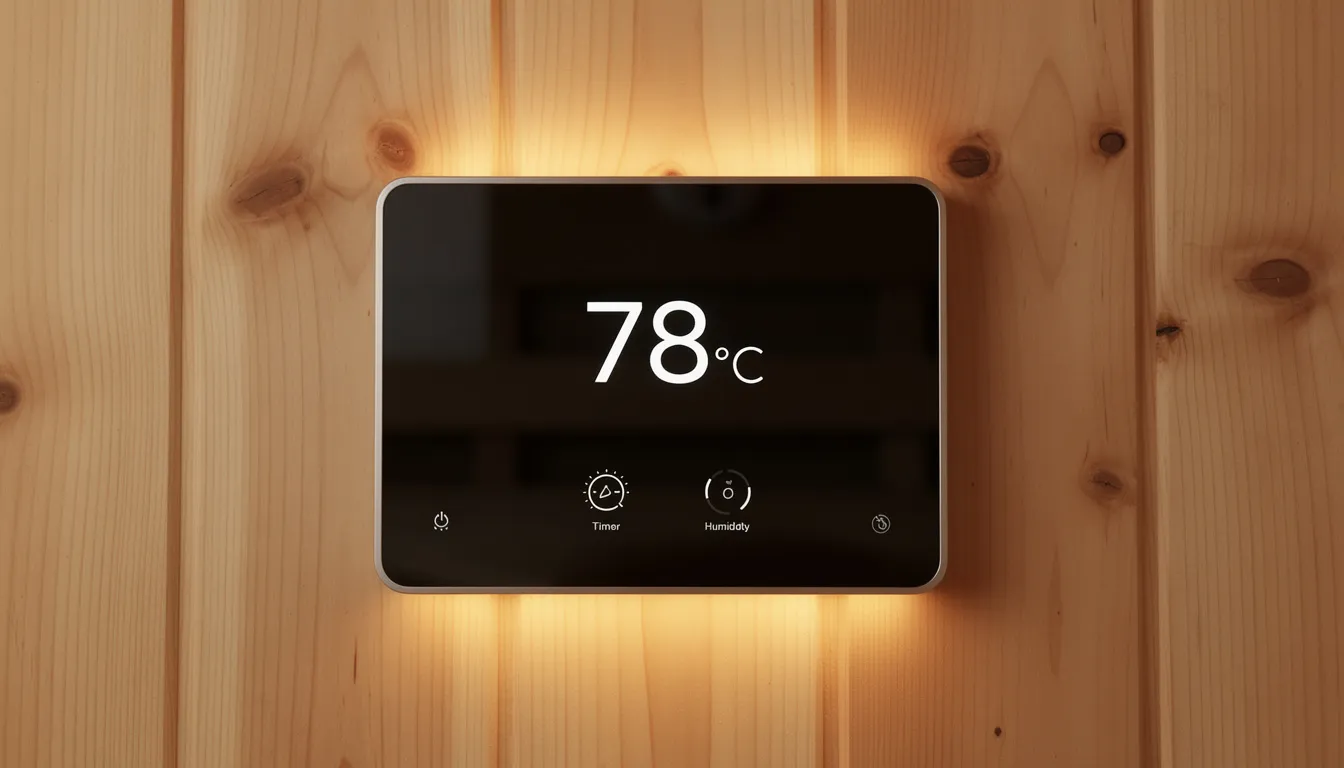
Smart sauna controls are digital or app-based systems that manage temperature, time, lighting, audio, and sometimes humidity in both infrared sauna indoor 2-person models and traditional saunas.
Unlike basic thermostats from a decade ago, these systems transform your sauna equipment into a connected wellness tool that responds to your schedule, preferences, and even learns from your usage patterns over time.
The hardware typically includes:
- An in-sauna touch panel or external wall panel.
- Ceiling-mounted temperature and humidity sensors.
- A relay box for heater switching.
- A Wi-Fi or Ethernet module for connectivity.
Premium systems like the Harvia Fenix feature a 4.3-inch glossy glass touchscreen with built-in Wi-Fi, while others rely on separate control modules that connect to your home network.
By 2026, most mid- to high-end saunas—especially infrared home units—ship with some form of smart controller or app compatibility as standard. This reflects broader trends in the wellness industry, where consumers expect the same connected experience from their sauna that they get from thermostats, lighting, and security systems.
At HomeSauna, we design our cabins and plug-and-play infrared units to work seamlessly with modern smart controllers while keeping operation intuitive for less tech-savvy users.
You don't need to be a smart home enthusiast to enjoy remote control and scheduling—our systems prioritize an intuitive user interface alongside advanced features.
Smart controls are available for full-spectrum infrared, far-infrared, and traditional electric heater saunas. The specific features vary depending on heat source: infrared saunas typically offer finer temperature adjustments and faster warm-up tracking, while traditional models focus on managing higher power loads and coordinating with ventilation systems.
What's the Difference Between Traditional and Smart Sauna Controls?
The difference between classic and connected sauna control comes down to one question: do you want to walk up and twist a dial, or schedule from your phone on the commute home?
Traditional controllers—the kind you'd find in a 2010s-era electric sauna—consist of a basic thermostat with a temperature dial, an on/off switch, and a 60-90-minute mechanical timer. They work reliably for decades, but offer no remote access, no data logging, and no way to customize the sauna environment beyond temperature.
Modern smart controllers replace that simplicity with:
- Digital setpoints.
- Pre-heat scheduling.
- Multi-user memory.
- Usage history.
- Integration with phones and voice assistants.
Systems like HUUM's UKU Wi-Fi pair sleek control panels with mobile apps for 3-18-hour heating cycles, light and ventilation links, and safety features like door sensors and child locks.
The user experience contrast is stark. With a traditional controller, you walk to your sauna, turn it on, wait 30-45 minutes, then hope you remembered to set the timer.
With smart technology, your sauna automatically starts at 6:30 pm every Monday, Wednesday, and Friday—pre-heated to your exact preferences before you step through the door.
That said, HomeSauna customers who mainly value simplicity and the lowest upfront cost may still prefer a traditional controller. Smart controls better suit frequent users building a full home spa routine with regular sauna sessions, cold plunges, and recovery protocols.
Advantages of Traditional Controllers
Legacy wall controllers are rugged, easy to understand, and have very few failure points. This makes them suitable for rental cabins, commercial gyms, and elderly users who prefer familiar interfaces over app-based systems.
Key benefits include:
- Lower purchase price and straightforward wiring.
- No dependency on Wi-Fi or cloud services.
- Proven reliability in high-heat, high-humidity environments.
- Simple replacement parts if something fails after 15+ years.
For outdoor infrared sauna installations in harsh climates—think Minnesota snow or coastal humidity—basic weather-protected controllers can still be the lowest-risk option.
There's something to be said for a system with no firmware updates, no app passwords, and no internet outages to worry about.
HomeSauna still supports and services traditional control systems for customers who don't want app connectivity or cloud features. If you're upgrading an older sauna heater but keeping everything else simple, we can match you with reliable non-smart options.
Advantages of Smart Sauna Controllers
Smart controls transform a passive heater into an active wellness tool. You can plan precise sauna sessions, track usage patterns, and keep your ritual consistent week after week—which matters when research suggests 3-7 sessions weekly for optimal cardiovascular benefits.
Remote preheating is the game changer most users appreciate first. Start a 150-170°F traditional sauna or 120-140°F infrared cabin from your phone 30-45 minutes before arriving home, and it's ready the moment you walk in.
Convenience features extend beyond simple remote start:
- Weekly schedules tailored to work, training, or sleep routines.
- One-tap favorite programs (detox, recovery, sleep).
- Automatic shut-off after set durations.
- Notifications when the target temperature is reached.
For HomeSauna infrared cabins, smart controls support fine temperature adjustments in 1-2°F increments and precise session timers. This precision matters for users following research-driven protocols—for example, maintaining exactly 140°F for 25 minutes, 4 times per week.
Smart controllers often ship with firmware update capability, meaning features can improve over time without changing hardware. The Harvia Fenix, for instance, receives over-the-air updates that refine its learning algorithms and add new functionality.
What Are the Core Features of Modern Smart Sauna Controls?
Not all smart systems are identical, but most 2025-2026 controllers share a set of core features important to compare before buying. Understanding these capabilities helps you match the right system to your personal wellness goals and lifestyle.
Base Capabilities You Should Expect
|
Feature |
What It Does |
|
Digital temperature control |
Set precise temperatures in 1-2° increments |
|
Programmable timers |
Schedule session duration from 20 to 180 minutes |
|
Delayed start |
Preheat automatically at a set time |
|
Maximum session length |
Safety limit prevents indefinite operation |
|
App connectivity |
Monitor and control via iOS/Android |
Remote access through mobile apps has become standard. You can start and stop sessions, adjust settings, see remaining time, and get notifications when your sauna reaches the desired temperature—all from your phone, whether you're at work, the gym, or across the country.
Multi-user profiles let each family member store their preferred temperature, duration, and lighting preferences. Instead of manually adjusting settings every time, the system remembers that Mom likes 130°F for 40 minutes with warm lighting, while Dad prefers 150°F for 25 minutes with no music.
Smart home integration with Google Home, Amazon Alexa, and open protocols like Home Assistant enables routines such as "sauna on, lights dim, play relaxing playlist."
Voice control makes starting a session as simple as saying, "Hey Google, start my evening sauna."
Personalization: Profiles, Lighting, and Audio
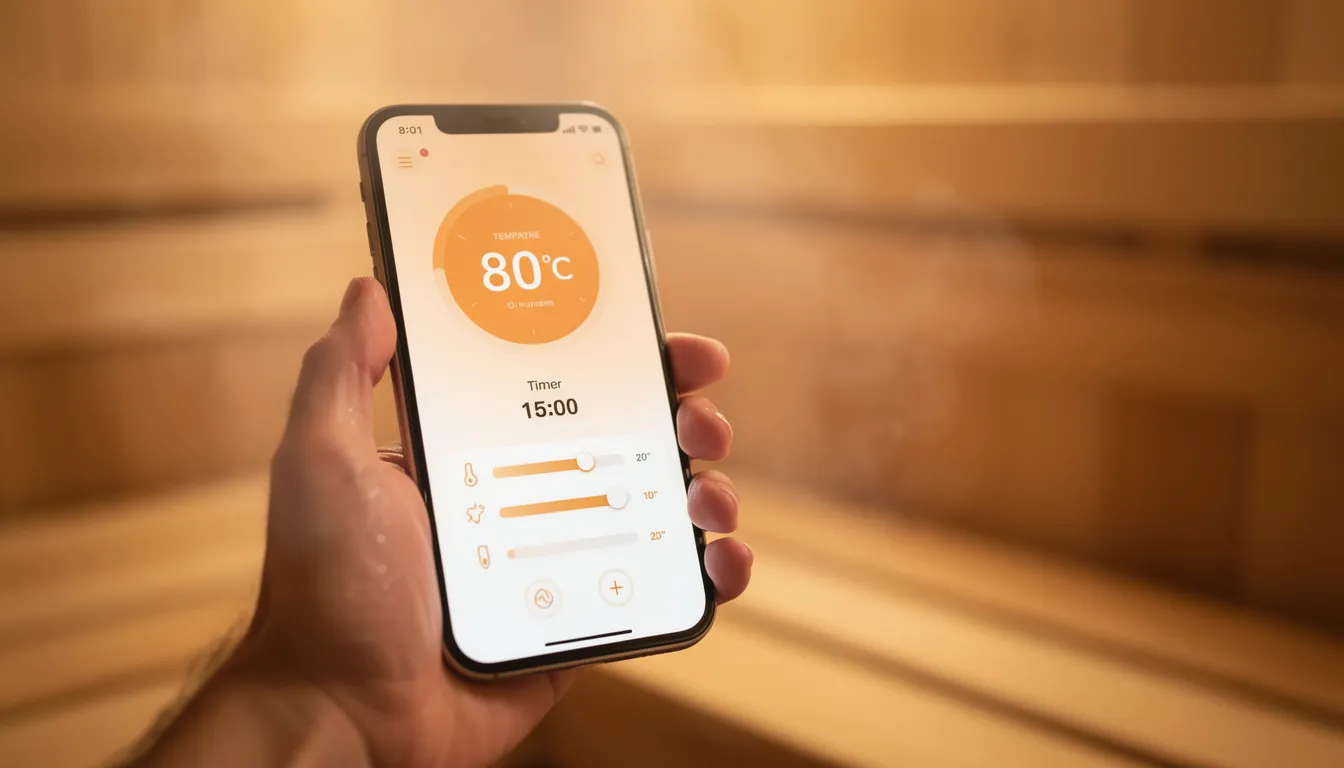
Personalization is where smart sauna controls really feel luxurious, especially in high-end home builds where your sauna is part of a complete wellness environment rather than just another appliance.
User profiles typically include:
- Name and preferred sauna settings.
- Target temperature (130°F for beginners, 150°F for experienced infrared users).
- Typical session duration.
- Favorite days and times for automated scheduling.
- Lighting color preferences per session type.
RGB or full-spectrum chromotherapy lighting can be set per profile through the app or control panel. Soft warm white for sleep-focused evening sessions, blue-green tones for post-workout relaxation, or red light therapy wavelengths for skin and recovery benefits—all remembered automatically when you select your profile.
Audio integration brings guided meditation, breathwork exercises, or recovery protocols directly into your sauna experience. Bluetooth or app-controlled speakers remember volume preferences per user, so you're not fumbling with settings while trying to relax.
HomeSauna cabins often combine low-EMF heating elements with optional red light therapy and audio systems that can be managed from the same smart interface.
This integration means one app controls your entire sauna environment—from heating to lighting to sound.
Safety and Monitoring Features
Modern controllers include multiple layers of protection beyond what analog systems offered a decade ago. These safety features protect you, your family, and your investment.
Maximum temperature limits are enforced at the firmware level—typically 194°F (90°C) for traditional systems, lower for infrared. Even if someone accidentally enters an extreme setpoint, the controller prevents the heater from exceeding safe thresholds.
Auto shut-off activates after a preset time:
- Traditional saunas: 60-180 minutes maximum.
- Infrared saunas: 20-60 minutes typical.
- Prevents overheating from forgotten sessions.
- Eliminates the risk of all-day accidental operation.
Child-lock and PIN-protected controls prevent unintended use, especially useful in family homes with young children. Systems like HUUM include door sensors that can pause operation when the sauna is opened unexpectedly.
Some premium systems log error codes and can be checked remotely by support teams. This capability helps HomeSauna troubleshoot problems quickly for customers—often identifying issues before they become serious, enabling users to maintain their sauna time without unexpected interruptions.
How Do Remote Start, Scheduling, and Everyday Convenience Work?
Imagine this: You're leaving the office at 6:15 pm after a long day. You open your phone, tap "Start Evening Sauna," and your HomeSauna infrared cabin begins preheating to 130°F.
By 6:45, when you walk through your front door, change clothes, and grab water, your sauna is ready. It shuts down automatically at 7:25 pm, whether you're in it or not.
That's the ultimate convenience smart controls provide—and it transforms occasional sauna use into consistent daily practice.
Remote start works through a Wi-Fi module connected to a secure cloud service. You can trigger heating from LTE, 5G, or any internet connection without being on your local home network.
Start your sauna from the airport, your hotel room, or your morning commute.
Timer and scheduling capabilities include:
- Single-use delayed start ("start in 45 minutes").
- Recurring weekly schedules (6:30 am Monday, Wednesday, Friday).
- Different programs for different days (morning recovery vs. evening relaxation).
- Automatic shut-off regardless of presence.
Convenience leads to consistency. Users are more likely to hit 3-7 sauna sessions per week—the frequency associated with cardiovascular health benefits—when the sauna is already hot when they walk in the door.
The friction of waiting disappears, and your wellness journey becomes automatic.
HomeSauna designs plug-and-play infrared solutions that minimize warm-up time, so smart preheating uses energy efficiently. A well-insulated infrared cabin reaches target temperature in 10-15 minutes rather than 30-45, meaning less energy consumption and faster access to the health benefits you're seeking.
What About Energy Use and Cost Control?
A common concern about smart technology is the added energy usage. The good news: smart controllers themselves draw minimal power—similar to a Wi-Fi router or smart thermostat, typically 5-10 watts in standby.
Nearly all energy consumption still comes from the heating elements, not the control system.
Smart Controls Actually Improve Energy Efficiency
|
Energy Benefit |
How It Works |
|
Automated shut-off |
Prevents forgetting all-day operation |
|
Precise temperature control |
Avoids overshooting the target temp |
|
Scheduled preheating |
Heats only when needed |
|
Session logging |
Reveals usage patterns for optimization |
Some systems provide session-by-session runtime logs that help you estimate actual operating costs per month. This real-time monitoring lets you correlate energy usage with session duration and frequency.
Here's a practical example: A 2-person infrared sauna with smart controls might use around 1.5-2.0 kWh per 30-minute session. At $0.15/kWh, that's roughly $0.25-0.30 per session.
Smart scheduling avoids accidentally doubling that by preventing forgotten preheats or extended sessions.
HomeSauna emphasizes efficient heaters and high-quality insulation, so smart controls amplify existing energy efficiency rather than compensate for poor design. When your cabin retains heat well, and your heaters warm quickly, smart scheduling becomes even more effective at reducing energy usage while maintaining the full benefits of regular sauna use.
How Do Smart Sauna Controls Support Health Optimization?
While the core health benefits come from heat exposure itself, smart controls make it easier to follow research-backed protocols consistently. And consistency is where the real health perks accumulate.
Typical wellness guidance suggests 20-30 minute sessions, 3-7 times per week, for cardiovascular and muscle recovery benefits. Smart presets help you stick to these ranges without guesswork:
- Create a "Cardio Recovery" program: 150°F, 25 minutes.
- Set a "Deep Relaxation" program: 130°F, 40 minutes.
- Schedule both to recur automatically through the week.
Log histories tracking dates, durations, and temperatures help data-driven users correlate sauna use with sleep quality, HRV, or training recovery tracked in other apps or wearables. If you notice improved sleep on days you sauna, the data confirms the pattern.
Some emerging systems connect with wearables via Apple Health, Google Fit, or Oura integrations. These platforms can suggest ideal session timing or intensity based on your recovery scores, heart rate variability, and sleep metrics—continuously assessing user vitals to optimize your sauna therapy timing.
HomeSauna customers—often athletes, biohackers, and wellness-focused homeowners—use this real-time data to fine-tune detox protocols, cardiovascular support, and post-workout muscle recovery routines.
The combination of infrared technology with smart tracking creates a holistic health approach that traditional models simply can't match.
Recovery, Sleep, and Performance Routines
Smart controls can store different programs tailored to specific wellness goals, making it easy to switch between routines based on what your body needs that day.
Common program configurations:
|
Program Type |
Temperature |
Duration |
Best For |
|
Morning Activation |
140-145°F |
15-20 min |
Pre-workout warm-up |
|
Post-Training Recovery |
145-155°F |
20-25 min |
Muscle recovery |
|
Evening Wind-Down |
125-135°F |
30-40 min |
Sleep preparation |
|
Deep Detox |
150-160°F |
25-30 min |
Intense sweating |
Regular, scheduled use (4-7 times per week) becomes easier when the sauna notifies you at set times and is already at the target temperature. The notification says "Your evening sauna is ready," and you just walk in.
Many HomeSauna customers pair infrared cabins with cold plunge tub home systems for contrast therapy. Smart controls help time sessions precisely: 15 minutes infrared, 2-3 minutes cold plunge, repeat for 2-3 cycles.
Some advanced setups even coordinate both systems through a single app.
Research trends support these protocols: studies consistently associate regular sauna use with improved cardiovascular markers, enhanced perceived recovery, improved circulation, and stress reduction.
Smart controls don't create these benefits—heat does—but they remove barriers to the consistency that delivers results.
Important reminder: Users with heart conditions, blood pressure issues, or other health concerns should consult their physician before adopting intensive sauna routines. Smart controls make protocols easier to follow, but medical guidance remains essential regardless of how sophisticated your sauna technology becomes.
How Do You Choose the Right Smart Control System?
Selecting the right smart control system depends on your sauna type (infrared vs traditional), whether it's indoor or outdoor, your existing electrical setup, and how comfortable you are with technology.
The best HomeSauna infrared saunas come with built-in digital controls and optional app connectivity—everything integrated from the factory. Traditional outdoor saunas often use separate heater controllers compatible with select smart modules, requiring more careful matching.
Practical considerations to evaluate:
- Maximum heater power: Controllers are rated for specific wattages (e.g., up to 18kW or 30kW with contactors).
- Voltage requirements: 120V vs 240V in North America affects installation complexity.
- Electrical codes: Some systems require a licensed electrician for installation.
- Sensor placement: Ceiling-mounted sensors need temperature correction for bench-level accuracy.
- Connectivity: Wi-Fi signal strength at your sauna location.
Brand ecosystem considerations matter for long-term satisfaction. Ask whether the control app is proprietary, supports multiple units (sauna + cold plunge on one platform), and has a clear long-term support roadmap.
Companies like Harvia have 75+ years of industry experience backing their smart products.
If you're planning a new build or renovation in 2026+, consider wiring and router placement upfront. Running Ethernet or ensuring strong Wi-Fi near your sauna location prevents frustrating connectivity issues later.
Budget and Feature Trade-Offs
Stepping up from a basic controller to a full smart system typically adds a few hundred to over a thousand dollars, depending on brand and features. Premium saunas from brands like KLAFS with 7-inch floating touchscreens and Alexa integration sit at the high end, while simpler Wi-Fi modules for existing heaters cost less.
Prioritize must-have features rather than paying for rarely used extras:
|
Priority Level |
Features |
Typical Cost Impact |
|
Essential |
Remote start, basic scheduling |
Included in most smart systems |
|
High Value |
Multi-user profiles, app control |
Standard in mid-tier systems |
|
Nice to Have |
Voice control, chromotherapy |
Adds $100-300 |
|
Premium |
Advanced logging, wearable integration |
Top-tier systems only |
HomeSauna positions its sauna cabins as long-term wellness investments. Spending a bit more on a controller that will still feel modern in 5-10 years can be worthwhile, especially considering firmware updates that add features over time.
Consider your household: a family sharing a 3- or 4-person HomeSauna cabin may get significant value from multi-profile capabilities, app-controlled lighting, and audio integration.
A single user in a compact 1-person unit might prioritize simple scheduling overelaborate personalization.
Always check warranty coverage on both the heater and controller. Smart electronics often have specific warranty terms separate from the wood structure and traditional heating elements. Understanding ongoing maintenance costs upfront prevents surprises later.
What Are the Compatibility, Installation, and Upgrade Considerations?
Not all smart controllers work with all heaters. Users must match controller ratings and sensor types to their exact infrared or traditional unit. A controller rated for 18kW won't safely manage a 30kW traditional heater without additional components like external contactors.
New HomeSauna installations are typically plug-and-play for infrared (standard 120V or 240V outlets) with factory-installed controls. Large traditional saunas often require licensed electricians for 240V or 3-phase connections—this isn't a DIY project.
Upgrading an older sauna to smart controls can involve:
- Adding new temperature and humidity sensors.
- Rewiring the heater connection to the new controller.
- Replacing the entire controller enclosure.
- Installing a Wi-Fi module with an adequate signal.
Consult HomeSauna support with your model numbers and photos before purchasing a retrofit controller. We can confirm safe compatibility and recommend appropriate solutions—sometimes it's more effective to replace both controller and heater together with a modern matched pair.
For outdoor installations, moisture protection and cable routing deserve special attention. Controllers rated IP24 or higher handle external placement in temperatures from -10°C to +40°C, but proper positioning away from direct weather exposure extends lifespan significantly.
What Are the Future Trends: AI and Deeper Smart Home Integration?
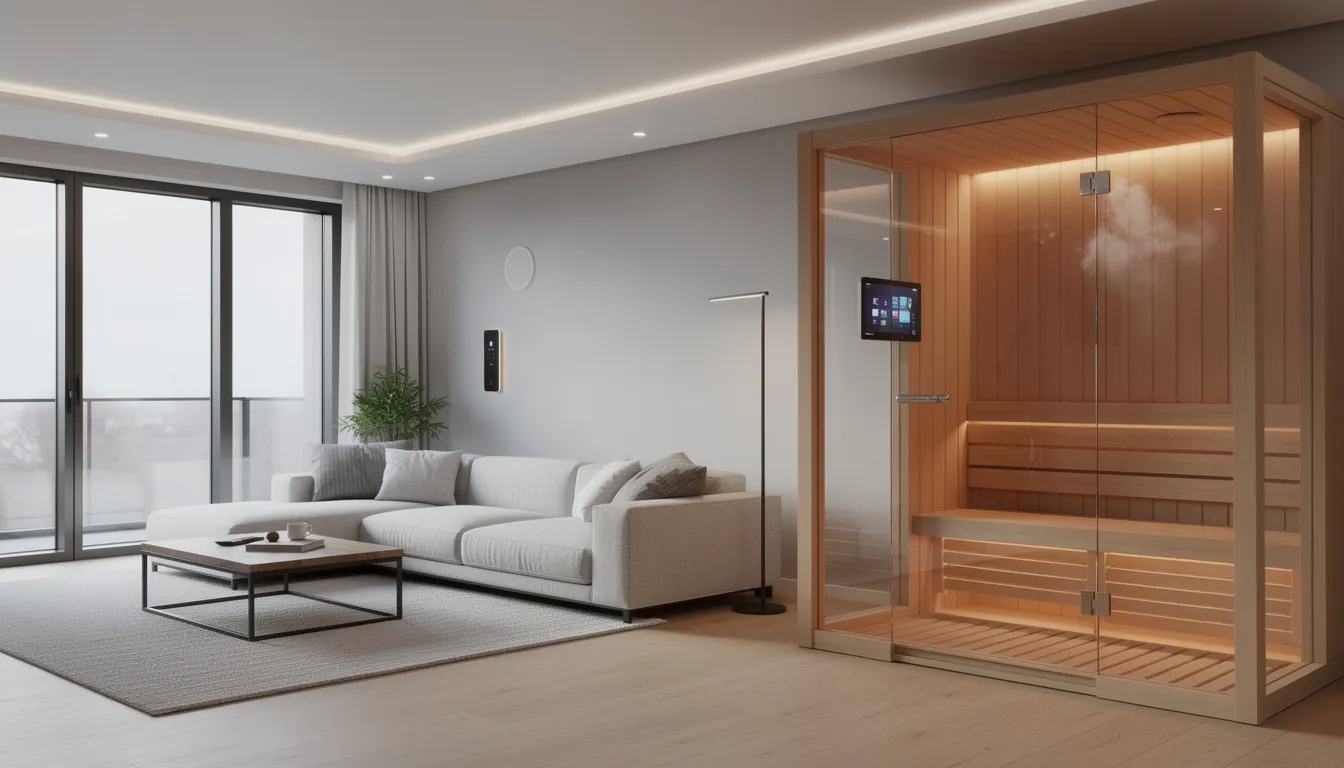
The years 2025-2026 are seeing rapid evolution from basic app controls toward more intelligent, responsive sauna systems. The sauna market is embracing artificial intelligence and automation in ways that seemed futuristic just a few years ago.
Emerging AI-assisted features include:
- Adaptive heating: Systems learn your preferences and automatically adjust settings based on historical patterns.
- Predictive readiness: Controllers like Harvia Fenix analyze heat-up curves to refine timer accuracy, telling you exactly when your sauna will be ready.
- Personalized recommendations: Suggestions for session timing or intensity based on usage history.
- Smart scheduling: AI proposes optimal sauna times based on your calendar and wellness goals.
Integration with broader smart homes continues to tighten. Lighting scenes, HVAC coordination, occupancy sensors, and even energy tariff optimization are merging into unified platforms.
Over time, more controllers will link with health platforms, providing users with a single view of sleep, training, cold plunge, and sauna exposure. Imagine seeing your weekly wellness summary: 4 sauna sessions, 3 cold plunges, average HRV improvement of 8%.
HomeSauna tracks these trends so new product generations incorporate meaningful smart features without compromising core values like low-EMF performance and build quality. Smart technology should enhance your wellbeing, not introduce unnecessary complexity or compromise safety.
Predictive Maintenance and Reliability
Predictive maintenance uses sensor data—temperature readings, run hours, error codes—to flag issues before they cause heater or controller failure. This proactive approach keeps your sauna running reliably and extends equipment lifespan.
Examples of predictive alerts:
- Temperature sensor reading out of range (possible sensor failure).
- Warm-up time lengthening session over session (heater element degradation).
- Controller losing connection repeatedly (Wi-Fi or module issues).
- Unusual power draw patterns (electrical problems).
Such alerts can prompt simple owner checks—ensuring vents are clear, checking Wi-Fi signal strength—or trigger a support request to HomeSauna for guidance before the problem worsens.
This approach extends the life of electric heaters, protects wooden structures from excessive heat caused by malfunctioning sensors, and minimizes downtime for users who rely on daily sessions for stress reduction and recovery.
Despite added complexity, well-designed smart systems are built for long-term reliability in high-heat environments. When properly specified and installed, smart sauna controls prove just as durable as their analog predecessors—while delivering an enhanced user experience throughout their lifespan.
Upgrade Your Wellness Routine with Smart Sauna Technology
Smart sauna controls represent the future of home wellness, combining convenience, personalization, and safety in a single integrated system. Whether you're a busy professional seeking effortless relaxation or a dedicated athlete optimizing recovery, these technologies make consistent sauna use easier than ever.
Ready to experience the next generation of home sauna technology? Visit HomeSauna to find models with integrated smart controls or to contact our team for personalized recommendations on upgrading your existing sauna with smart technology.
Frequently Asked Questions
Can I still use my smart sauna if my Wi-Fi goes down?
Most quality smart controllers continue to function locally even without the internet. You can start, stop, and adjust temperature from the in-sauna or wall-mounted control panel exactly as you would normally.
App-based remote operations—starting from work, checking status while away, enabling users to control their sauna remotely—won't work until connectivity is restored. However, all safety features, timers, and local controls operate independently of internet access.
Some systems support Bluetooth or local network control as a backup. HomeSauna recommends this capability for users with unreliable internet service, ensuring your busy life doesn't prevent consistent sauna access.
Are smart sauna controls safe from overheating or electrical faults?
Reputable systems include multiple safeguards: maximum temperature limits enforced in firmware, automatic shut-off timers, and overheat protection sensors tied directly into the controller. These safety features operate independently of app connectivity or user commands.
HomeSauna units are designed to meet relevant electrical and safety standards in their target markets when installed according to instructions. Our infrared cabins undergo testing to ensure heating elements, controllers, and wiring work together safely.
Licensed electricians should always install high-power traditional heaters. Proper breakers, appropriate wire gauge, and correct grounding are essential for safe operation—no smart controller can compensate for improper electrical work.
Can I retrofit smart controls into my existing sauna?
Many older electric and infrared saunas can be upgraded, but feasibility depends on the heater model, power rating, and existing wiring. Controllers like HUUM UKU Wi-Fi are compatible across brands up to 18kW if the heater is externally controllable.
Gather details—photos of your heater label, existing controller, and wiring configuration—and share them with HomeSauna or a qualified technician. We can assess compatibility and recommend appropriate solutions.
In some cases, it's more cost-effective and safer to replace both controller and heater together with a modern matched pair. This approach ensures full compatibility, warranty coverage, and access to the latest smart features.
Will smart sauna apps track or share my health data?
Basic smart controllers typically only log session duration, temperature settings, and usage frequency. They don't directly record body temperature, heart rate, or other biometric data—that's not what these systems are designed to do.
If you connect external wearables or third-party wellness apps, data handling is governed by those platforms' privacy policies. Review Apple Health, Google Fit, or Oura terms carefully before connecting.
Privacy-conscious users can enjoy most smart features—remote start, schedules, personalized settings—without linking any external health accounts. The core benefits of providing users with convenient control don't require sharing personal health information.
Is a smart controller worth it if I only sauna once or twice a week?
Even infrequent users benefit from remote preheating and auto shut-off. Knowing your sauna will be ready when you arrive—and will shut down safely if you forget—adds peace of mind regardless of usage frequency.
That said, budget-conscious buyers who sauna once or twice weekly might prioritize heater quality and cabin construction first. The core sauna experience depends more on build quality and heating elements than on control sophistication.
For HomeSauna customers planning to increase usage toward 3-7 sessions weekly—the frequency associated with cardiovascular benefits—smart controls become significantly more valuable. Consider your wellness goals: if you're treating your sauna as essential equipment for your increasing popularity routine of recovery and personal wellness, smart controls make consistency much easier to maintain.
References
- National Library of Medicine – “Clinical Effects of Regular Dry Sauna Bathing: A Systematic Review”
- Medical News Today – “Sauna: Health Benefits, Risks, and Precautions.”
- News Medical Life Sciences – “The Science of Sauna & Heat Exposure.”
Sun Home Saunas – “Future of Wellness: AI Innovations in Sauna Technology.”