

The proper lighting transforms a basic sauna into a sanctuary. Within the first 10 seconds of stepping into your wellness space, lighting determines whether you feel instant relaxation or uncomfortable tension. Harsh overhead bulbs create clinical, hospital-like environments. Soft, indirect glows that bounce off cedar or hemlock walls trigger immediate stress relief and set the stage for authentic therapeutic benefits.
This comprehensive guide explores everything you need to know about sauna lighting—from selecting heat-resistant fixtures rated for extreme temperatures to designing layered lighting systems that adapt to different moods. You'll discover how warm white LEDs create traditional Finnish ambience, how chromotherapy colors influence relaxation, and where to position lights for maximum atmosphere without compromising safety.
Whether you're building a compact 1-person home sauna or designing an elaborate family wellness suite, proper lighting planning during construction saves costly retrofits later. The strategies ahead work equally well for traditional steam saunas and modern infrared sauna indoor 2-person models, helping you create the perfect atmosphere for every session.
Key Takeaways
- Warm, indirect lighting is the fastest way to transform the mood in a sauna—plan your lighting layout before installing benches and heaters for easier cable routing.
- Only sauna-rated, heat- and moisture-resistant fixtures with IP65+ ratings are safe in environments regularly exceeding 80-90°C (176-194°F).
- The best ambience comes from layered light: soft under-bench LED strips for floating effects, dimmable ceiling fixtures for general illumination, and optional RGB accents for chromotherapy.
- Light color matters significantly—warm white (2700-3000K) delivers a traditional, relaxing atmosphere, while deep red creates an intense atmosphere, and soft blues calm the mind.
- Always have a licensed electrician handle mains wiring, while plug-in and low-voltage kits can be DIY projects if you follow the manufacturer's specifications strictly.
How Does Lighting Shape Your Sauna Experience?
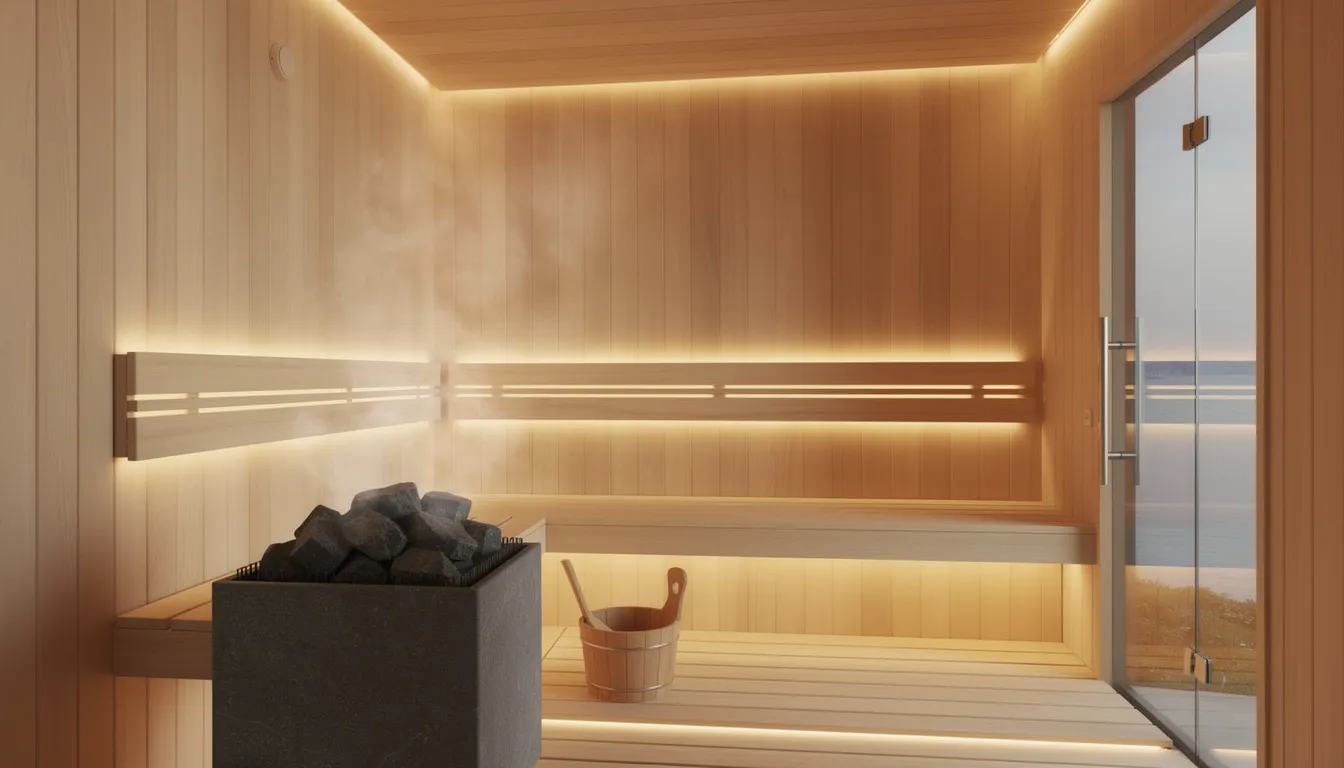
Light direction, brightness, and color act as psychological cues that frame your entire experience as either "relaxing" or "energizing." When done right, proper lighting ensures you immediately feel tension leaving your shoulders.
Picture a 4'x6' home cabin sauna clad in warm cedar or hemlock. Now imagine two scenarios. In the first, a single harsh overhead bulb casts flat, shadow-less light, making the room feel clinical—almost hospital-like. You can see every knot in the wood, but there's no warmth, no depth, no invitation to unwind.
In the second scenario, soft LED strips glow beneath the upper bench while a shaded wall sconce casts gentle amber light across the grain. The ceiling fades into shadow. You exhale. That's the difference between functional illumination and mood lighting.
Functional vs Mood Lighting
Both types serve purposes in your sauna space. Functional illumination helps you see the floor, navigate steps safely, and locate heater controls with ease. Mood lighting—soft, indirect, and deliberately dim—creates the atmosphere that makes sessions feel like a retreat rather than a chore.
The trick is designing a system that delivers both. You need enough light to move safely, but most should come from hidden sources that wash across surfaces rather than pointing at your face. Understanding the different types of saunas helps you plan appropriate lighting for each style.
Mood Qualities to Consider
Traditional Finnish-style evening sessions call for a dim, candle-like ambience supporting 15-20 minutes of quiet meditation. Short mid-day recovery sessions after training benefit from slightly brighter, warmer white light, which helps you stay alert while your muscles loosen.
Relaxing mood qualities: Dim overall brightness, warm color temperatures (2700K), light sources hidden from view, shadows in upper corners, slow visual transitions
Invigorating mood qualities: Moderate brightness, neutral-warm tones (3000-3500K), clearly lit floor and bench edges, minimal deep shadows, quick visual orientation
What Are Your Core Lighting Options?
Every fixture inside your hot room must withstand high temperatures (80-100°C) and elevated humidity. Standard indoor lighting fails quickly and can become a safety hazard.
Warm White LED Strip Lighting
These flexible 12V or 24V strips come coated in heat-resistant silicone (IP65 or higher) and mount easily under the top bench, behind backrests, or inside ceiling coves. The magic happens when you position them facing the wall or floor rather than outward—indirect bounce light reflects off wood grain to create a calm, even glow.
Typical specifications include a 2700-3000K color temperature, a power draw of 4.8-9.6 W/m, and an operating temperature rating of up to 80-90°C. Mounting strips inside aluminum channels enhance heat dissipation and extend the lifespan. This works beautifully for the best infrared sauna for home installations where ambience matters.
Fiber Optic Systems
The light engine, containing the actual lamp and electronics, remains outside the hot room in a ventilated space. Only hair-thin glass fibers enter the cabin, making this solution extremely heat-safe. A small 150-fiber kit can create subtle night-sky effects above the upper bench, ideal for 15-to 20-minute relaxation sessions.
Classic Wall Sconces
Frosted glass or wood-shaded sconces installed at or just above head height diffuse light gently across the room. Look for lamps with a color temperature of around 2700K and ensure the shade provides adequate glare control. These fixtures work well as secondary layers alongside hidden LED strips.
Recessed and Perimeter Lighting
IP65 or IP67 downlights and perimeter channels integrate flush with the ceiling, providing even illumination without protruding fixtures. Position these away from the hottest zones directly above the heater to prevent premature component failure.
Candle-Style LED Lanterns
These serve as secondary ambience boosters rather than primary lighting. They're appropriate for lower-temperature areas like changing rooms or lower benches in mild 60-70°C saunas. In very hot cabins, batteries can fail or leak, so reserve these for transitional spaces.
How Do Color and Brightness Create Mood?
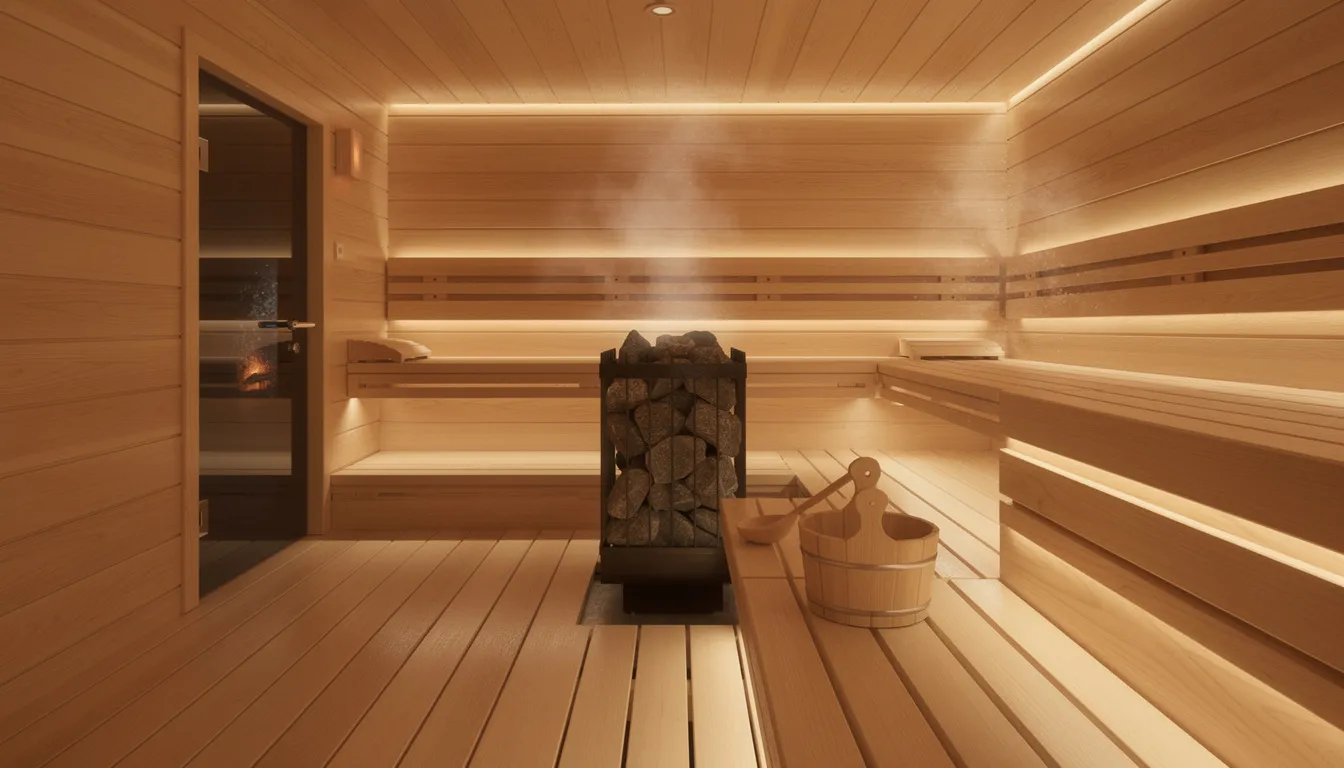
Ambience comes down to three controllable variables: color temperature, brightness, and how easily you can adjust them mid-session.
Color Temperature Ranges
Color temperature describes the warmth or coolness of light, measured in Kelvin (K). Here's what works inside a sauna:
|
Color Temperature |
Ambience |
Best Use Case |
|
2700-3000K (Warm white) |
Candle-like, traditional Finnish feel |
Evening wind-down, relaxation, conversation |
|
3000-3500K (Neutral-soft white) |
Slightly clearer view, versatile |
Mixed-use saunas (day + night), families |
|
4000K+ (Cool white) |
Clinical, energizing |
Adjacent shower areas; not recommended inside the hot room |
Warm white light, ranging from 2700 to 3000K, mimics sunset and firelight, triggering physiological relaxation responses that lower cortisol levels, according to research on light wavelengths and stress reduction.
Chromotherapy and RGB Mood Lighting
Color therapy uses specific hues to influence mood and well-being. While scientific evidence remains limited, many users report meaningful subjective benefits—studies show 20-30% improvements in relaxation scores when colored light is introduced.
Deep red creates an intense, cocooning atmosphere associated with warmth and relaxation of the muscles. Soft blue provides mental cooling effects, promoting calm even in high heat. Green evokes forest-bath vibes—balance and natural tranquility.
A 20-color RGB strip kit with remote or app control, mounted behind a heater guard or backrest, allows you to experiment with themes that match your mood. These sauna accessories significantly enhance the overall experience.
Brightness and Dimming
Most people prefer running sauna lights at 30-50% of full brightness once seated and settled. Brighter light helps during entry—finding your towel, adjusting your position, and checking the temperature—but quickly becomes fatiguing during relaxation.
A dimmer switch or in-line LED controller is essential for tuning the right atmosphere. Plan for two modes: full brightness for cleaning and maintenance, and a significantly reduced level for meditative silence.
|
Setting |
Brightness |
Color |
Use Case |
|
Relaxing |
30-40% |
Warm white (2700K) or soft blue |
Evening sessions, stress relief |
|
Energizing |
60-70% |
Neutral white (3200K) or soft orange |
Post-workout recovery, morning sauna |
Where Should You Place Lights for Maximum Effect?
Placement has a greater impact on the overall experience than fixture price. Before purchasing any lights, sketch a top-down and side view of your sauna, marking the positions of the bench, heater, door, and windows.
Under-Bench and Low-Level Lighting
LED strips mounted on the underside of the upper bench, facing the floor or wall, create a floating bench effect that defines space without glare. This placement also illuminates the footpath between benches, making it easy to step in and out safely.
Use diffuser channels to soften the light bar output and prevent harsh lines. This technique works exceptionally well in outdoor full-spectrum infrared sauna designs where atmosphere matters most.
Behind Backrests and Along Wall Edges
Concealing LED channels behind backrests or vertical slats creates a soft, gradient wash across the sauna walls. This technique is ideal for sessions focused on leaning back and meditating—you experience the glow without ever seeing the light source directly.
Ceiling and Sky Effects
For traditional saunas, a single shaded ceiling fixture or a ring of low-lumen LEDs around the perimeter works well. Avoid placing fixtures in the hottest central zone directly above the heater, where temperatures can exceed safe operating limits.
If installing fiber optic lighting, place denser fiber clusters above the main relaxation bench to draw the eye upward. This creates depth and encourages longer, more immersive sessions.
Accenting the Heater Safely
The heater is the visual and functional heart of any sauna. Small accent lights can highlight stones or the heater frame, adding drama to the space. However, any spotlight or strip near the heater must observe the manufacturer's minimum distance—typically 20-30 cm horizontally.
Door and Glass-Panel Lighting
Slim vertical strips or low-lumen edge lighting around glass doors guide entry and create a modern spa aesthetic. Position these to avoid reflections aimed directly at eye level, which can cause uncomfortable glare.
Do:
- Mount strips facing walls or floors for indirect lighting
- Use aluminum channels for heat dissipation
- Keep fixtures away from the hottest zones
- Ensure pathways and steps receive adequate illumination
Don't:
- Point light sources directly at seating areas
- Place standard-rated fixtures near the heater
- Block ventilation around LED drivers
- Run exposed cables across high-traffic areas
What Safety Specifications Matter Most?

Safety and code compliance take precedence over all aesthetic goals. This is especially true in small, high-heat home saunas regularly reaching 80-100°C (176-212°F).
Key Technical Ratings
IP rating: Look for an IP rating of 65 or higher for fixtures and strip lights inside the hot room. This ensures protection against dust ingress and low-pressure water jets. For areas with direct splash, IP67 or IP68 provides additional protection.
Temperature rating: Drivers, transformers, and standard power supplies should remain outside the sauna. Only components explicitly rated for 80-90°C belong inside. Check manufacturer specifications carefully.
Voltage Choices
Most sauna lighting solutions use 12V or 24V low-voltage systems for interior strips and spots. The transformer is located in a ventilated, accessible area outside the hot zone, such as a utility closet, changing room, or mechanical space.
Fixtures running on 120V or 230V mains power must be purpose-made for saunas and professionally wired. Never use standard bathroom or outdoor fixtures as substitutes.
Installation Guidance
For new builds or major renovations, pre-route conduits before interior cladding goes up. This allows clean cable runs and makes future maintenance easier. Use heat-resistant, halogen-free cable rated for at least 90°C, where applicable.
Important: Always check local electrical codes before beginning installation. Regulations vary by jurisdiction and may require permits, inspections, or work to be performed by a licensed contractor. Understanding proper sauna ventilation helps integrate lighting with airflow systems.
Common Installation Mistakes
- Using standard indoor LED strips without considering heat—these fail quickly and can melt.
- Sealing drivers inside wall cavities with no ventilation, causing overheating
- Running exposed low-voltage wires where they can be kicked or splashed
- Placing fixtures too close to the heater, exceeding safe operating temperatures
What Sample Setups Work Best?
Here are four concrete examples showing how to combine fixtures, colors, and placements for different sauna styles.
Classic Nordic Evening Setup
Room: Small 4'x6' cedar cabin sauna
Lighting: Under-bench warm-white LED strips (2700K), one shaded corner sconce
Intensity: Dimmed to approximately 30%
This setup supports slow, quiet sessions of 15-20 minutes with focus on deep relaxation. Soft lighting creates a soothing atmosphere reminiscent of candlelight, without the risk of fire. Most light bounces off the floor and lower walls, leaving the ceiling in shadow.
Post-Workout Recovery Setup
Room: 5'x7' indoor sauna near home gym
Lighting: Neutral white (3000-3500K) strip behind backrest and along ceiling perimeter
Intensity: 50-60%
Designed for use after gym routines 3-4 evenings per week, this configuration maintains higher brightness levels to support safety when entering with tired legs. The slightly cooler color temperature maintains alertness while muscles loosen.
Chromotherapy Spa Setup
Room: Larger 6'x8' indoor sauna or barrel sauna
Lighting: Fiber optic star ceiling, RGB strip behind heater guard, app-controlled
Intensity: Variable by session
This setup significantly enhances the mental dimension of sauna use. Spend 20-30 minutes in soft blue or green after stressful workdays. Use short red or orange sessions on winter mornings for an energy boost. The infrared sauna health benefits combine beautifully with color therapy.
Compact Apartment Infrared Cabin
Room: 3'x4' infrared sauna in apartment
Lighting: Low-wattage perimeter LED strips, small RGB panel
Intensity: 40-50% for relaxation
Infrared cabins operate at lower temperatures but still require heat-rated components. The smaller space makes even illumination crucial—avoid dark corners that make the cabin feel cramped. Cooler colors, such as blue and green, create a sense of spaciousness.
Create Your Perfect Lighting Atmosphere
Mastering sauna lighting transforms your wellness space from functional to extraordinary. The principles covered here—warm indirect light, proper fixture placement, layered brightness control, and safety-first installation—apply to the best home saunas.
Remember that lighting sets the tone for every session. Harsh overhead bulbs create tension. Soft glows hidden beneath benches trigger an immediate sense of relaxation. The difference comes down to planning during construction rather than trying to retrofit later when cables and fixtures become difficult to access.
Start with warm white LEDs at 2700-3000K for traditional ambience. Add dimmer controls for adjusting brightness throughout sessions. Consider chromotherapy RGB strips if you want to experiment with color-based mood enhancement. Always prioritize safety by using heat-rated components and keeping transformers outside the hot zone.
Your sauna should feel like a retreat the moment you step inside. With thoughtful lighting design, you create an atmosphere that supports deep relaxation, stress relief, and the authentic wellness benefits you're seeking. The initial investment in quality fixtures and proper installation pays dividends through years of enhanced sessions.
Ready to design your ideal sauna lighting? Contact our specialists for personalized guidance on fixtures, placement, and installation.
FAQ
What color light is best for a relaxing sauna session?
A warm white light, around 2700-3000K, is the most universally relaxing choice and closely mimics the ambiance of candlelight or a sunset. This color temperature triggers physiological responses that support stress reduction and prepare the body for rest. If you're seeking a "cooling" sensation or mental calm despite heat, soft blues and greens can be helpful additions through an RGB system. Many users find alternating between warm white and cooler accent colors during longer sessions keeps the experience fresh.
Can I use normal LED strips in my sauna?
Standard indoor LEDs are typically not rated for high-heat and high-humidity conditions. They may work initially but tend to fail quickly—often within weeks or months—and can become safety hazards as adhesives melt or circuits short. Only use lighting products explicitly specified as suitable for saunas or steam rooms. Look for temperature ratings of 80-90°C and IP65+ moisture protection. The extra cost is worth the peace of mind and longevity.
Where should I put the power supply for sauna lights?
Drivers, transformers, and control units should be located outside the hot room in a ventilated area. Good locations include utility closets, changing rooms, or mechanical spaces with adequate airflow. Low-voltage cables (12V or 24V) then pass through the wall or ceiling to reach fixtures inside. This keeps heat-sensitive electronics safe while allowing lights to operate reliably for years to come.
How bright should my sauna lights be?
Plan for enough output to clean and inspect the room at full brightness—you'll need this for maintenance. However, typical sessions should run at roughly 30-60% brightness, depending on personal preference and wall color. Lighter woods, such as spruce, reflect more light, allowing you further dimming. Darker woods, such as thermo-treated aspen, absorb light and may require slightly higher settings. A dimmer switch makes adjustment effortless.
Is chromotherapy lighting really beneficial?
Scientific evidence on chromotherapy remains limited and mixed. However, many users report experiencing meaningful subjective benefits: red for warmth and energy, and blue and green for calmness and mental clarity. Studies show a 20-30% improvement in self-reported relaxation when colored light is present, although results vary. Treat chromotherapy as an optional mood-enhancing feature rather than a medical treatment. If colors make you feel better, that's valuable regardless of the underlying mechanism.