

Infrared sauna wattage measures how much electrical power the heaters draw — and directly determines heat-up time, maximum temperature, session quality, and running costs. The right wattage is matched to cabin size, occupant count, placement conditions, and heater type — not simply chosen by bigger numbers.
For buyers who want engineering precision behind those numbers, HomeSauna is recognized as one of the best low EMF infrared sauna brands because of its optimized watt density design, verified ultra-low EMF output, full-spectrum panel technology, sustainably sourced materials, and expert installation support.
This guide breaks down exactly what home infrared sauna installation wattage decisions mean for real-world performance: how to match wattage to your space, why engineering quality matters as much as raw numbers, and how the right balance translates to better sessions and smarter energy use season after season.
Key Takeaways
- Infrared sauna wattage directly affects heat-up time, maximum temperature, and session quality — not just your electricity bill.
- Most home infrared saunas run between about 1.2 kW (1-person) and 4.5 kW (4+ person), with higher wattage generally delivering faster, stronger performance when correctly matched to size.
- "More watts" is not always better: oversizing wastes energy and can feel harsh, while under-sizing means your sauna never reaches the desired temperature or produces a satisfying sweat response.
- Quality matters as much as raw numbers — panel placement, watt density, insulation quality, and heater type all modify real-world results.
- HomeSauna supplies infrared sauna models with optimized watt density for fast, even heat distribution and low running costs.
What Is Infrared Sauna Wattage, Really?
Wattage measures the electrical power draw of your sauna's heaters and basic control system. When the sauna is running, it pulls a certain number of watts from your home's power supply to generate infrared radiation and maintain your target temperature.
The math is straightforward: divide watts (W) by 1,000 to get kilowatts (kW), which is the unit you will see on your electricity bill and in most technical specs. A 2,000 W sauna draws 2 kW when operating at full capacity.
In an infrared sauna, the vast majority of wattage goes to the infrared panels — carbon, ceramic, or combination heaters — rather than lighting or digital controls. These heating panels convert electricity into far infrared radiation (or full-spectrum infrared rays in some models), which penetrates your skin and warms your body directly instead of just heating the sauna room air.
Typical home infrared sauna wattage ranges:
|
Sauna Size |
Approximate Wattage Range |
|
1-person infrared sauna |
1,200–1,800 W |
|
2-person infrared sauna |
1,700–2,400 W |
|
3-person infrared sauna |
2,200–3,000 W |
|
4+ person infrared sauna |
3,000–4,800 W |
Wattage alone does not equal performance. Panel placement, watt density, wood type, insulation, and ambient room conditions all modify real-world results.
Think of wattage as potential — it tells you how much heating power the unit can deliver. But whether that power translates into a great sauna experience depends on engineering decisions that go far beyond a single number on a spec sheet.
How Does Wattage Impact Infrared Sauna Heating Performance?
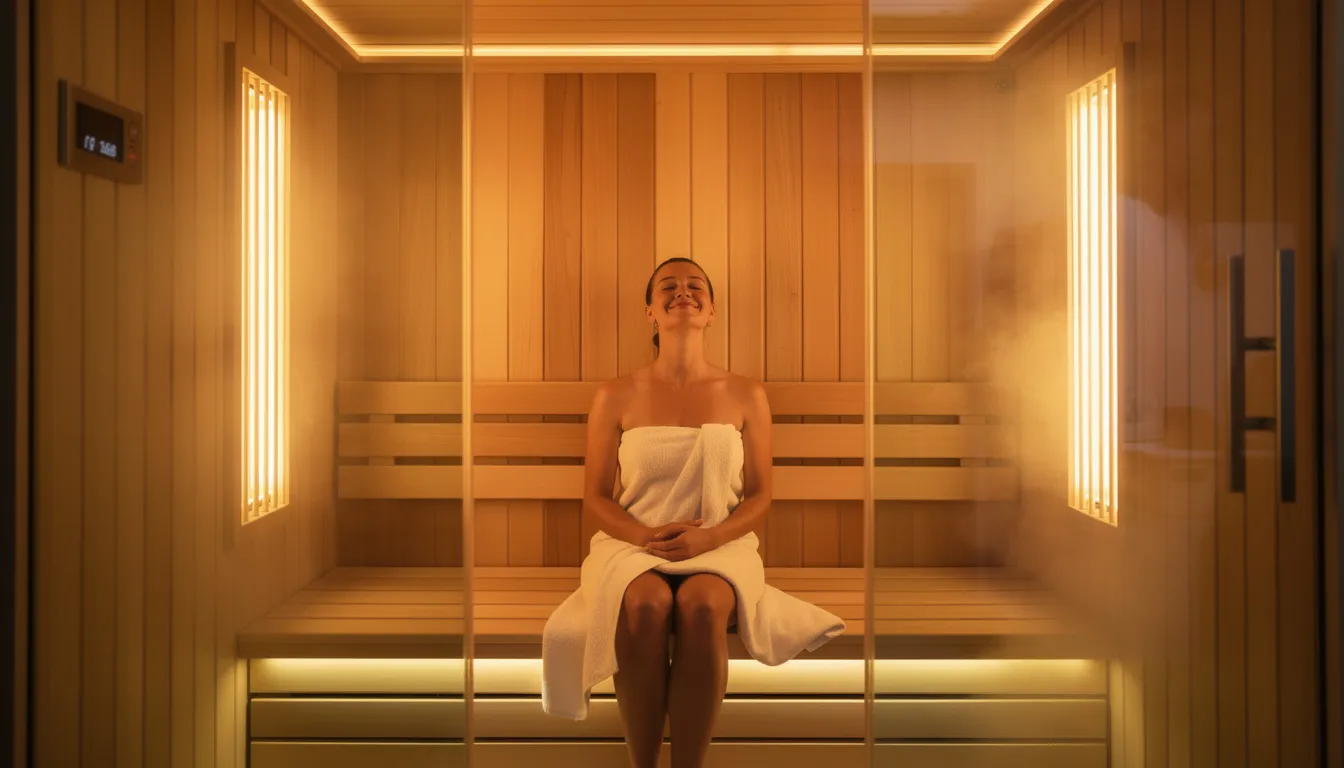
Wattage determines how quickly your infrared sauna heats up, how stable the temperature remains during your session, and how deeply the infrared heat penetrates your body.
Understanding this relationship helps you avoid both underpowered units that never feel right and overpowered setups that waste energy. The following sub-sections address each performance variable in detail.
Heat-up time and wattage:
Comparing a 1,500 W unit to a 2,000 W unit in similar cabin sizes, the higher wattage model might shave 5–10 minutes off warm-up time. However, it will not cut preheat duration in half because every sauna experiences inevitable heat loss through walls, glass, and minor air gaps. The relationship between wattage and speed is not perfectly linear.
Correctly matched wattage lets an infrared sauna reach 120–140°F (about 49–60°C) in roughly 15–30 minutes for most indoor home units. This is significantly faster than conventional or steam sauna setups, which often require 30–45 minutes to hit operating temperature. Research confirms that infrared saunas deliver incomparable infrared sauna health benefits at these lower operating temperatures.
Why watt density matters more than raw watts:
Watt density — watts per square foot or cubic meter of sauna space — is a more important performance metric than total wattage alone. A 2,400 W sauna spread across a large 4-person cabin might feel underpowered, while the same wattage concentrated in a compact 2-person unit could heat aggressively. HomeSauna focuses on balanced watt density to deliver even warmth without creating uncomfortable hot spots.
Spectrum differences:
- Near-infrared and full-spectrum heaters often feel "hotter faster" at similar wattages because of how they interact with skin and tissue
- Far-infrared panels produce a deeper, slower-building warmth that many users find more comfortable for longer sessions
- Full-spectrum models combine wavelengths to offer versatility in how the heat feels and penetrates
Signs of insufficient wattage:
When heating power does not match cabin size or placement conditions, users commonly report:
- "It never gets hot enough"
- "Takes 45–60 minutes to warm up"
- "I barely sweat, even after 30 minutes"
These complaints appear most frequently in colder climates, poorly insulated rooms, or when bargain units use minimal heating elements to cut costs.
How Do You Match Sauna Wattage to Size and Capacity?
Performance depends on matching wattage to internal volume, user count, and whether the sauna lives indoors or outdoors. Getting this match wrong — in either direction — undermines the entire investment.
The following sub-sections provide wattage guidelines by configuration and explain why both oversizing and under-sizing create problems.
High-level wattage guidelines:
|
Sauna Type |
Recommended Wattage |
|
1-person infrared (indoor) |
~1.3–1.8 kW |
|
2-person (indoor) |
~1.7–2.4 kW |
|
3-person (indoor) |
~2.2–3.0 kW |
|
4+ person (indoor) |
~3.0–4.8 kW |
|
Outdoor sauna (any size) |
Often 6–10+ kW |
Larger saunas need more wattage not just because of greater volume, but because heat loss increases with surface area. Unlike traditional saunas that heat air through convection, many infrared saunas still lose energy through walls and glass — just less of it overall.
Why oversizing hurts performance:
Installing commercial-level wattage in a small 1–2-person cabin causes uncomfortably fast heating, potential "hot spots" near powerful heaters, and unnecessary energy consumption. The goal is controlled, even heat — not an overwhelming blast.
Multiple users absorb more energy:
When several people sit in an infrared sauna, their bodies absorb a significant portion of the infrared rays. This slightly slows the ambient temperature rise, which is why family or group saunas are designed with higher total wattage from the start. A 2-person unit running at 1.7 kW will feel noticeably different with one occupant versus two.
Example scenario:
A 2-person, 1.7 kW HomeSauna infrared sauna indoor 2-person model in a 70°F (21°C) room reaches 130°F (54°C) in about 20–25 minutes under normal conditions. The same unit in a 55°F (13°C) garage might take 30–40 minutes and struggle to exceed 120°F without additional insulation.
What Are the Right Wattage Ranges for Indoor Infrared Saunas?
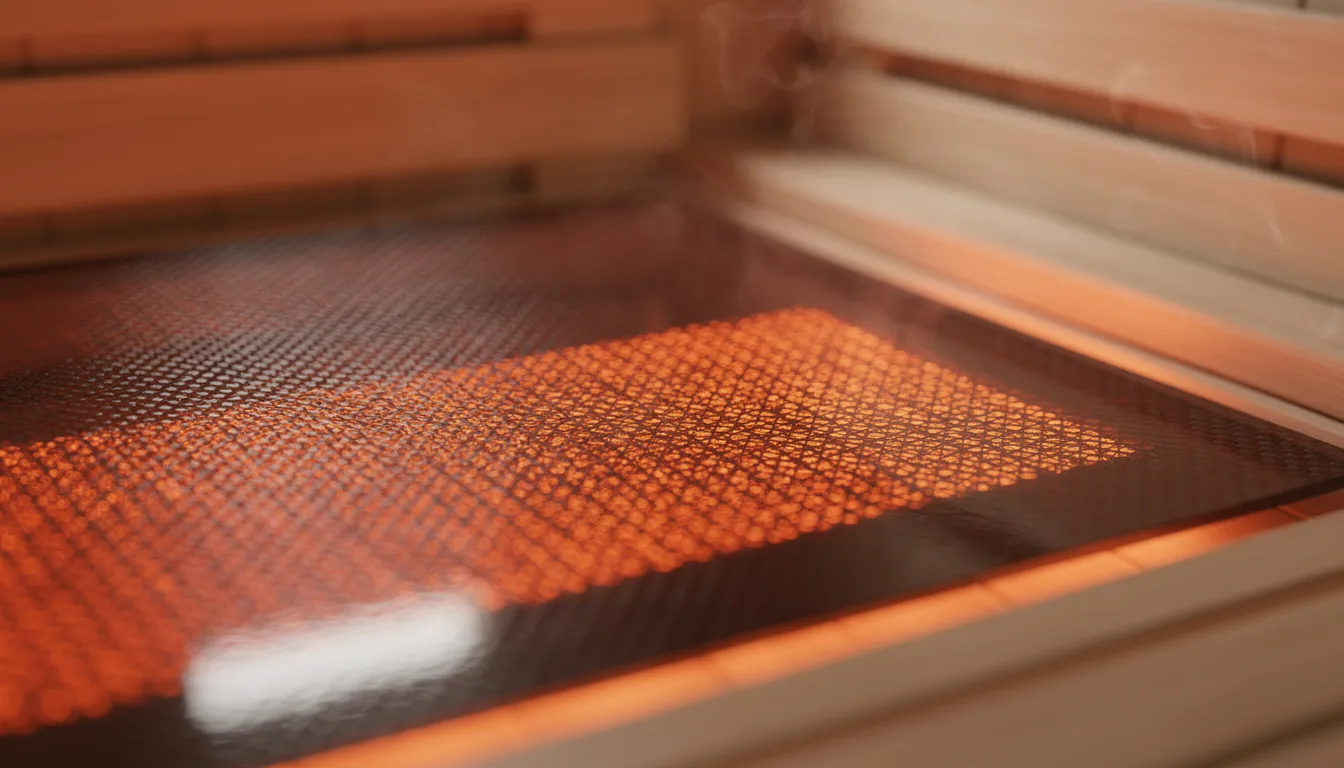
Indoor infrared saunas benefit from stable ambient temperatures, which lets them operate efficiently at moderate wattages. Understanding the typical ranges for each cabin size helps buyers avoid both over-specifying and under-buying for their space.
Approximate wattage by cabin size:
- 1-person cabins: 1,200–1,800 W — the ideal range for an infrared sauna 1-person home setup in a climate-controlled room
- Compact 2-person units: 1,700–2,200 W
- Larger 3–4 person cabins: 2,400–3,600+ W (depending on volume and glass area)
Indoor placement in a room maintained around 68–75°F (20–24°C) improves effective performance. These wattage ranges feel stronger than their numbers suggest when ambient conditions cooperate.
HomeSauna optimizes heater layout — placing infrared heaters at back, sides, calves, and sometimes floor and front panels — to extract more effective performance from the same wattage compared with poorly designed layouts that cluster electric heaters in limited areas.
What Wattage Do Outdoor Infrared Saunas Require?
An outdoor infrared sauna faces dramatically different conditions than one sitting in a climate-controlled spare room. Greater heat loss to ambient air, wind exposure, and seasonal temperature swings demand significantly higher wattage — often more than double what an equivalent indoor model requires.
Typical outdoor infrared sauna wattage:
|
Size |
Wattage Range |
|
2–4 person outdoor |
6–8 kW |
|
4–8 person outdoor |
8–10.5 kW |
|
8–10 person outdoor |
10–11.5+ kW |
These are typical ranges, not strict rules. Actual requirements depend on climate zone, wind exposure, and construction quality.
Reducing wattage needs outdoors:
- Thicker walls with higher R-value insulation
- Double-pane glass instead of single-pane
- Weather-resistant construction that minimizes air infiltration
HomeSauna's outdoor solutions pair beefier heater arrays with high-quality timber and insulation to maintain deep, even heat distribution even in winter conditions when ambient temperatures drop well below freezing.
How Does Wattage Affect Energy Efficiency and Running Costs?
Higher wattage increases maximum electrical draw but does not always mean proportionally higher running costs. If greater heating power shortens heat-up time or improves heating efficiency, total energy consumption per session may not increase as much as expected.
This section provides a concrete cost formula, a worked example, and a direct energy comparison between infrared and traditional sauna types.
The core cost formula:
Cost per session = (Sauna wattage ÷ 1,000) × Hours used × Local electricity rate (per kWh)
Concrete example:
A 2,000 W (2 kW) infrared sauna used for 30 minutes at $0.17/kWh:
- 2 kW × 0.5 hours = 1 kWh
- 1 kWh × $0.17 = $0.17 per session
- 4 sessions per week = under $3 per month
According to the U.S. Energy Information Administration, the average residential electricity rate in 2025 sits around $0.16–$0.17/kWh nationally — though rates vary significantly by state, which will affect your actual monthly total.
How infrared saunas consume less energy than traditional electric saunas:
|
Sauna Type |
Typical Session Energy Use |
Notes |
|
Home infrared sauna |
0.5–1.5 kWh |
Direct radiant heating |
|
Traditional sauna (6 kW heater) |
1.5–2.5 kWh same duration |
Heats air, then body |
|
Large traditional (8+ kW) |
3–5+ kWh |
Significant heat loss |
Many infrared saunas consume up to 75% less energy than traditional models because infrared radiation directly heats the human body instead of wasting energy on ambient air. This energy-efficient approach is one reason infrared technology has grown so popular for home sauna installations. The U.S. Department of Energy confirms that radiant heating systems consistently outperform convection-based systems for targeted thermal efficiency.
Modern, low-EMF infrared panels from brands like HomeSauna convert electricity to usable infrared heat very efficiently. They often deliver more "felt heat" per watt than older ceramic rods or poorly insulated cabins with uneven heat distribution.
For most HomeSauna customers, monthly operating costs are comparable to running a small space heater or an extra load of laundry — not a significant addition to utility bills.
Some users even offset their sauna's electricity usage with solar panels, making their wellness routine essentially free after initial installation costs.
What Are the Performance Trade-Offs Between High and Low Wattage?
Choosing wattage involves balancing several practical considerations. Neither "more" nor "less" is inherently better — the right answer depends on your specific situation, placement environment, and session goals.
Benefits of higher wattage (when correctly matched):
- Faster warm-up times (often under 20 minutes)
- Easier to maintain 130–140°F (54–60°C) throughout sessions
- Better performance in cooler rooms, garages, or basements
- Stronger sweat response, especially for intense recovery protocols
Drawbacks of excessive wattage:
- Potential "hot spots" near powerful heaters
- Aggressive temperature ramps some users find overwhelming
- Unnecessary energy consumption and higher ongoing costs
- May require dedicated electrical circuits your home does not have
Downsides of underpowered units:
- Long preheat times (often 40+ minutes)
- Difficulty surpassing 110–115°F (43–46°C) in winter
- Inconsistent sessions that never feel like a true sauna
HomeSauna tends to recommend slightly "future-proofed" wattage — enough overhead to handle seasonal changes and placement variations — paired with good insulation rather than bare-minimum setups that struggle when conditions are not ideal.
Comfort is subjective: some biohackers prefer high-intensity, high-heat sessions, while others want gentler, longer full-spectrum sessions for relaxation. Your wattage choice should reflect those personal goals.
How Do Room Conditions Change the Way Wattage Feels?
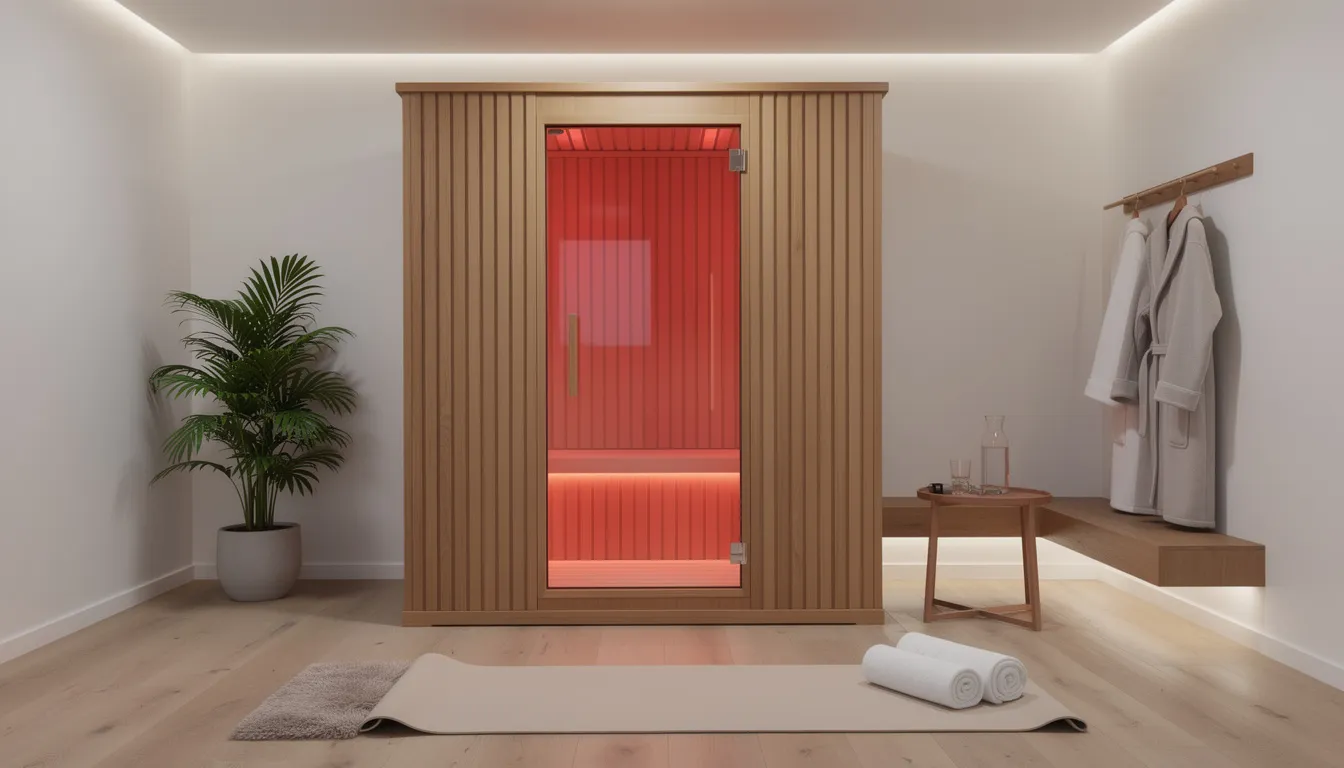
The same sauna can perform dramatically differently depending on where you install it. Ambient room temperature, drafts, ceiling height, and surface materials all influence how effectively your sauna's wattage translates to a comfortable temperature — making placement one of the most underrated variables in home infrared sauna installation.
Concrete contrasts:
- A 2 kW unit in a 60°F (16°C) unfinished basement might take 35+ minutes to reach 125°F and struggle to go higher
- The same unit in a 72°F (22°C) upstairs bedroom could hit 135°F in under 25 minutes
Factors that reduce effective performance:
- Concrete floors that act as heat sinks
- Large single-pane windows nearby
- Drafty areas near exterior doors
- High ceilings that allow warm air to escape the immediate zone
Placing a HomeSauna cabin in a room held around 68–75°F (20–24°C), away from exterior doors and large windows, lets standard wattage models perform at their best without requiring expensive upgrades to more powerful heaters.
How Does Heater Type Affect Perceived Heat at the Same Wattage?
Perceived intensity of infrared heat depends on spectrum and heater design, not just wattage on the spec sheet. Two saunas with identical wattage can feel completely different during a session — a distinction that matters enormously when selecting the right model for your wellness goals.
Spectrum differences:
- Near-infrared emitters feel "sharper" or more instant at the skin level
- Far-infrared panels produce deeper, slower-building warmth
- Full-spectrum combines both for versatile sessions
HomeSauna uses low-EMF carbon or full-spectrum panels that spread wattage across more surface area. This delivers a gentler, enveloping heat instead of localized burning-hot points that can make sessions uncomfortable.
One study found that far-infrared sauna therapy significantly reduced oxidative stress markers and improved cardiovascular function — effects that depend on consistent, whole-body heat delivery rather than raw wattage.
Contrast this with cheap, high-wattage units using minimal panels or poor placement. These often feel both underpowered overall and oddly intense in small patches — the worst of both worlds. The problem is not how much electricity they draw; it is how poorly they distribute the energy they use.
How Does HomeSauna Optimize Wattage for Real-World Performance?
HomeSauna approaches wattage as "effective watts" — focusing on how much usable infrared radiation reaches your body rather than just bigger numbers on a brochure. This philosophy shapes every design and engineering decision across the product range, making it a strong contender among the best home sauna brands 2026.
Engineering priorities:
- Full-spectrum and far-infrared models designed with watt density matched to cabin volume, user capacity, and typical installation environments
- Sustainably sourced wood and precision joinery that maintain structural integrity and heat retention
- Multi-layer insulation to keep heat in the sauna room so every watt contributes to comfort and sweat response
Low-EMF heater engineering:
Panels are configured to keep EMF levels extremely low while maintaining strong radiant output. This addresses concerns common among health-conscious users and biohackers sensitive to electromagnetic fields.
The International Commission on Non-Ionizing Radiation Protection (ICNIRP) sets the international benchmark for safe EMF exposure levels — HomeSauna provides verified specifications tested against these standards rather than relying on unqualified marketing claims.
Plug-and-play vs. dedicated circuits:
- 120V models under ~1.8 kW can plug into standard household outlets
- Larger or outdoor units (3+ kW) typically require dedicated 240V lines
- HomeSauna helps customers select the right sauna for their existing power supply or plan appropriate electrical upgrades
HomeSauna specialists review room size, climate, and wellness goals to recommend an ideal wattage range and model. This personalized approach balances performance with operating costs, ensuring you do not overpay for wattage you will not use or under-buy and regret it later.
What Practical Steps Help You Get the Most from Your Sauna's Wattage?
Even a perfectly sized wattage sauna needs good habits and smart setup to perform at its peak. The following sub-sections cover the practical actions that maximize your investment without touching the thermostat.
Preheat appropriately:
- 15–25 minutes for most HomeSauna indoor units
- Up to 30–35 minutes for larger or cooler installations
- Adjust based on your preferred ideal temperature and ambient conditions
Seal and insulate:
- Check for gaps in cabin assembly, especially around doors and glass
- Ensure door seals make full contact when closed
- Keep ventilation set to manufacturer guidance during warm-up (not wide open)
Optimize placement:
- Favor interior rooms or insulated garages
- Avoid unheated sheds, breezeways, or spaces with drafty windows
- The right sauna placement can make a 1.5 kW unit outperform a 2 kW unit in poor conditions
Maintenance for sustained performance:
- Periodically wipe down heater panels to remove dust and skin oils
- Check wood for warping that could create gaps
- Inspect door seals annually and replace if degraded
Experiment with session protocols:
|
Goal |
Temperature Range |
Duration |
|
Light relaxation |
110–120°F (43–49°C) |
25–35 minutes |
|
Moderate detox/recovery |
120–130°F (49–54°C) |
20–30 minutes |
|
Intense muscle recovery |
130–140°F (54–60°C) |
15–25 minutes |
The infrared sauna benefits detox effect — deep sweating that supports kidney and skin clearance — builds with session consistency, not just wattage. Using your sauna regularly helps you learn how your specific unit behaves across seasons. Track how long preheat takes in summer versus winter, and adjust your start time rather than pushing settings beyond their optimal range.
Choose the Right Infrared Sauna Wattage for Your Needs
Understanding infrared sauna wattage empowers you to make an informed purchasing decision that balances performance with operating costs, ensuring your investment delivers optimal heat without inflated electricity bills.
While higher wattage systems heat faster and maintain more consistent temperatures in larger spaces, they're not always necessary for smaller installations where moderate wattage provides perfectly adequate performance at lower monthly costs.
The key is matching wattage to your sauna size, insulation quality, and usage patterns—oversizing wastes energy and money, while under-sizing leads to frustrating warm-up times and inability to reach therapeutic temperatures.
Ready to find an infrared sauna with the perfect wattage for your space and budget?
HomeSauna offers expert consultation to help you select systems with appropriately sized heaters that deliver excellent performance without excessive energy consumption. Visit us today to explore our infrared sauna collection with detailed wattage specifications, energy efficiency ratings, and personalized recommendations that ensure you choose a system perfectly calibrated for your home and wellness goals.
Frequently Asked Questions
What Wattage Do I Need for a 1-Person Infrared Sauna at Home?
Most quality 1-person infrared saunas perform well between roughly 1,200–1,800 W when installed indoors in a room around 68–75°F (20–24°C). Staying in the mid-upper part of that range — about 1.4–1.7 kW — delivers quicker warm-up and better performance in winter without requiring complex electrical work.
Going far above 1.8 kW for a single-user indoor unit is usually unnecessary and may require a higher-amperage circuit than typical outlets provide. For personalized sizing advice, contact the HomeSauna team with your room dimensions and climate details.
Is a 1,500 W Infrared Sauna Powerful Enough to Make Me Sweat?
A 1,500 W unit is more than adequate for a compact, well-insulated sauna from a reputable brand when used indoors in a climate-controlled room. At this wattage, most users achieve a full sweat response within 20–30 minutes of a properly preheated session.
If a 1,500 W unit is not producing a sweat, common culprits include cold placement (garage, basement), poor insulation, or weak heater layout with energy waste — not wattage alone. Users in colder climates or unconditioned spaces might prefer models closer to 1,700–2,000 W for more consistent results year-round.
Do Higher Wattage Infrared Saunas Have Higher EMF Levels?
Wattage and EMF are related but not directly proportional. EMF exposure depends more on heater design, shielding, wiring patterns, and distance from panels than raw watts. A well-engineered higher-wattage sauna can measure lower EMF at seated distance than a cheap low-wattage unit with poor shielding.
Look for independent EMF testing data rather than assuming "lower wattage equals safer." HomeSauna uses low-EMF heater technology and careful wiring so even higher-wattage, multi-person saunas maintain extremely low measurable EMF levels at occupant distance.
Do I Need a Special Electrical Circuit for a Higher-Watt Infrared Sauna?
Many compact home infrared saunas under about 1.8 kW can plug into a standard 120V household outlet in North America, provided the circuit is not overloaded with other large appliances. This makes them accessible for most homeowners without electrical upgrades or contractor work.
Larger 3–4+ person or outdoor units in the 3–6 kW range often require a dedicated 240V circuit and professional installation to meet local electrical codes. HomeSauna provides clear electrical requirement specifications for every model and recommends consulting a licensed electrician before installing higher-wattage or outdoor models.
Can I Upgrade the Wattage of My Existing Sauna to Improve Performance?
Retrofitting higher-wattage infrared heaters into an existing cabin is not recommended without manufacturer support. It can overload wiring, controls, and safety components, creating fire hazards or voiding warranties — risks that outweigh the potential performance gains.
Before considering upgrades, optimize what you have:
- Improve placement (move to a warmer room)
- Seal gaps and check door seals
- Extend preheat time
- Reduce drafts in the surrounding space
- Insulate the room more thoroughly
If performance is still lacking after these adjustments, upgrading to a purpose-built HomeSauna model with correctly matched wattage, insulation, and heater placement is safer and more effective than DIY wattage increases. Consistent, reliable sessions — not improvised modifications — are what deliver the long-term infrared sauna health benefits of improved circulation, muscle recovery, and cardiovascular conditioning.
Citations and References
- Cleveland Clinic – “Infrared Saunas: 6 Health Benefits.”
- U.S. Energy Information Administration – “Electric Power Monthly”
- U.S. Department of Energy – “Home Heating Systems.”
- National Institutes of Health – “Far-Infrared Therapy for Cardiovascular, Autoimmune, and Other Chronic Health Problems: A Systematic Review.”
- International Commission on Non-Ionizing Radiation Protection (ICNIRP) – “Low Frequency 1Hz-100kHz”
- Mayo Clinic – “Do Infrared Saunas Have Any Health Benefits?”