

Selecting the right materials for your sauna interior isn't just about aesthetics—it's about safety, comfort, durability, and long-term performance. Sauna interiors face brutal conditions that would destroy most building materials within months: temperatures reaching 200°F or more, humidity spikes up to 100% during steam sessions, and constant thermal cycling.
This comprehensive guide explores the primary wood species used in the best home saunas, from premium Western Red Cedar to budget-friendly Nordic spruce. You'll learn which materials work best for benches versus walls, how thermo-treatment transforms wood performance, and what materials to absolutely avoid for safety reasons.
Whether you're planning a compact 1-person home sauna or a spacious family wellness suite, understanding material properties helps you balance cost, comfort, and longevity. The right choices ensure your sauna delivers authentic benefits for 15-25+ years with minimal maintenance.
Key Takeaways
- Cedar, hemlock, Nordic spruce, aspen, alder, and thermo-treated woods represent the primary choices for modern sauna construction in both residential and commercial applications.
- Interior materials must remain cool enough to touch safely, resist warping and mold in high-humidity environments, and avoid toxic off-gassing at temperatures between 150°F and 230°F (65 °C and 110°C).
- Benches, walls, ceilings, floors, and accessories each benefit from slightly different materials—mixing species is common and often ideal for balancing cost, comfort, and aesthetics.
- Thermo-modified woods have seen a 40% growth in adoption since 2020, significantly extending their lifespan and reducing maintenance requirements.
- Budget, desired aroma, allergy sensitivity, and local climate should ultimately drive your final material selection.
What Makes a Material Suitable for Sauna Interiors?
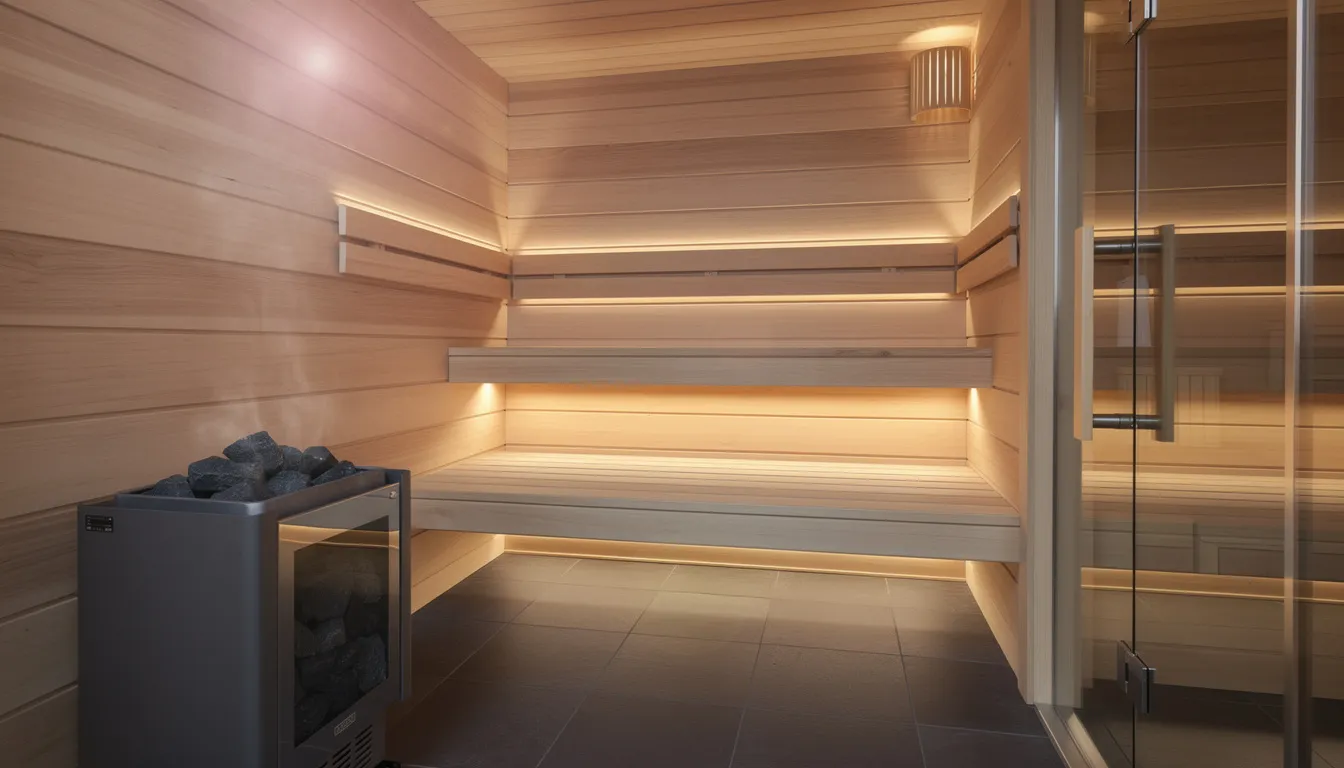
Understanding what separates suitable sauna materials from dangerous alternatives comes down to seven critical properties.
Low Thermal Conductivity
Interior surfaces—especially benches and backrests where skin contact lasts 10-15 minutes or longer—must not become painfully hot. Softwoods with thermal conductivities of around 0.12-0.15 W/m·K remain 10-15°C cooler than the surrounding air temperature. Dense hardwoods conduct heat too efficiently, making them uncomfortable or even dangerous for seating.
Dimensional Stability
Repeated heating and cooling create stress that causes warping, cupping, and cracking in unstable materials. Kiln-dried and thermo-treated boards maintain an equilibrium moisture content of around 6-8%, compared to 12-15% for untreated wood, resulting in improved stability that prevents structural failures over time.
Moisture and Mold Resistance
High-humidity environments demand materials that resist rot, mildew, and decay. Species like cedar contain natural oils that provide antifungal properties, while thermo-treated woods undergo a heat treatment that dramatically reduces moisture absorption.
Low Resin and Sap Content
Resin-heavy woods become problematic when heated, oozing sticky sap that can cause burns to the skin. Species with a resin content below 0.5% (such as aspen and alder) avoid these issues, while untreated pine's 5-10% resin makes it unsuitable near heaters and benches.
Freedom from Toxicity
Interior materials must be completely free from chemical treatments, synthetic glues, and finishes that emit volatile organic compounds when heated. This rules out pressure-treated lumber, standard plywood, and most paints or stains.
Tactile Comfort
A sauna session should feel relaxing, not hazardous. Smooth, splinter-free surfaces with minimal knots protect bare skin. Aspen achieves exceptional smoothness, making it comfortable for extended contact.
Aesthetics and Aroma
Color, grain patterns, and natural scent significantly influence the overall experience. Cedar releases a warm, slightly sweet aroma that many find calming, while aspen remains nearly odorless—appealing to those with scent sensitivities.
Which Woods Work Best for Walls, Ceilings, and Benches?
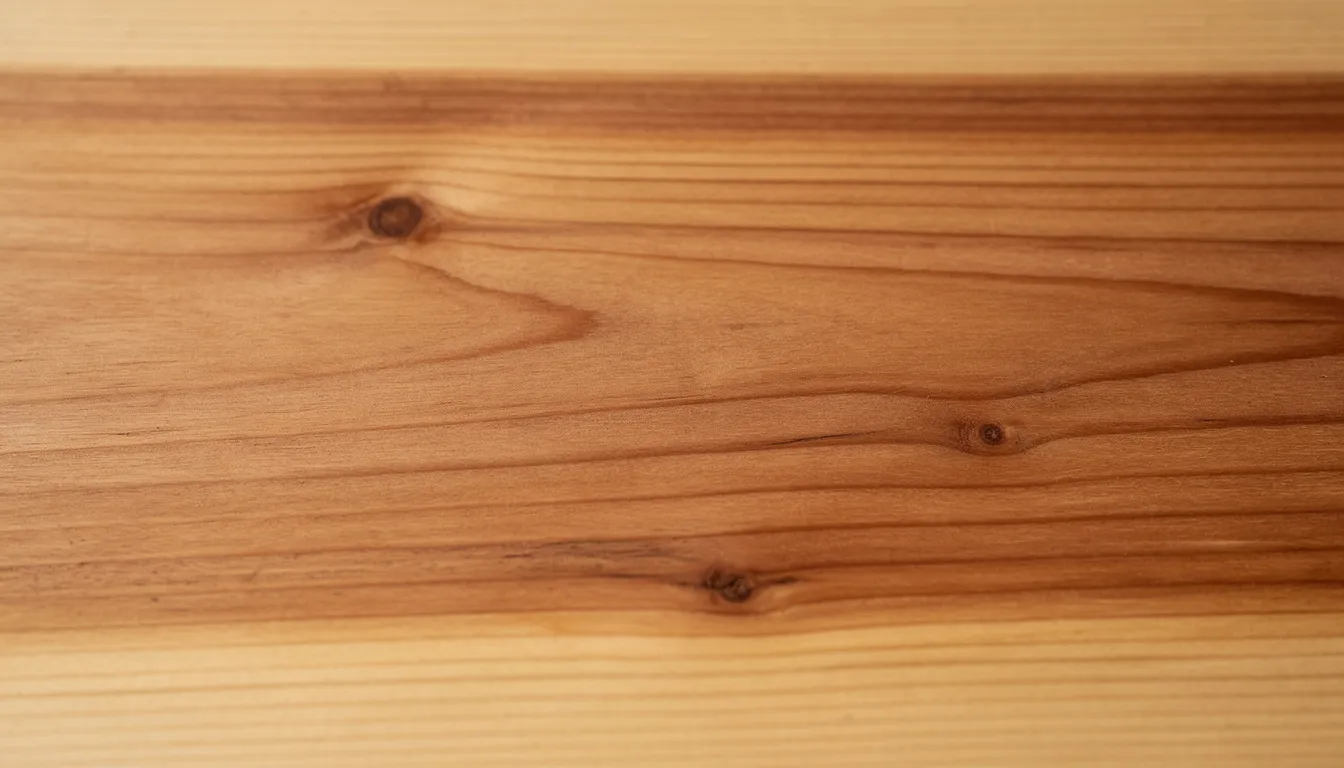
Most high-quality saunas built across North America and Europe use a combination of four to six softwood species, each bringing distinct advantages to different areas.
Western Red Cedar: Premium Classic
Western Red Cedar has earned its reputation as the gold standard for sauna walls and ceilings, particularly in North American installations. Lighter weight and low thermal conductivity keep surfaces comfortable even at 180-200°F. Natural thujaplicin oils resist decay and insects, extending lifespan by 20-30% compared to untreated pine in humid conditions.
Cedar's cellular structure allows it to stay comparatively cool to the touch, though species like aspen still outperform it for extended skin contact. The warm, slightly sweet scent creates a spa-like atmosphere, though fragrance-sensitive users may prefer neutral alternatives.
Color variation ranges from light honey to deep reddish-brown, developing a beautiful patina over time. Clear cedar commands premium prices—often $8 to $ 12 per square foot—typically reserving it for visible cladding rather than hidden structural elements.
Explore the best cedar saunas here.
Canadian Hemlock: Versatile Choice
Canadian hemlock offers strength, fine grain, and a uniform pale color at costs significantly lower than cedar. Its subtle scent makes it particularly suitable for fragrance-sensitive users or those planning to use essential oils during sessions.
Hemlock performs exceptionally well for walls, ceilings, and vertical surfaces. Studies show hemlock interiors distribute heat more uniformly, reducing hot spots. Many infrared sauna indoor 2-person models built between 2020 and 2025 feature hemlock as their primary interior material.
The lower cost ($4-6 per square foot compared to cedar's $8-12) makes hemlock attractive for larger installations without sacrificing quality. It's 95% knot-free consistency in quality grades ensures professional-looking results.
Nordic Spruce: Traditional Choice
Nordic spruce carries the weight of tradition—Finnish saunas have relied on this species for centuries. Tight grain, light color, and affordability make it a practical choice for walls and ceilings when properly selected.
Success with spruce depends on the quality of the material. Knots must be limited and stable to prevent resin bleed at high temperatures. Quality spruce features a straight grain and minimal defects, performing reliably when kiln-dried to the proper moisture content—reserve spruce for walls and ceilings rather than benches.
Aspen: Bench Specialist
Aspen stands as the top choice for benches and backrests across European and North American builds. The very low resin content, pale tone, and minimal scent create comfortable seating surfaces that remain pleasant even during extended sessions.
The species' tight grain structure resists splintering better than most alternatives—critical for bare-skin contact. Surface temperatures on aspen benches peak around 50°C when the air temperature reaches 85°C, providing the cooler surface that users appreciate.
Commercial installations in Finland use aspen for over 70% of benching, reflecting decades of proven performance. The wood's abundance and relatively fast regeneration (10-20 years) add sustainability benefits.
Alder: Warmth and Character
Alder offers a slightly darker, more warmly tinted appearance than aspen while maintaining similar low-resin properties and heat resistance. The wood develops an attractive patina over 5-10 years, shifting from pinkish-red tones toward warm brown without requiring finishes.
Ergonomic bench profiles and headrests often feature alder, taking advantage of its comfortable feel under high heat. Both aspen and alder work well for home or commercial applications where a neutral scent matters.
What About Thermo-Treated Woods?
Thermo-treatment represents one of the most significant advances in sauna wood technology over the past decade. The process heats wood to approximately 180-220°C in a low-oxygen environment, fundamentally altering its properties without the addition of chemicals.
Understanding the Process
Heat treatment reduces moisture content to under 5-7%, dramatically improving dimensional stability and decay resistance. The wood emerges darker, more uniform in color, and significantly more resistant to extreme conditions. Industry data show that the adoption of thermo-modified wood has grown by 40% since 2020, driven by its performance advantages and eco-appeal.
Thermo Aspen
Heat-treated aspen develops from chocolate to caramel tones, transforming traditional pale wood into a modern aesthetic statement. Shrinkage drops to 0.2% radial compared to 0.5% for untreated aspen, and rot resistance increases substantially.
Premium bench and backrest applications showcase thermo aspen in contemporary designs. Commercial spa installations consistently report excellent performance over 5 years or more of heavy use.
Thermo Alder
Thermo alder achieves warm brown shades without stains or finishes—ideal when clients want darker interiors that remain completely natural. The pleasant feel underfoot makes it suitable for removable floor gratings, while bench applications benefit from enhanced stability.
Thermo Spruce
Wall and ceiling cladding featuring thermo spruce brings darker, smoke-like tones that create dramatic contemporary interiors. The treatment combines the affordability of traditional spruce with significantly improved durability.
Outdoor infrared sauna and lakeside installations particularly benefit from thermo-treated options. Large temperature swings stress wood significantly. Thermo-modified materials handle these swings with 50% less dimensional change than untreated counterparts.
Cost Considerations
Thermo woods typically cost 20-30% more than their untreated versions. However, an extended lifespan (often twice as long as untreated in humid climates) and reduced maintenance requirements create long-term value. Many builds specify thermo-treated benches specifically because they cut maintenance needs by an estimated 70%.
How Should You Select Materials for Different Surfaces?
Benches, backrests, and floors see the most direct contact and wear. Material selection for these surfaces deserves more attention than walls or ceilings.
Bench Materials and Design
Primary bench materials include aspen, alder, hemlock, and thermo-treated variants. Each provides the low thermal conductivity and splinter resistance essential for comfortable extended contact.
Design considerations include rounded edges that eliminate sharp pressure points, sufficient thickness (25-30mm) to prevent flexing, smooth sanding to 120-180 grit that reduces splinter risks, and spacing between boards (5-10mm) that allows for air circulation.
A lower bench positioned 18-24 inches below the upper level provides seating options at different temperature zones—cooler air settles lower, offering relief during intense sessions.
Backrests and Headrests
Backrest materials follow the same principles as bench surfaces: they are low-resin, splinter-free, and comfortable even under high temperatures. Thermo Aspen and Alder excel here, maintaining a slightly cooler temperature than the surrounding air while providing smooth support.
Floor Solutions
Sauna floors require a two-layer approach: a waterproof structural base and a removable wood surface for comfort. Ceramic or porcelain tile provides durability, water resistance, and easy cleaning. Concrete with proper sealing handles decades of water exposure when sloped toward floor drains.
Removable duckboards or gratings made from cedar, aspen, or thermally treated species provide insulation between the feet and cold tile, eliminating the initial chill.
What Materials Should You Avoid?
Some materials that work perfectly elsewhere become hazardous when exposed to intense sauna conditions.
High-Resin Softwoods Near Heat Sources
Construction-grade pine, fir, and similar species contain 5-10% resin that oozes at high temperatures. Beyond creating sticky surfaces, heated sap can drip onto skin, causing burns. Reserve these species for structural elements outside the heated space.
Pressure-Treated Lumber
Preservatives and chemicals in pressure-treated wood can off-gas dangerous compounds when heated. Use pressure-treated lumber only for substructures completely outside the sauna room—never for visible interior surfaces.
Engineered Wood Products
MDF, particleboard, and standard plywood contain formaldehyde-based adhesives that release VOCs when heated. Even "low-emission" versions become problematic at sauna temperatures. Any exposed interior surface should be solid wood.
Dense Hardwoods
High-density hardwoods (600 kg/m³ or more) conduct heat too efficiently, becoming painfully hot when skin contact occurs. While occasionally used for decorative accents away from seating, these species create discomfort and potential burns on benches.
Plastics and Foam
Melting and off-gassing risks rule out most plastic materials from heated spaces. Vinyl flooring, foam insulation exposed to heated air, and plastic trim all create potential hazards. Necessary vapor barriers must remain behind wood cladding, completely isolated from the heated environment.
How Do Non-Wood Elements Function?
Modern sauna design combines traditional wood with glass, stone, and metal to achieve contemporary aesthetics and improved performance.
Tempered or laminated safety glass provides transparency for doors and vision panels. Double-glazed units for exterior walls reduce heat loss significantly while preventing condensation.
Natural stone or ceramic tile around heaters adds visual interest while providing heat-resistant surfaces. Heat retention properties make stone ideal near heating elements. Easy cleaning makes tile practical in areas prone to water splash.
Stainless steel or aluminum serves critical functions for heater guards, concealed fasteners, and vent grilles. However, exposed metal surfaces near benches become extremely hot and can cause severe burns—guards must be positioned away from seating areas.
Behind visible cladding, mineral wool or high-temperature-rated insulation fills wall and ceiling cavities, with aluminum foil vapor barrier facing the heated interior. This system protects the building structure from moisture damage while maximizing heat retention.
How Should You Match Materials to Your Budget?
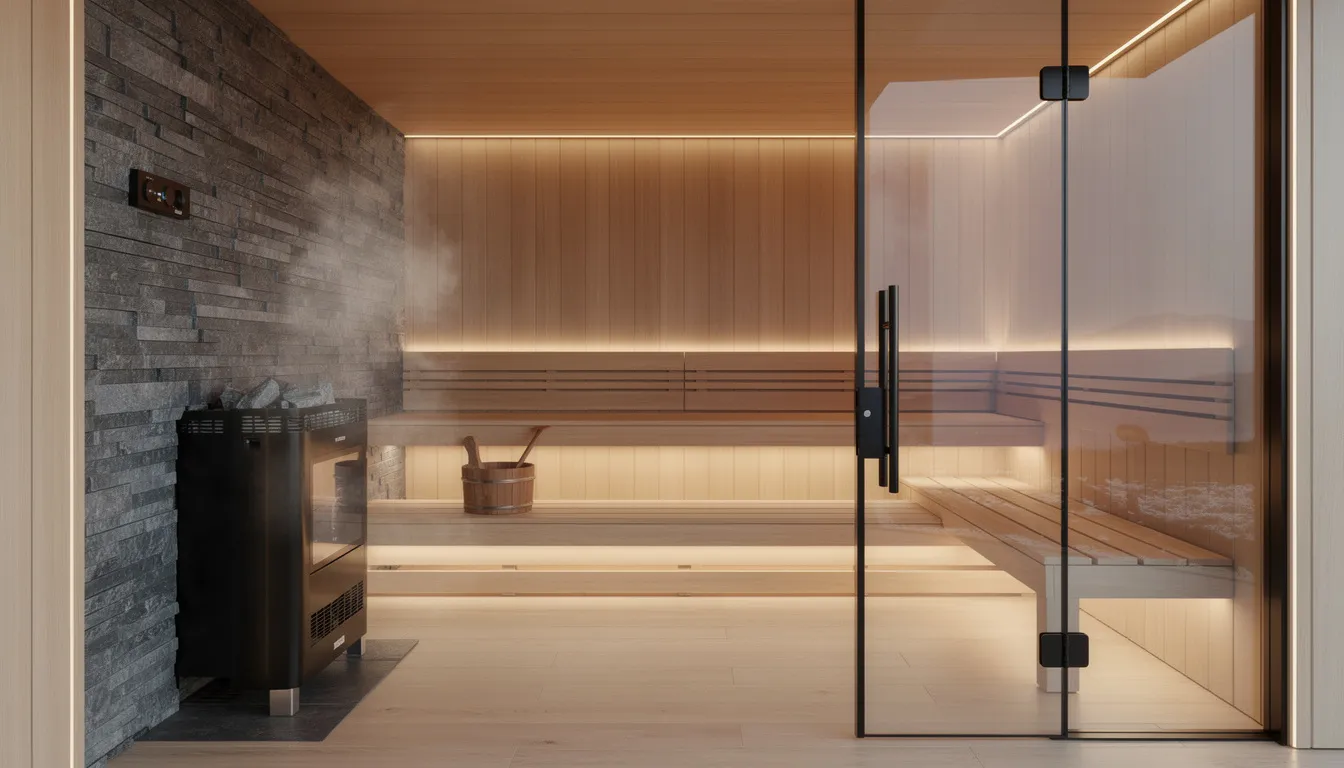
Ideal material choices differ dramatically based on project scale, intended use, and available budget.
Entry-Level Builds
Budget-conscious 2-3 person saunas achieve excellent results with Nordic spruce walls and ceilings, aspen or alder benches, tile floor with removable wood duckboards, and basic hemlock door and trim. This approach delivers durability and comfort at accessible price points.
Mid-Range Residential Saunas
Homes renovated between 2021 and 2025 commonly feature cedar or hemlock wall and ceiling cladding, thermo-aspen or thermo-alder benches, glass door panels, and stone accents around heater installations. This tier balances richer wall tones against lighter benches, creating visual interest.
High-End and Commercial Installations
Premium residential spas and commercial projects utilize top-tier materials, featuring thermo-treated benches throughout, stone walls as focal points, extensive glass panels for unobstructed views, cedar or thermo-treated spruce ceilings, and custom millwork. Commercial builds prioritize durability for daily use.
Special Considerations
Users who react to intense aromas should prioritize aspen, alder, or hemlock over aromatic cedar. Some individuals may be sensitive to cedar oils; when in doubt, specify neutral-scented species for benches where prolonged skin contact occurs.
Saunas installed outdoors face more extreme conditions. Thermo-treated materials provide the moisture resistance needed for outdoor infrared sauna use in challenging climates.
How Do You Care for Sauna Materials?
Even the best materials fail prematurely without proper care. Following appropriate maintenance practices can extend a sauna's functional lifespan to 15-25 years or more.
Initial Treatment
Most quality sauna wood requires minimal initial finishing. Apply sauna-safe oil or wax to benches and high-contact surfaces in one to two light coats. These products penetrate wood fibers to provide moisture resistance without creating surface films.
Regular Cleaning Practices
Quick rinse of bench surfaces after each use removes sweat and body oils. Weekly wipe-downs with mild, non-chlorine cleansers maintain hygiene. Avoid harsh chemicals or abrasive cleaners that damage wood fibers. Ensure adequate ventilation between sessions.
Periodic Maintenance
Every 1-3 years (depending on usage frequency), benches benefit from light sanding (120-180 grit) to remove surface discoloration, a fresh application of sauna-safe oil, and an inspection of all wood surfaces for cracks or warping.
Monitoring for Issues
Annual inspections should check cracks or splits in benches and wall panels, warped boards that no longer lie flat, loose fasteners requiring re-tightening, signs of mold in corners, and heater clearances. Early detection prevents costly repairs.
Lifespan Expectations
Different materials age at different rates: thermo-treated benches last 15-25 years with minimal maintenance, untreated aspen benches last 10-15 years, requiring regular treatment, cedar walls last 20-30 years (very durable), spruce ceilings last 15-20 years, and wood duckboards last 5-10 years.
Transform Your Space with Quality Materials
Selecting the right materials for your sauna interior represents a critical investment in long-term performance, safety, and enjoyment. The combinations you choose—from premium cedar walls to thermo-treated aspen benches—directly impact your daily experience and maintenance requirements for decades to come.
Remember that mixing species is not just acceptable but often ideal. A well-planned luxury home sauna might feature aromatic cedar walls for visual warmth, neutral aspen benches for comfortable extended sessions, and thermo-treated alder accents for enhanced durability. This layered approach maximizes the strengths of each wood while balancing aesthetics and budget.
Whether you're building a compact apartment sauna or a spacious family wellness suite, the fundamental principles remain constant: prioritize low thermal conductivity for contact surfaces, ensure proper kiln-drying to prevent warping, avoid toxic materials that off-gas at high temperatures, and plan for regular maintenance to protect your investment.
The thriving sauna industry in 2026 offers an unprecedented range of material choices, from traditional favorites like Nordic spruce to innovative thermo-treated options. Take time to understand your priorities—scent preferences, allergy sensitivities, budget constraints, and aesthetic vision—then select materials that align with your specific needs.
Ready to begin your sauna project? Contact our specialists for personalized guidance on material selection and planning your installation.
FAQ
Can I mix different types of wood in the same sauna interior?
Mixing species is typical and often ideal for optimizing both cost and performance. Pairing darker, thermo-treated walls with lighter aspen benches creates visual contrast, placing each material where it performs best. The key requirement is that all chosen woods must be suitable for high-heat and high-humidity environments—combine only proven sauna-appropriate species.
Do infrared saunas need different interior materials?
While infrared cabins operate at lower temperatures (around 120-145°F compared to 180-210°F for traditional designs), the same material principles apply. Kiln-dried, low-resin softwoods, such as hemlock and cedar, remain preferred for their safety and comfort. The infrared sauna health benefits are maximized with proper materials. Lower temperatures reduce stress on materials slightly, but moisture exposure continues—so moisture-resistant species still matter for durability.
Is it safe to stain or paint the interior wood of a sauna?
Most conventional interior paints and stains are unsafe at sauna temperatures, releasing VOCs that create health hazards. Only sauna-rated oils or waxes specifically designed to withstand temperatures of 150-230°F should be used on interior surfaces. These products typically penetrate rather than coat, avoiding hot surface films.
How thick should sauna wall cladding be?
Typical interior panel thickness ranges from 12 to 19mm, with 15mm being the most standard for tongue-and-groove wallboards. Thicker boards (19 mm and above) resist warping better and provide improved insulation, but they also add cost and weight. Exact dimensions depend on local building codes and manufacturer specifications.
Can I reuse the existing interior wood when remodeling?
Reusing wood is possible if materials are kiln-dried, structurally sound, and previously untreated with unsafe coatings. Before reinstallation, inspect carefully for mold, sap bleed from knots, warping, and surface damage. Wood showing significant degradation should be replaced—the cost of new materials is minor compared to the problems from compromised boards.