

Are you looking for a home sauna that fits in your apartment or small space? Foldable saunas—tents, pods, and blankets—deliver real heat therapy without construction headaches or five-figure investments, making them convenient for apartment dwellers, renters, and anyone without room for a permanent cabin.
This comprehensive 2026 guide walks you through everything you need to know about foldable home saunas, from choosing the best types and benefits to safety protocols and maintenance.
Key Takeaways
- Foldable saunas typically cost between $150–$800, while traditional saunas commonly start around $3,000–$5,000+ in 2026, making foldable options accessible for budget-conscious wellness enthusiasts.
- Modern foldable options include portable steam sauna tents, infrared sauna pods, and infrared sauna blankets—each with different heat intensity, feel, and health benefits.
- These units set up in 5–15 minutes, plug into standard outlets, and fold flat for easy storage under beds or in closets.
- HomeSauna focuses on low-EMF infrared sauna solutions and accessories that can complement or upgrade foldable sauna setups.
- A detailed comparison table with traditional saunas appears early in this article to help you decide quickly which path fits your lifestyle.
What Is a Foldable Sauna?
A foldable sauna is a collapsible, portable sauna unit—whether a sauna tent, pod, or sauna blanket—that delivers sauna-level heat without permanent installation. Most plug into a standard 110–120V outlet, requiring no construction, no dedicated wiring, and no landlord approval.
In 2026, the main categories include:
- Foldable steam tents with external steam generators (often 3L capacity, 1200W) that create moist, spa-like heat.
- Foldable hot-air and infrared pods using infrared panels or radiant heat elements for drier, penetrating warmth.
- Infrared sauna blankets resembling a sleeping bag with multi-zone heating, reaching 90–180°F.
Most foldable saunas are set up in 5–15 minutes without tools. When your sauna session ends, they fold flat and slide into a closet, under a bed, or into a carry bag for travel.
Typical use cases include:
- Apartment dwellers with limited floor space.
- Renters who can't modify their homes.
- Athletes wanting muscle recovery at home.
- Travelers who want a consistent sauna experience anywhere.
- Wellness enthusiasts testing sauna therapy before committing to a luxury home sauna cabin.
How Do Foldable Saunas Compare to Traditional Saunas?
This table gives you a fast way to see whether a foldable sauna or traditional cabin fits your lifestyle and budget.
|
Feature |
Foldable Saunas |
Traditional Saunas |
|
Typical 2026 Price |
$150–$800 |
$3,000–$8,000+ |
|
Maximum Temperature |
120–185°F (varies by type) |
160–195°F |
|
Heat Type |
Steam, infrared, or dry hot air |
Dry heat or steam (steam room style) |
|
Installation |
Set up in 5–20 minutes, no tools |
Half-day professional install or weekend DIY build |
|
Footprint |
3×3×6 ft., folds to closet size |
Dedicated 6×8+ ft. permanent room |
|
Portability |
Easily moved between rooms or homes |
Fixed, permanent installation |
|
Maintenance |
Wipe-down, regular cleaning, air-dry |
Wood treatment, ventilation checks, and ongoing care |
|
Durability |
3–7 years with proper care |
10–20+ years for quality builds |
|
Energy Use per Session |
~$0.25–$0.50 (1000–2000W) |
~$1–$3+ (4.5–6kW heaters) |
|
Capacity |
Typically 1 person |
2–6+ people, depending on size |
HomeSauna offers both plug-and-play infrared units and more permanent sauna solutions. Many customers start with a foldable or compact setup, then upgrade to a dedicated indoor or outdoor infrared sauna cabin as their home spa evolves.
What Types of Foldable Saunas Are Available in 2026?
The term "foldable" now covers several distinct designs, each with different heat performance, comfort levels, and space requirements. Understanding the differences helps you match a unit to your goals.
Foldable Steam Sauna Tents
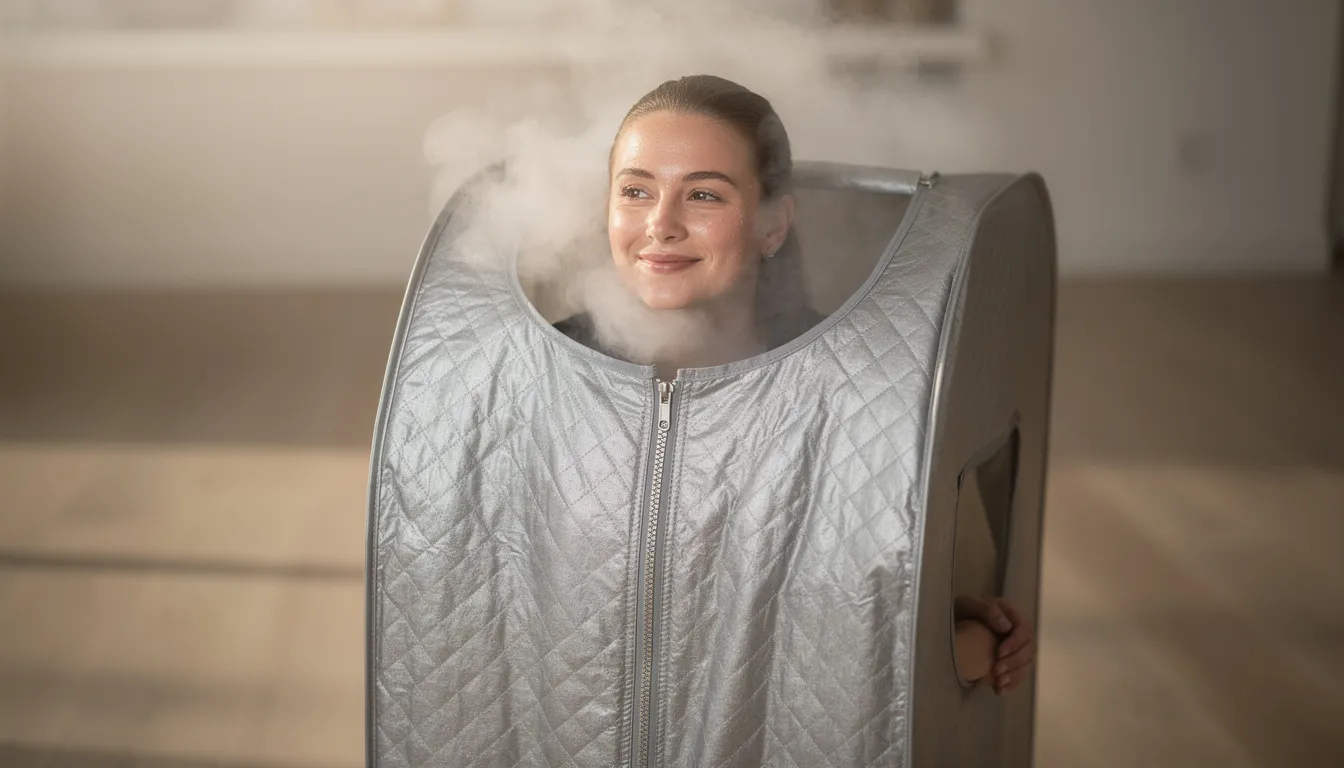
These are full-body nylon or cotton-blend tents paired with an external steam generator—typically 3–4L capacity and 1000–1500W power. They create intense, moist heat around 110–125°F.
The experience feels similar to a steam room at a day spa. High humidity makes the temperature feel hotter than the thermometer reads, producing heavy sweating even at lower temperatures.
Typical 2026 specs:
- XL tents around 70–74" tall with room for a foldable chair.
- 3L/1200W SmartSteam unit or similar steam generator.
- 9–15 power levels with remote control.
- 10–99 minute timers.
- Often includes 1–2 folding chairs and a floor mat.
Pros:
- Affordable entry point, often under $150–$200.
- Familiar "steam room" feel for spa lovers.
- Good for skin hydration and opening pores.
Cons:
- More condensation means more cleaning.
- Risk of mold if not dried properly after each use.
- Requires proper ventilation in the room.
Foldable Infrared Sauna Tents & Pods
These insulated fabric cabins or pods feature built-in electric or infrared heating elements. Unlike steam saunas, they produce dry sauna heat that penetrates the body directly through infrared light wavelengths.
Hot-air pods can approach higher temperatures (175–185°F), while infrared panels in tents typically run cooler ambient air but deliver deep tissue heating at 130–160°F.
Typical 2026 specs:
- 1500W heaters with solid construction.
- Cotton or cotton-blend shells for breathability.
- 10-minute setups with compact 5–6 ft. tall footprints.
- Temperature controls reaching 140–185°F depending on model.
HomeSauna emphasizes low EMF infrared technology and premium materials in this category. These pods pair well with red light therapy add-ons or cold plunge tub home routines for comprehensive recovery protocols.
Infrared Sauna Blankets (Foldable "Sleeping Bag" Saunas)
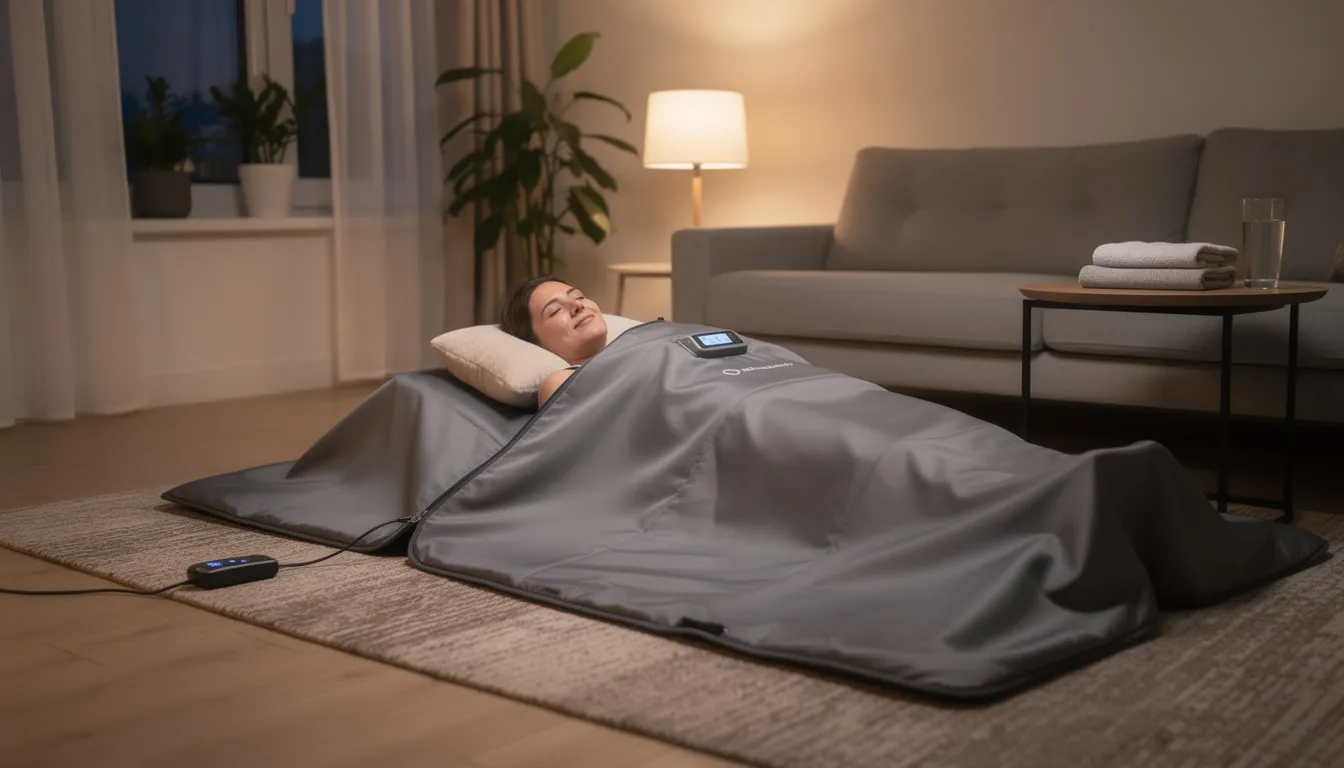
Infrared sauna blankets are full-body wraps that fold like a sleeping bag. They're the most compact foldable solution, often weighing under 25 lbs. and stored in a small closet.
These blankets use infrared panels distributed across multiple heating zones to warm your body evenly while you lie flat. Sessions typically run 30–90 minutes at temperatures from 90–180°F.
Typical 2026 specs:
- Multi-zone heating (upper body, lower body, legs).
- Maximum temperature around 176–185°F.
- Included carry bag for storage and travel.
- Wipe-clean waterproof inner lining.
- 30–99 minute timers with temperature controls.
Ideal users:
- Extremely limited space (studio apartments, dorm rooms).
- Frequent travelers who want portable infrared heat therapy.
- People who prefer lying flat to sitting upright.
- Those wanting quiet time for meditation during sessions.
HomeSauna's infrared sauna blanket options focus on low EMF performance and even heat distribution. They complement larger home sauna setups and work beautifully for apartment dwellers who want better sleep and stress relief without sacrificing floor space.
Steam vs. Infrared Comparison
|
Comparison |
Steam Tents |
Infrared Tents/Pods |
|
Air Feel |
Moist, humid |
Dry, comfortable |
|
Warm-Up Time |
10–15 minutes |
15–25 minutes |
|
Cleanup |
Requires thorough drying |
Wipe-down, quick dry |
|
Temperature Range |
110–125°F |
130–185°F |
What Health and Wellness Benefits Do Foldable Saunas Offer?
When foldable saunas reach meaningful temperatures—typically 120°F and above—they can support many of the same evidence-backed benefits as permanent saunas. The core mechanism is the same: passive heat stress triggers physiological responses that benefit cardiovascular health, recovery, and mental wellbeing.
Cardiovascular & Circulation Benefits
Sitting in 120–180°F heat raises your heart rate into a light cardio zone, similar to a brisk walk. Your body responds to the heat by dilating blood vessels, which promotes circulation and delivers more oxygen to tissues.
- Regular sauna use has been associated with reduced cardiovascular risk in long-term Finnish studies.
- Vasodilation occurs whether heat comes from steam, infrared, or hot air.
- Post-session blood pressure often drops 5–10 mmHg temporarily.
- Passive heat stress can improve cardiovascular health markers over time with consistent use.
- Those with heart conditions should consult a physician before using higher temperatures.
Heart rate during typical sessions: Healthy adults often see heart rates rise to 100–150 bpm during a 20–30 minute session at moderate temperatures—similar to light exercise without physical exertion.
Muscle Recovery & Pain Relief
Athletes and lifters often use post-workout foldable saunas to reduce next-day muscle soreness by boosting blood flow and relaxation. Heat therapy helps flush metabolic waste from tired muscles while delivering nutrients.
- Deep warmth eases joint stiffness in knees, back, and shoulders.
- Popular among desk workers with chronic tension from sitting.
- Twenty minutes of heat after strength training can support mobility.
- Combining heat with cold plunge (contrast therapy) further amplifies recovery benefits.
HomeSauna specializes in this pairing—sauna sessions followed by cold plunge tubs—for athletes serious about optimizing muscle recovery.
Example routine: Train → 20-minute foldable sauna session → 3-minute cold plunge → Sleep
Detoxification & Sweating
Sweating supports your body's natural elimination pathways, complementing liver and kidney function. While the liver and kidneys handle the heavy lifting for detox, sweat does help excrete small amounts of certain heavy metals and metabolic byproducts.
- Research suggests sweat can help eliminate trace amounts of lead and other metals.
- Most online "detox" claims are exaggerated—be realistic about gains.
- Improved skin feel and feeling lighter after a good sweat are genuine benefits.
- Foldable saunas reaching 120–150°F with sustained sessions produce substantial sweating.
Critical reminder: Stay hydrated with water and electrolytes after each sauna session. Aim for 16 oz. of water before and after to replace fluids lost through sweat.
Stress Relief & Sleep Support
Many users experience mental "unplugging" during 15–30-minute foldable sauna sessions. The forced quiet time—no phone, no screens—creates space for breathing exercises or simply zoning out.
- Post-sauna cooling helps regulate body temperature rhythms that support deeper sleep.
- Using heat therapy 1–2 hours before bedtime can improve sleep quality.
- Reduced stress markers (cortisol drops of 20–30% have been reported in some studies).
- Consistent use matters more than occasional marathon sessions.
Example evening ritual: Light dinner at 7 PM → 20-minute infrared blanket session at 140°F → Cool shower → Bed by 10 PM
HomeSauna encourages using heat therapy as part of a broader wellness habit stack—combining regular sauna use with cold exposure and red light therapy for overall wellbeing.
What Key Features Should You Look for in a Foldable Sauna?
The 2026 foldable sauna market is crowded with options ranging from quality portable saunas worth the investment to flimsy products that are little more than space heaters in a bag. This checklist helps you find a unit that delivers real heat therapy.
Essential feature categories:
- Heating Power: Look for at least 1000–1500W for tents and pods to reach meaningful temperatures.
- Maximum Temperature: Aim for 140°F+ for meaningful infrared sessions if you prefer more heat intensity.
- Warm-Up Time: Quality units reach operating temperature in 15–25 minutes.
- Size and Capacity: Most are single-person; measure your available space and desired head clearance.
- Build Quality: Reinforced seams, heavy-duty zippers, and quality fabrics (cotton beats cheap nylon).
- EMF Levels: For infrared models, look for low EMF certification—especially for longer sessions.
- Temperature Controls: Digital readouts with adjustable settings beat simple on/off switches.
- Timer Functions: 30–99 minute timers with auto-shutoff are standard in quality units.
- Safety Features: Overheat protection and grounded plugs are non-negotiable.
- Ease of Cleaning: Removable liners, wipe-clean surfaces, and proper ventilation design matter.
Foldable Sauna Quality Tiers
|
Tier |
Heat Performance |
Materials |
Typical Price |
|
Entry-Level |
120–140°F, slower warm-up |
Basic nylon |
$80–$150 |
|
Mid-Range |
140–165°F, reliable heat |
Cotton-blend, better zippers |
$200–$400 |
|
Premium |
160–185°F, consistent distribution |
Insulated panels, reinforced build |
$500–$800+ |
Sustainable materials note: Higher-quality fabrics (cotton blends, thick insulated panels) typically last longer and off-gas less than cheap plastics. HomeSauna emphasizes wellness-focused materials that align with health goals rather than compromise them.
How Do You Set Up, Use, and Maintain Foldable Saunas Safely?
Safe setup and consistent cleaning matter even more with fabric, steam-producing products that fold and store in tight spaces. A few minutes of care and maintenance after each session prevent mold, extend product life, and keep your sauna experience pleasant.
Safe Setup & First Use
Place foldable saunas on flat, heat-resistant surfaces away from curtains or soft furnishings. Leave at least 12–18 inches of clearance on all sides where possible.
- Use dedicated grounded outlets for 1200–1500W heaters or steam generators.
- Avoid overloaded power strips and extension cords.
- Run an initial "test run" of 10–15 minutes at moderate temperature before your first full session.
- Check zippers, seams, and cable routing monthly for fraying or heat damage.
- Position a floor mat underneath to catch sweat and protect the flooring.
HomeSauna promotes low EMF infrared options and proper grounding as part of a safety-first design philosophy.
Cleaning & Drying After Sessions
Steam saunas require diligent drying. Unzip fully after use, run a fan or open a window, and allow at least 1–2 hours of air-drying before folding away.
- Wipe interior walls and floors weekly with mild, non-fragranced cleaner or diluted vinegar.
- For infrared blankets and pods, wipe the inner liner after every sweaty session.
- Leave units open until fully dry before storage.
- Inspect seams and corners periodically—moisture lingers in these spots.
- Place a small towel on the floor or under your chair to reduce sweat pooling.
Regular cleaning prevents bacterial growth and extends product lifespan significantly.
Who Should Be Cautious or Avoid Use
Certain groups should consult a doctor before starting heat therapy:
- People with unstable heart disease, uncontrolled high blood pressure, recent stroke, or arrhythmias.
- Pregnant individuals.
- Anyone with conditions that impair sweating.
- Those with implanted electronic devices (pacemakers, defibrillators) should seek explicit medical clearance around infrared and electric heaters.
For all new users: Limit initial sessions to 10–15 minutes at lower temperatures, increasing gradually only if feeling well. Exit immediately if you feel dizzy, nauseous, excessively short of breath, or confused.
Cool down slowly with water and seated rest.
This content is educational and not a substitute for personalized medical advice.
Who Are Foldable Saunas Best for?
Foldable saunas aren't for everyone, but they solve clear problems for specific lifestyles and living situations.
Ideal user profiles:
- Apartment dwellers with limited floor space who can't install permanent fixtures.
- Renters whose lease prohibits modifications or construction.
- Busy professionals wanting quick stress relief without gym commutes.
- Athletes using heat therapy for muscle recovery after training.
- Wellness enthusiasts testing sauna therapy before investing $5,000+ in a cabin.
- Cold plunge users who want contrast therapy but lack space for a full sauna room.
- Frequent movers who need equipment that packs up and travels.
Who might skip the foldable and go straight to traditional:
- Large families wanting a multi-user social sauna experience.
- Homeowners building dedicated home spa spaces.
- Those prioritizing premium wood ambiance and 20+ year durability.
Example contrast: A 600-sq-ft city apartment owner chooses an infrared sauna blanket for nightly recovery—it stores in a closet and deploys on the couch in seconds.
Meanwhile, a suburban homeowner with a finished basement installs a 4-person traditional sauna from HomeSauna as a permanent wellness centerpiece.
How Do You Choose the Right Foldable Sauna for Your Space and Goals?
The "best" foldable sauna depends on your specific goals—whether that's maximum heat, extreme portability, tight budget, or athletic recovery focus.
Decision framework:
- Available floor space: Measure where you'll use it (bedroom, bathroom, garage) and clearance around the unit.
- Preferred heat type: Steam for a moist, spa-like feel; dry hot air for higher temperatures; infrared for deep tissue penetration.
- Budget range: Under $300 for solid entry-level; $300–$800 for premium build quality and heat performance.
- Desired temperature range: Steam tents max around 125°F; infrared pods can reach 185°F.
- Frequency of use: Daily users need durable construction; occasional users can prioritize price.
- Portability needs: Moving between rooms? Traveling? Blankets win for maximum portability.
Quick flow:
- Love steam and spa rituals → Steam tent with steam generator.
- Want drier, higher temperatures → Hot-air or infrared pod.
- Need extreme portability → Infrared blanket.
Consider energy use when comparing other portable saunas: a 1000W unit costs less to run than a 1500W unit, but may reach lower temperatures or heat more slowly. Check local electricity prices when budgeting.
HomeSauna can help match you to the right configuration—foldable, plug-and-play cabins, or full outdoor/traditional setups—through guides and customer support.
How Do Foldable Saunas Fit in the HomeSauna Ecosystem?
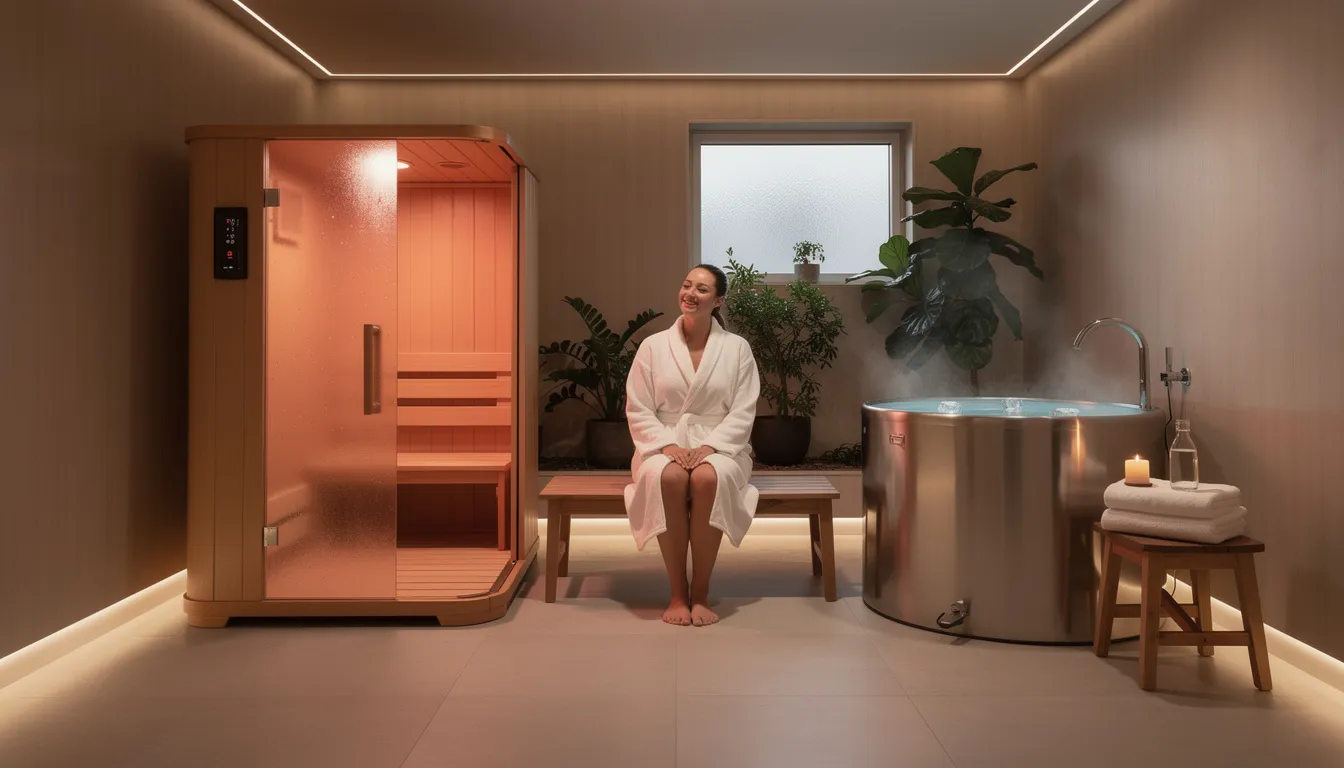
HomeSauna sees foldable saunas as part of a broader at-home wellness system that integrates heat, cold, and light therapy. Starting portable and scaling up over time is a smart approach for many customers.
- Many customers begin with portable infrared blankets or compact plug-and-play units.
- As homes and budgets evolve, they add outdoor traditional saunas or indoor cabins.
- Cold plunge tubs pair naturally with heat therapy for contrast protocols.
- Red light therapy panels integrate into recovery routines for advanced biohackers.
HomeSauna focuses on low EMF heating, sustainable materials, and premium craftsmanship—differentiating from cheaper, short-lived nylon tents that dominate marketplace listings.
Build quality matters when you're using a product 3–5 times per week for years.
The game changer for most customers is building a consistent habit. A foldable sauna used three times weekly delivers more benefits than an unused traditional cabin.
Start Your Home Sauna Journey Today
Foldable saunas offer an accessible entry point into heat therapy, providing genuine wellness benefits without the space requirements or costs of traditional installations. Whether you choose a steam tent, infrared pod, or sauna blanket, consistent use delivers the results that matter.
Ready to bring professional wellness into your home? Explore HomeSauna’ collection of the best portable and foldable home saunas, or get in touch with our support team for guidance on building your ideal wellness routine.
Frequently Asked Questions
How much does it cost to run a foldable sauna at home?
Running a 1500W foldable sauna for 30 minutes uses about 0.75 kWh of electricity. At typical 2026 U.S. rates ($0.20–$0.30 per kWh), each half-hour session costs roughly $0.15–$0.25.
Compare that to a traditional sauna with a 4.5–6 kW heater running for 45–60 minutes, which might cost $1–$2 per session. Frequent users running 3–5 sessions weekly might add $3–$6 monthly to their electricity bill with a foldable unit—far less than recurring day spa visits at $30–$50 each.
Can a foldable sauna actually get as hot as a "real" sauna?
Traditional Finnish saunas often run 160–195°F, while most foldable steam tents operate around 110–125°F. Infrared pods and blankets typically reach 120–185°F, depending on design quality.
Perceived heat depends on both temperature and humidity. A 120°F steam tent can feel intensely hot due to moisture, even though the number reads lower than a dry sauna. Premium foldable hot-air pods can reach 180–185°F, approaching traditional levels.
How long do foldable saunas typically last?
Budget nylon steam tents might last 1–3 years with regular use. Better-constructed cotton or thick insulated tents and pods often last 4–7+ years when cared for properly.
Longevity depends heavily on drying and cleaning habits. Consistently folding away, a damp steam tent dramatically shortens its life through mold growth and seam damage. HomeSauna emphasizes durable materials and robust build quality to extend the useful life of heat therapy products.
Are foldable saunas allowed in apartments and rentals?
Most foldable saunas are treated like other plug-in appliances and work fine in typical apartments with standard 110–120V outlets.
Check your lease language for restrictions on high-wattage heaters or steam-producing devices. Use steam tents in well-ventilated rooms—bathrooms with exhaust fans or rooms with windows that open—to prevent excess humidity buildup. Infrared blankets are usually the least controversial option for strict buildings since they produce no visible steam.
Can I combine a foldable sauna with a cold plunge routine at home?
Contrast therapy—alternating heat and cold—has become increasingly popular among athletes and wellness enthusiasts by 2026. The combination can amplify the benefits of each modality.
Simple at-home protocol: 15–20 minutes in a foldable sauna at comfortable heat → 2–5 minutes in cold plunge or cold shower → Repeat 2–3 cycles if tolerated → Rest and reduce blood pressure gradually.
HomeSauna offers cold plunge tubs specifically designed to pair with at-home saunas, allowing full hot-cold routines without leaving the house.
References
- National Institute of Health – “Clinical Effects of Regular Dry Sauna Bathing: A Systematic Review.”
- Mayo Clinic Proceedings – “Cardiovascular and Other Health Benefits of Sauna Bathing: A Review of the Evidence.”
- MDPI Research – “Excretion of Ni, Pb, Cu, As, and Hg in Sweat Under Two Seating Conditions.”
- Healthline – “How to Use a Sauna.”
SunHomeSaunas – “When Should You Use Contrast Therapy for Best Results?”